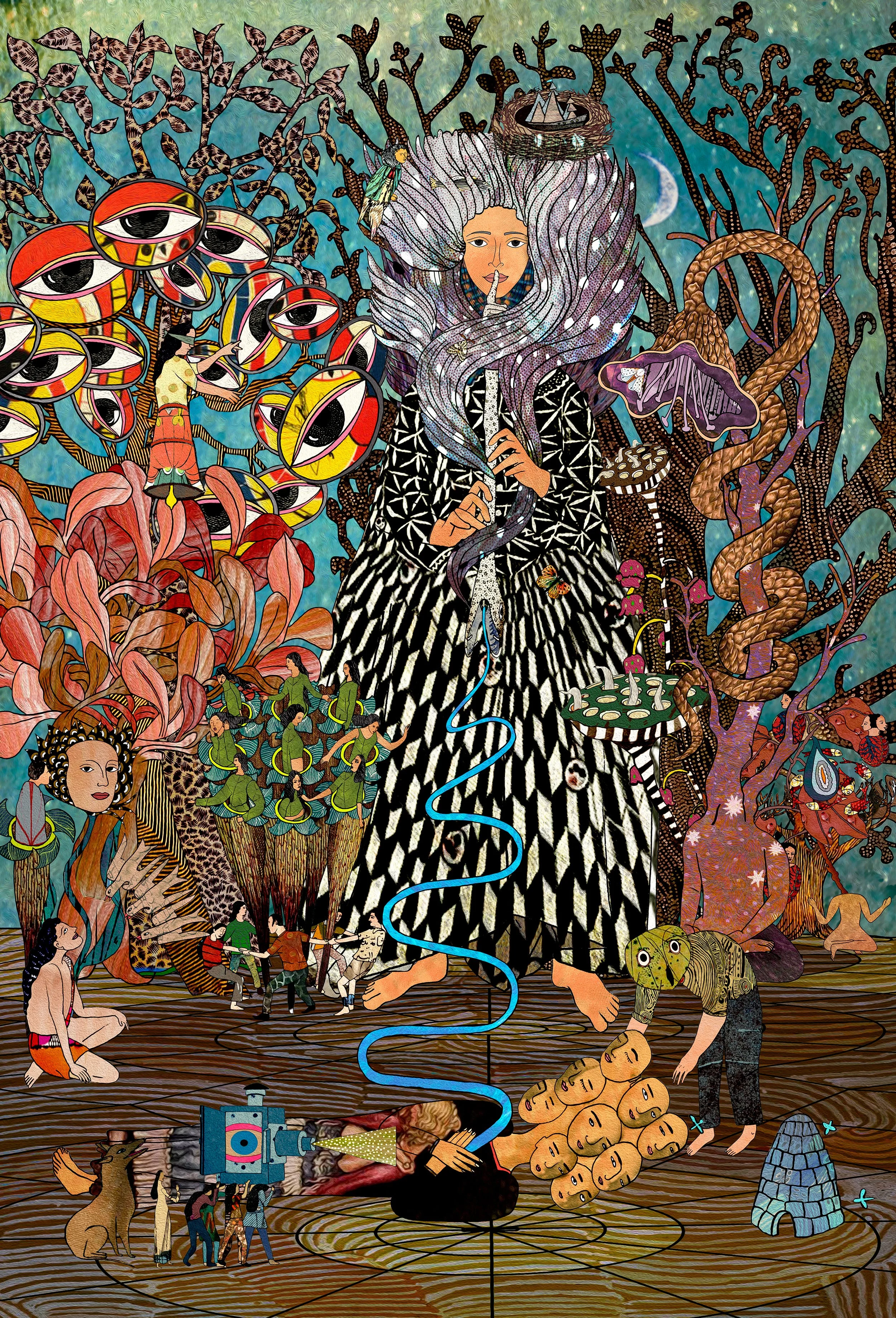
Ruchi Bakshi Sharma is a Mumbai-based artist working across lenticular print, silvered and etched mirrors, shadow box, moving image, and object-making. She devotedly chronicles her own nocturnes, transcribes the subconscious through drawings that spiral into labyrinthine worlds—each a palimpsest of archetypes, thresholds, and metamorphic echoes. Her work is rooted in years of research into dream psychology and South Asian mythological traditions.Every image is hand-drawn individually over many days and months, then realised as three-dimensional forms or as flat painted cutouts that read as dimensional because of the depth surrounding them. What distinguishes these works is that they are made by a moving image practitioner — which means every decision is a filmmaker's decision. The lenticulars move, the shadow boxes have theatrical depth and light, the dioramas are essentially frozen films.
THREE TIMES AS DREAM
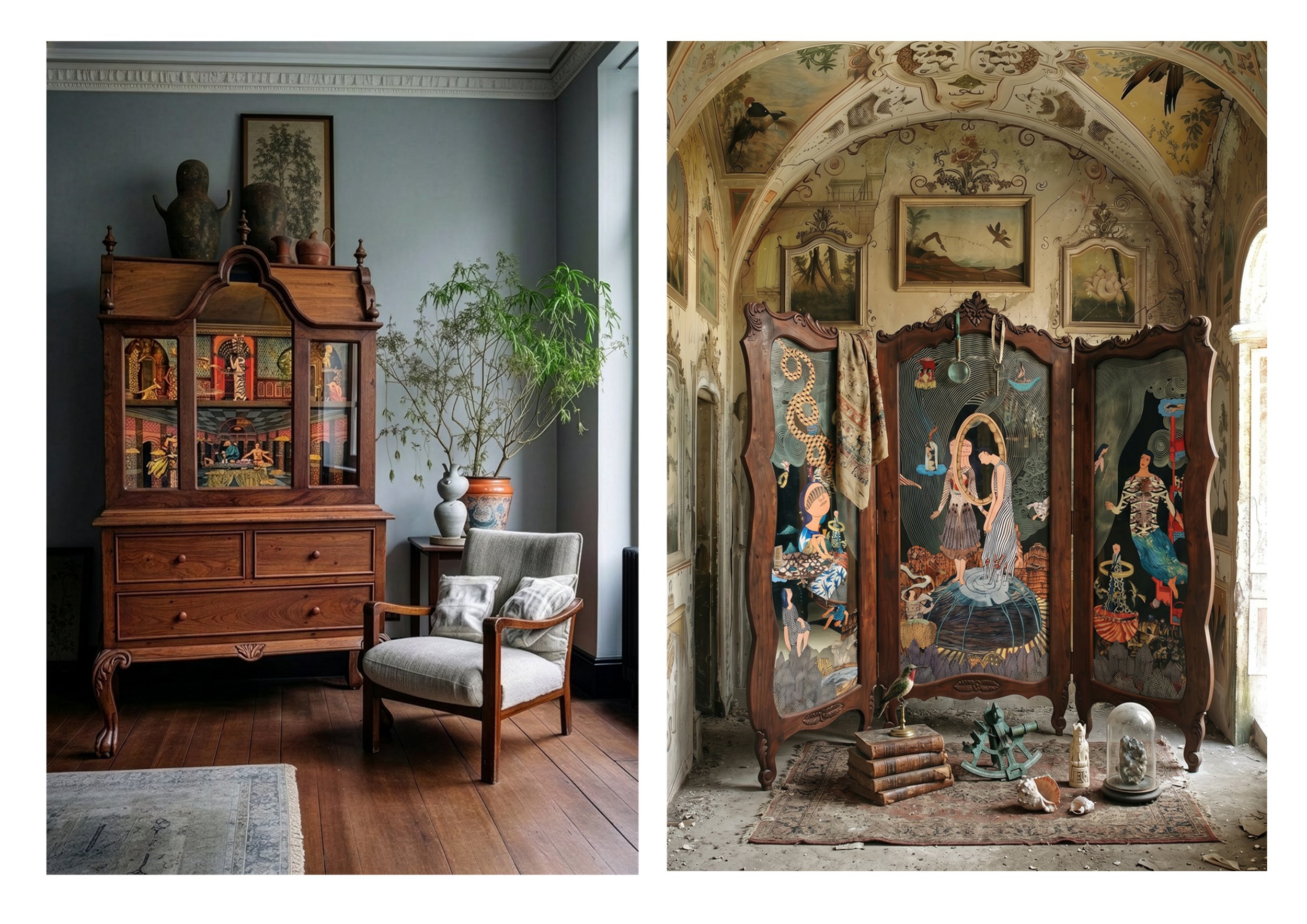
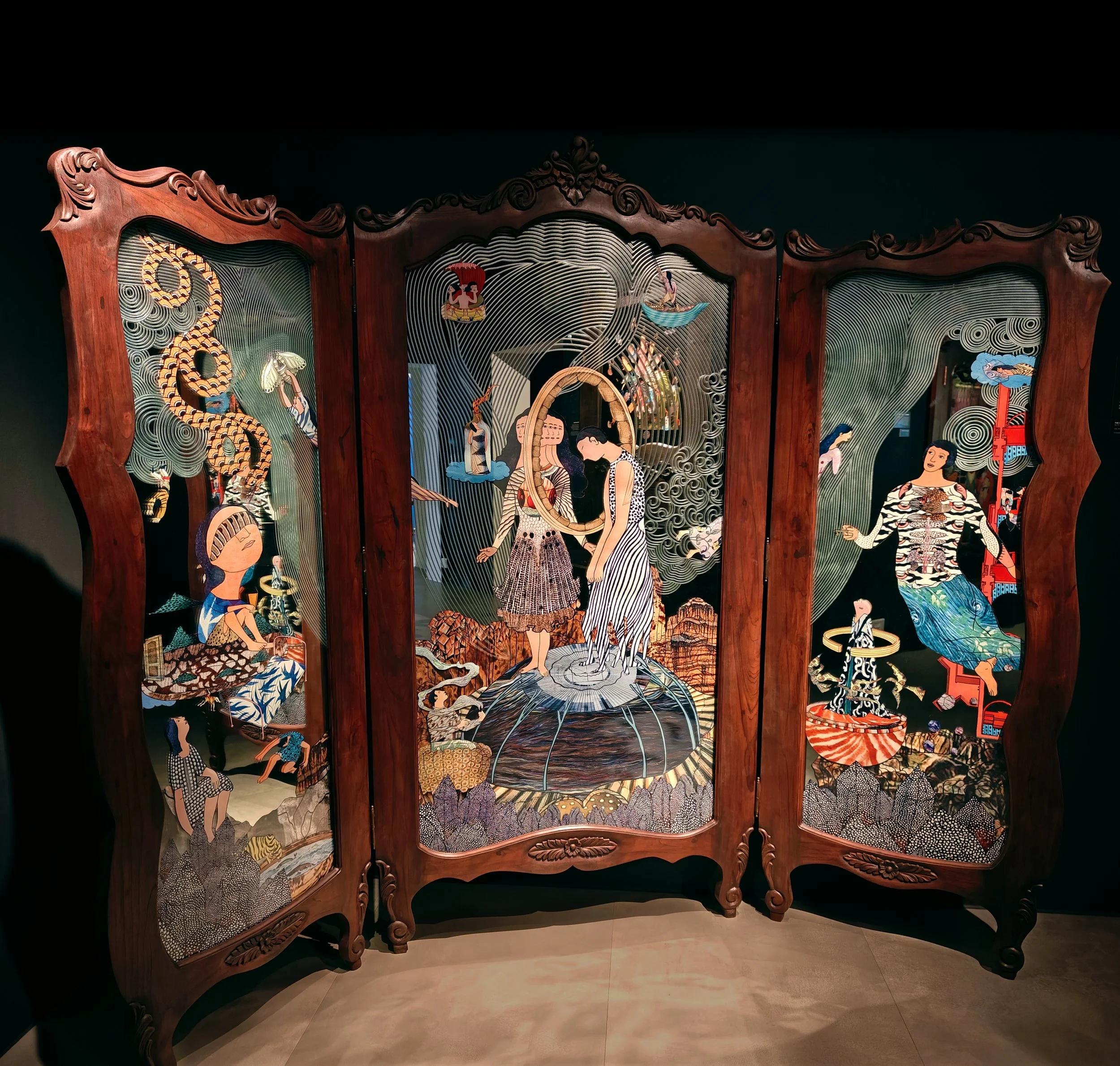
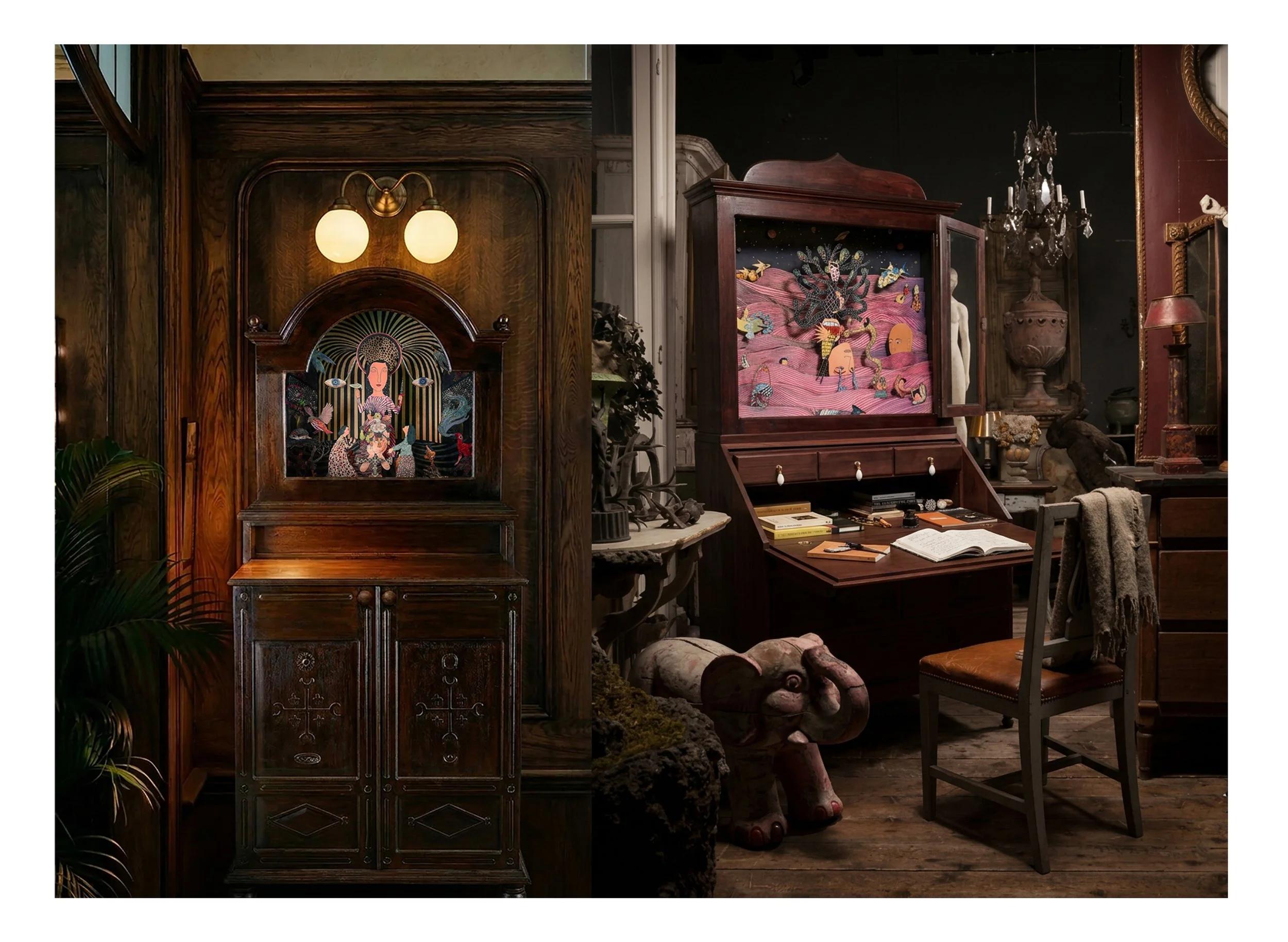
The dream furniture is the shadow box turned inside out: Where a shadow box places you on the outside looking in through glass — a witness to the dream world — the furniture places the dream world on the outside, in the room with you. These assemblages function as cabinets, writing beaureus and centre tables — they hold things, stand on their own, occupy a room — but their primary architecture is interior. They are designed to hold the interior world of a specific dream. The dream however, is no longer something you just look at. It becomes something you live alongside.
SCULPTURE & VIDEO
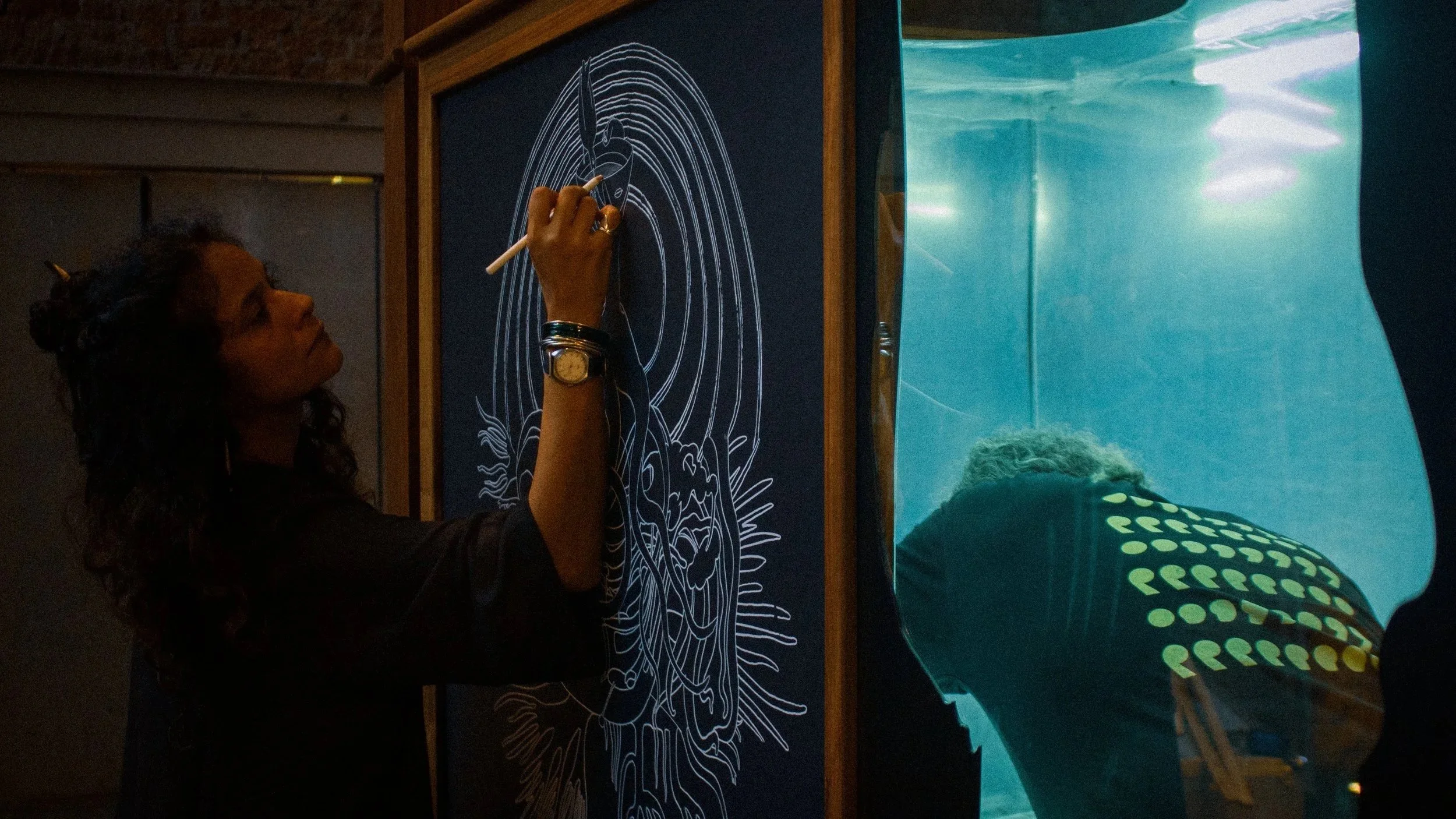
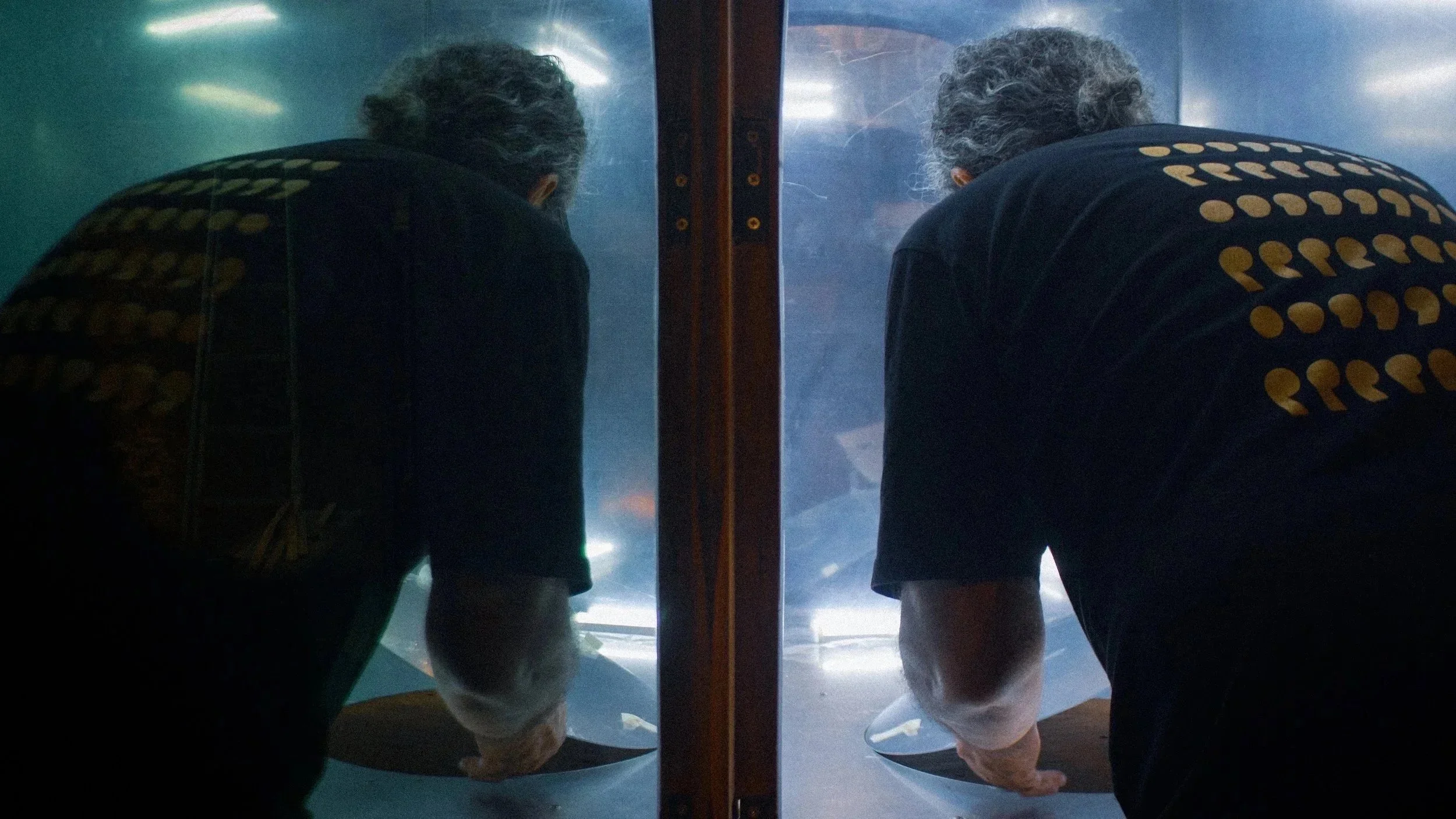
My sculptural & video practice explores mythology, dream states, and the heroine’s journey as frameworks for individuation. Drawing on Carl Jung’s collective unconscious and feminist film theory, I create fragmented, layered, text-based works that exist between waking and dreaming. The female body functions as a porous, self-reflexive site, where motifs of mouth, womb, bed, eye and ritual motifs generate shifting subjectivities and out-of-body perception. Urban landscapes merge with hyperbolic mindscapes, forming “dreaming chambers” where personal and archetypal narratives converge. Through states of “fitful sleeptime,” the work examines how inherited identities are inhabited, disrupted, and transformed into new forms of awareness.
SHADOW BOXES
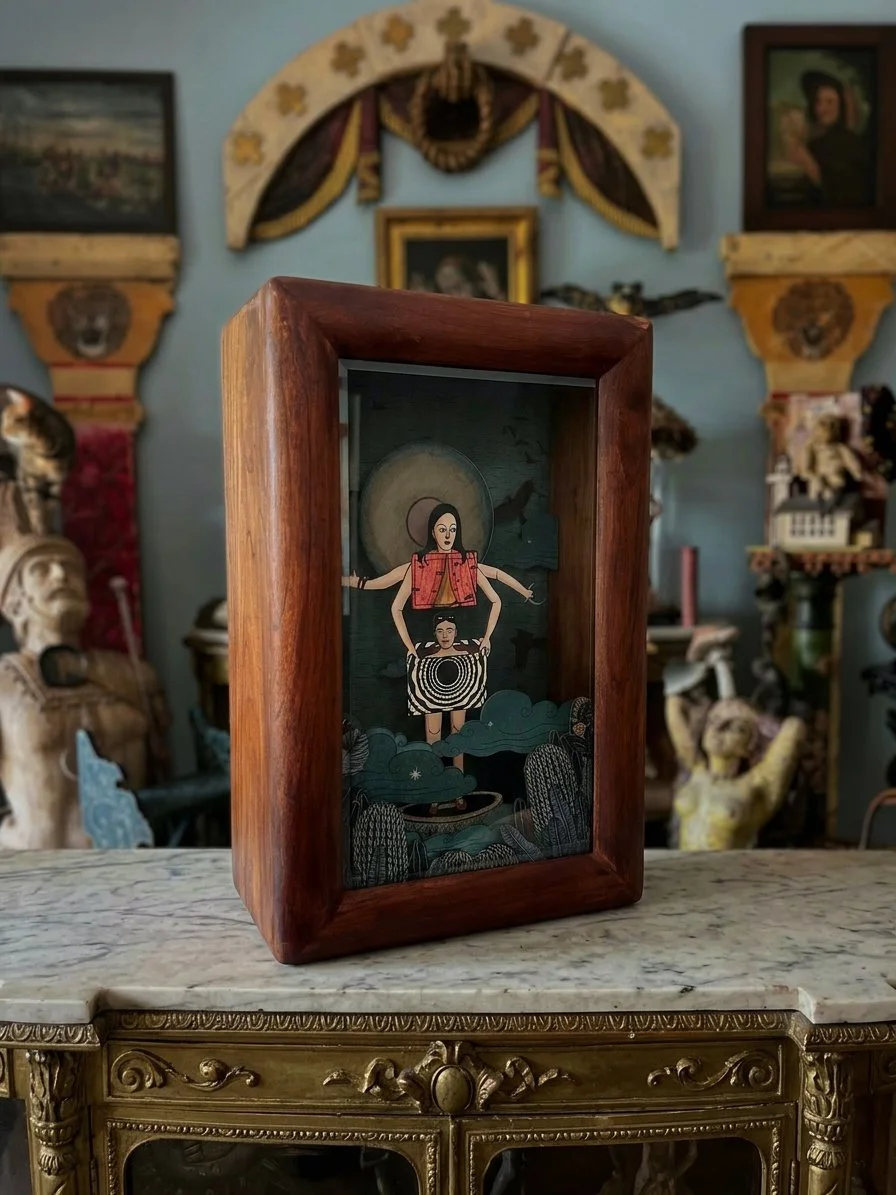
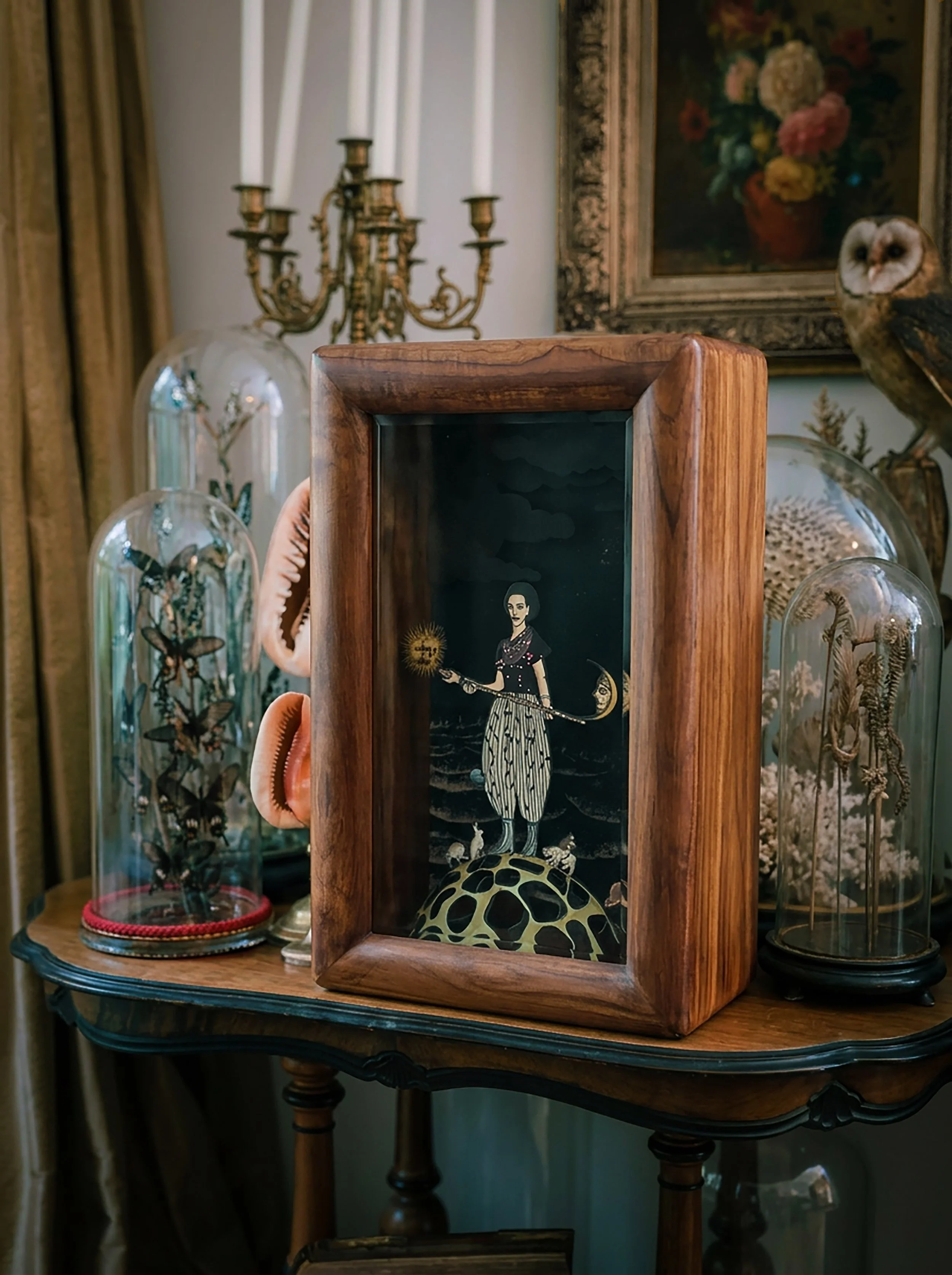
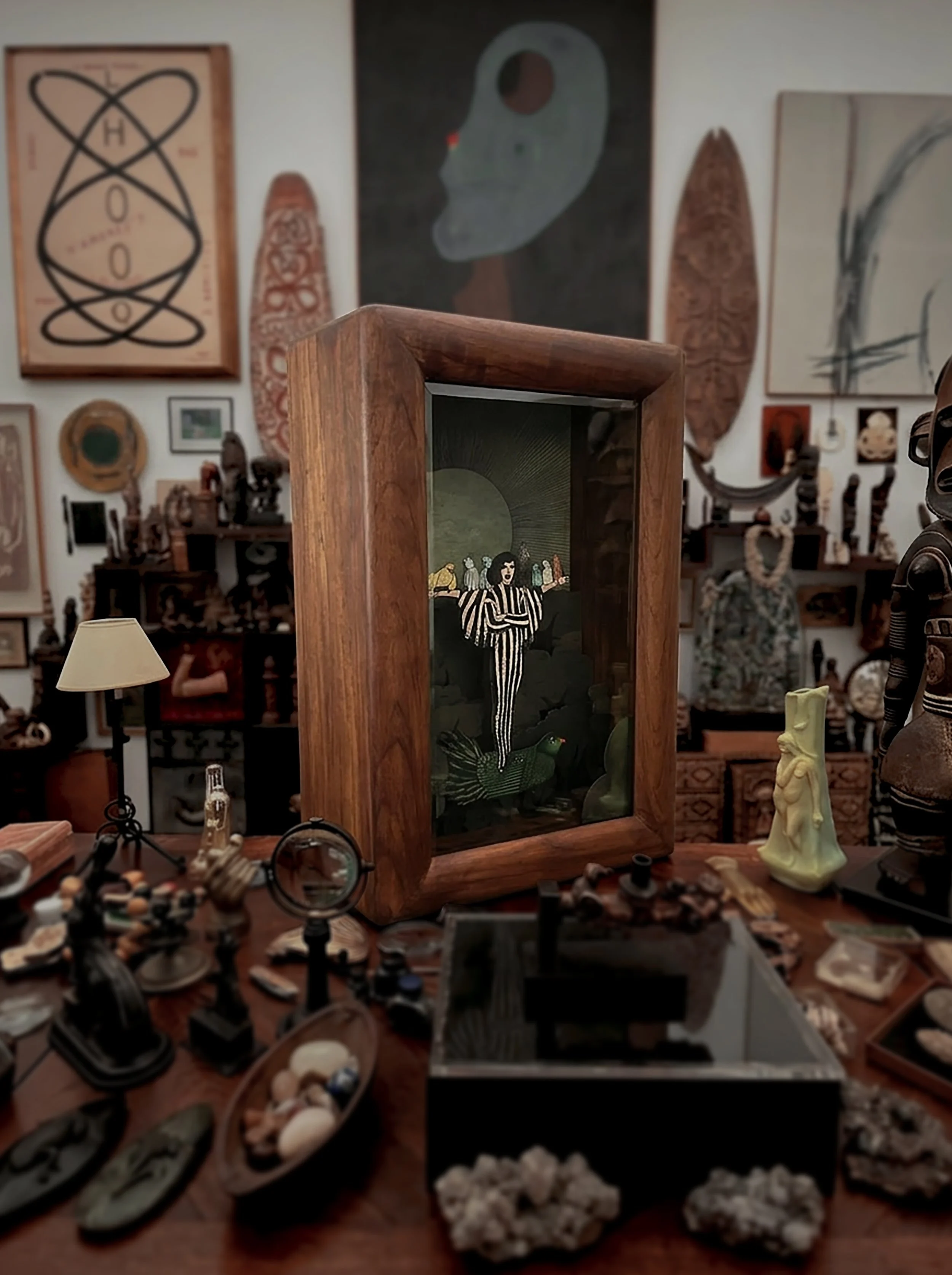
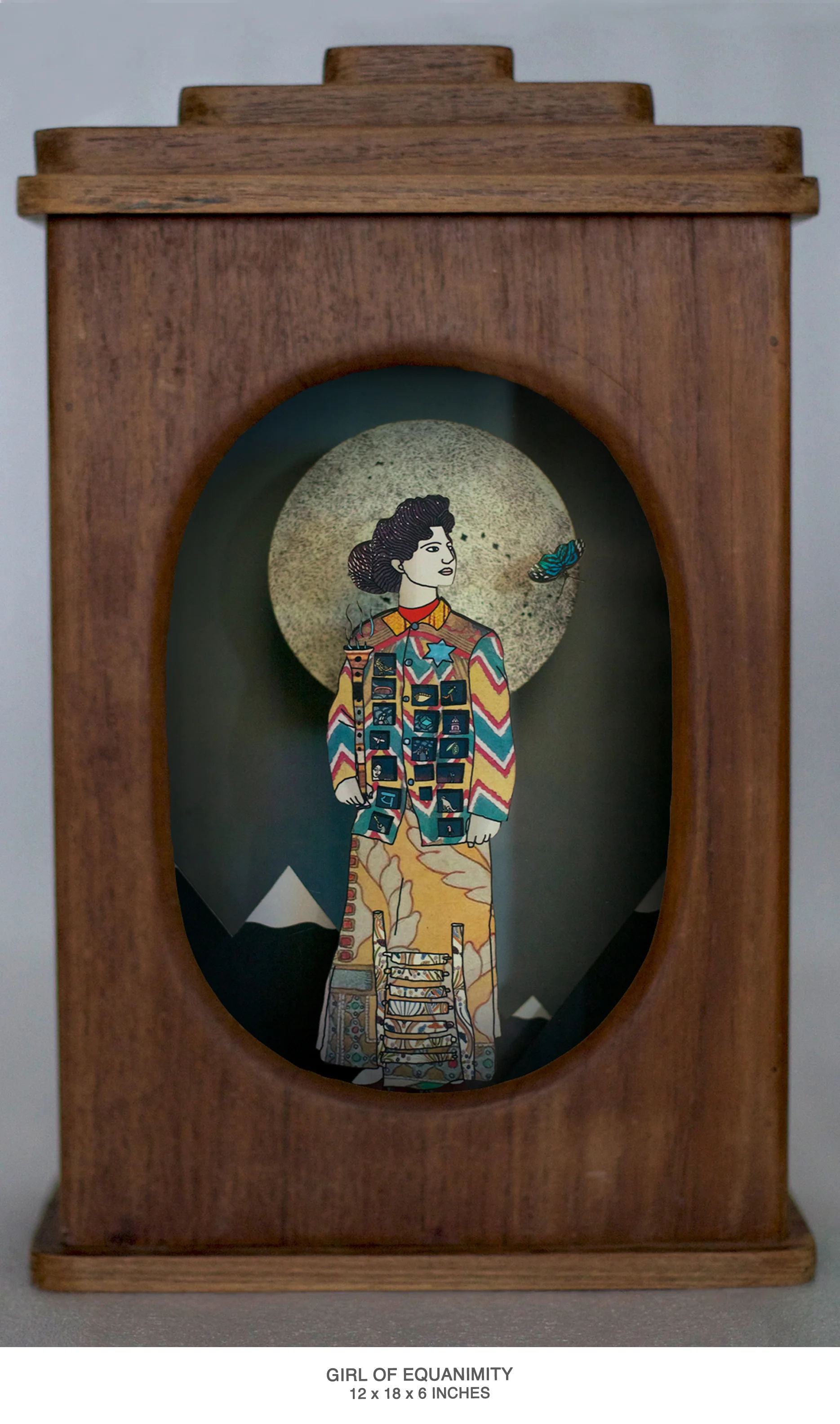
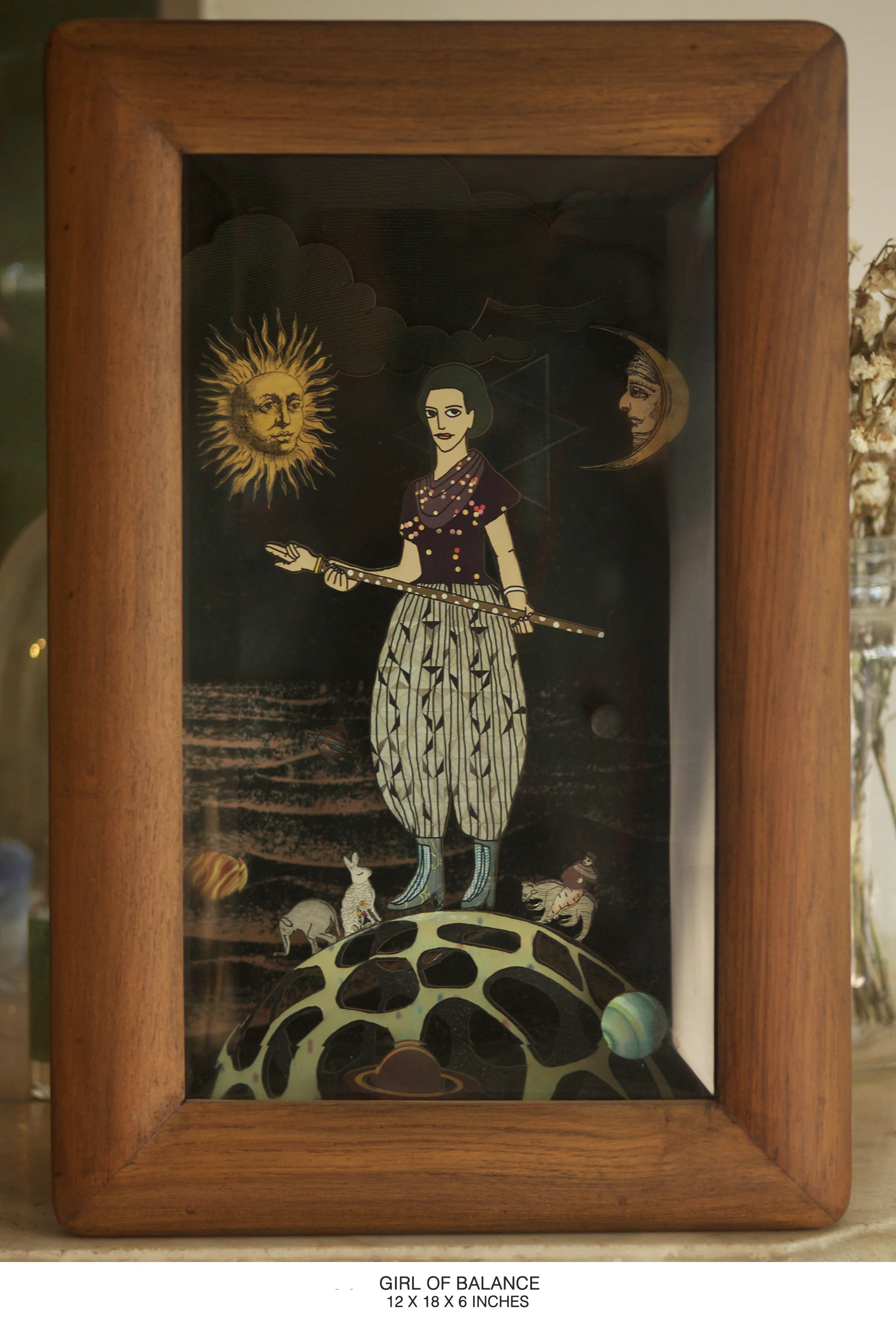
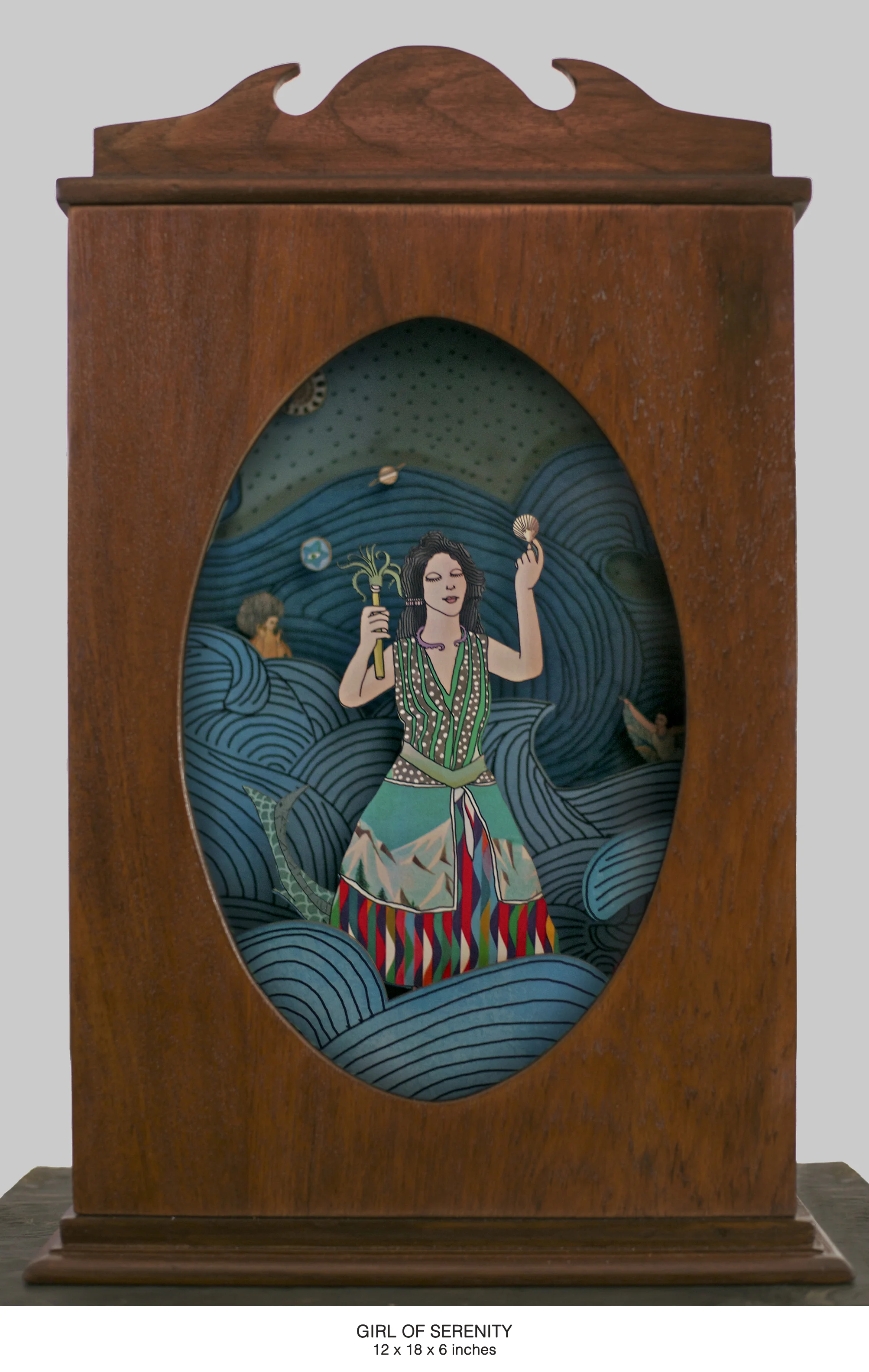
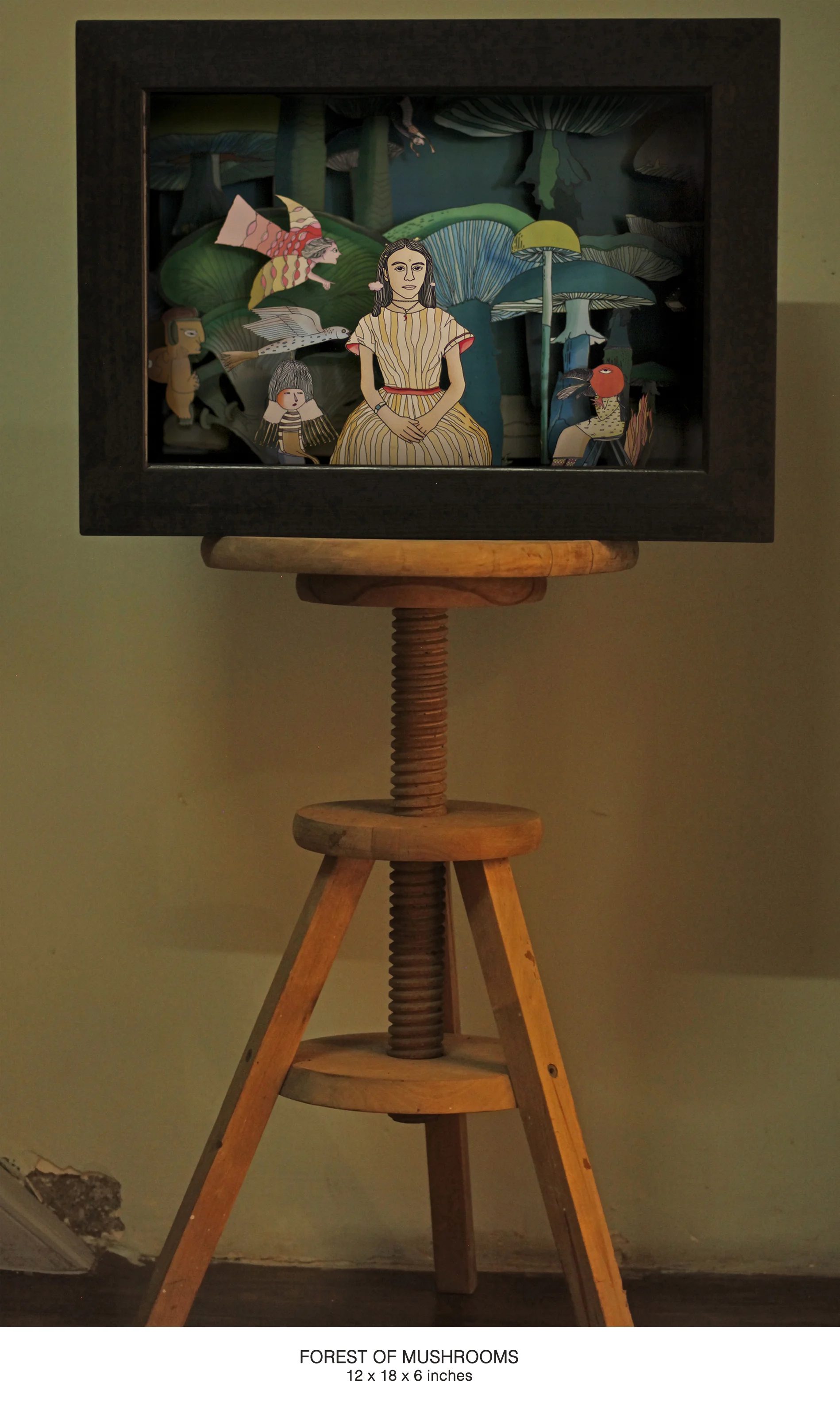
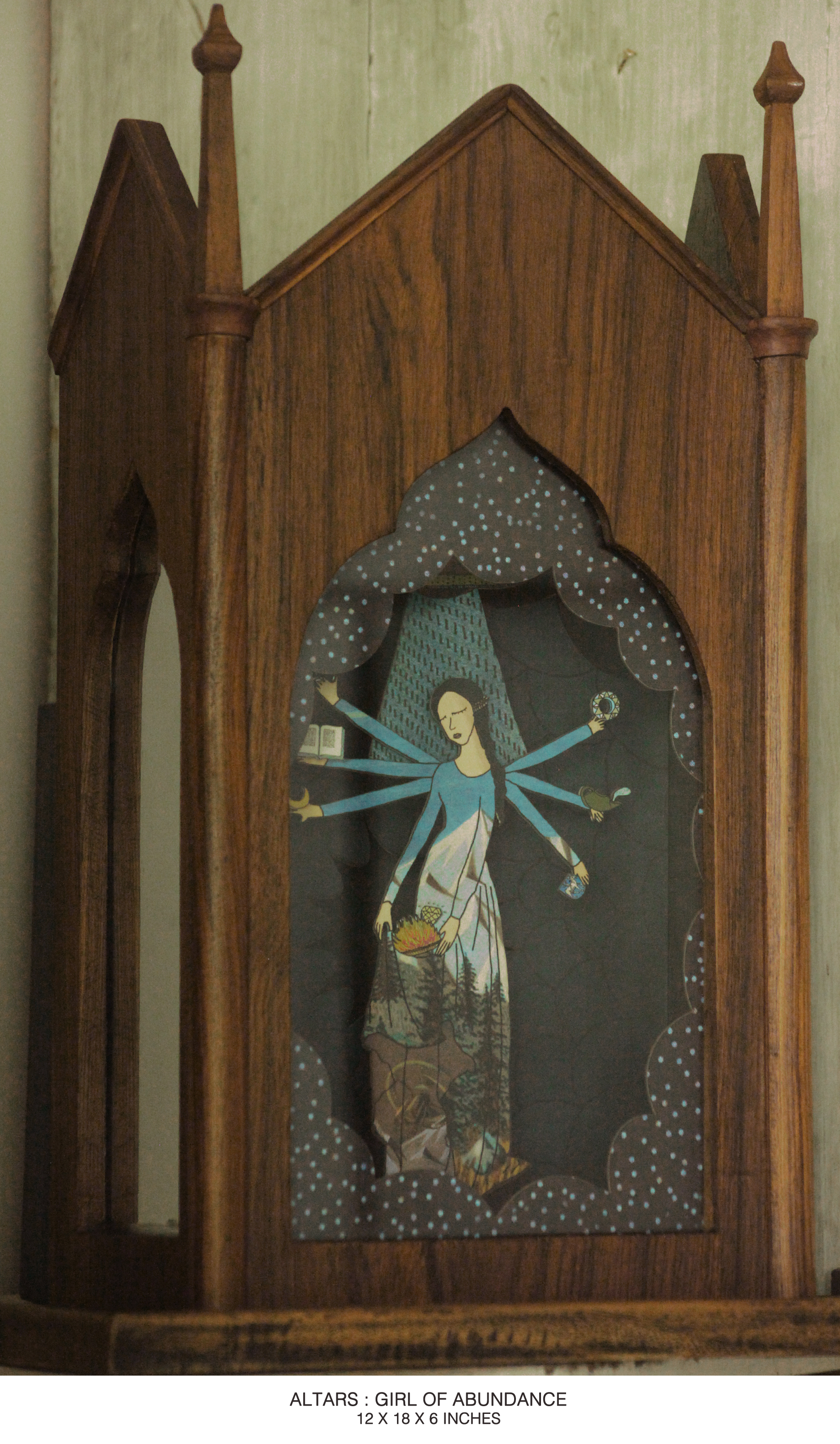
A Shadow box is a miniature environment — a constructed world at reduced scale with its own horizon, atmosphere, light source and inhabitants. The tradition goes back to Louis Daguerre in the early nineteenth century, who built theatrical dioramas as public spectacles before he invented photography — large translucent painted scenes lit from behind that appeared to shift between day and night as the lighting changed. The word itself means "through what is seen" in Greek. The construction is closer to a stage set than to a painting.
LENTICULARS
The lenticular medium requires digital preparation. These drawings are then interlaced: sliced into precise vertical strips and interleaved in a sequence that maps exactly to the pitch of the lens sheet bonded over them. Each cylindrical lens in that sheet bends light differently depending on where you stand, directing your eye to a different strip of the image. Your brain assembles what it receives into a complete picture — and as you move, the picture changes.
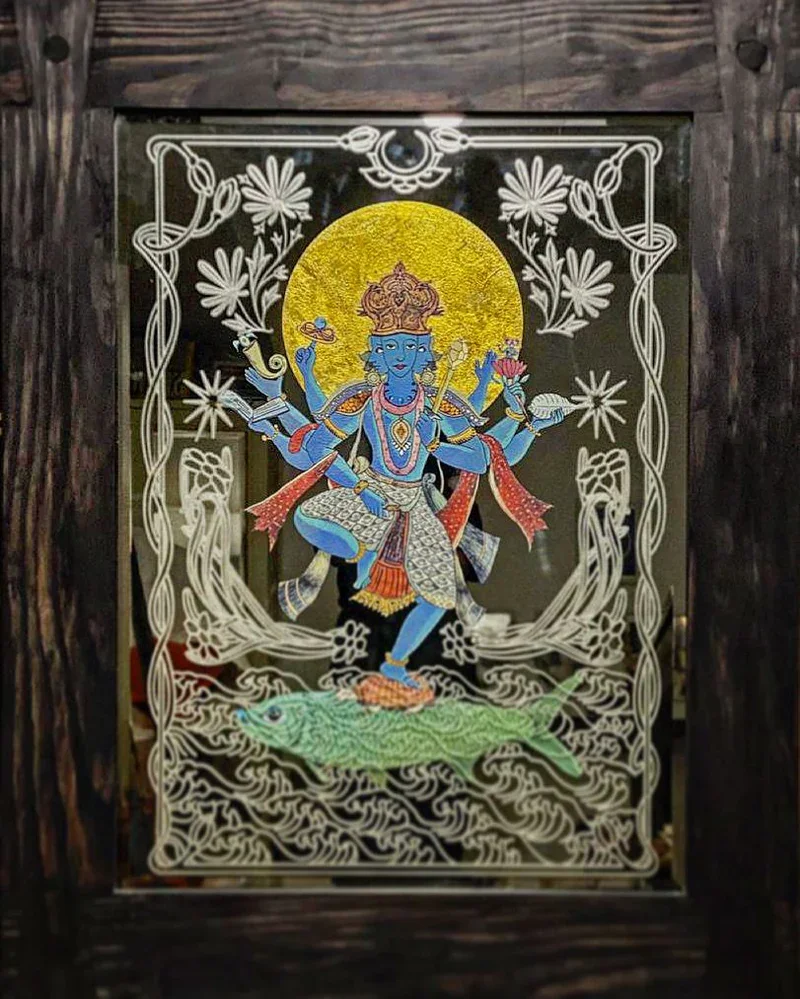
SILVERED, ETCHED & ENGRAVED MIRRORS
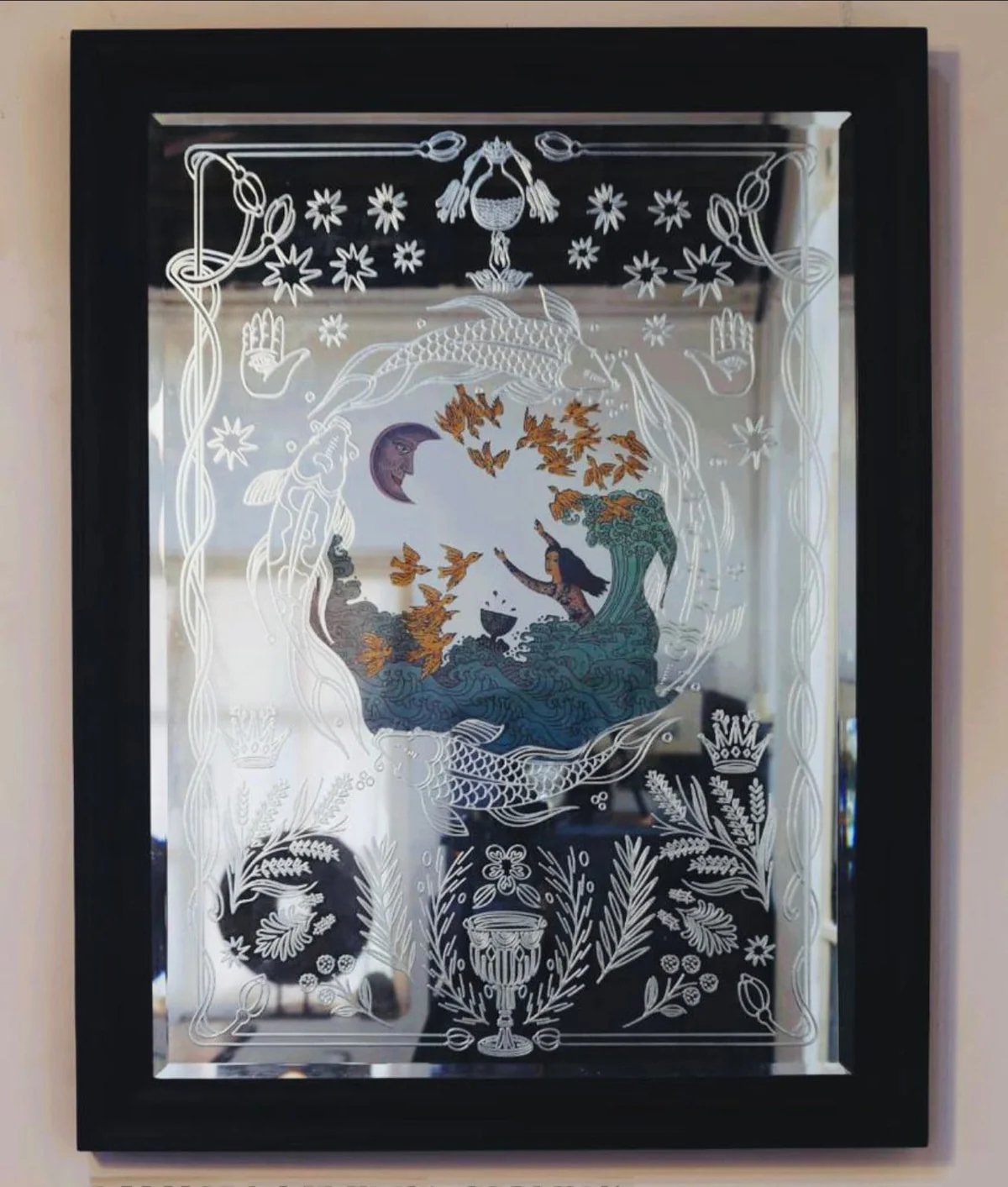
A mirror is one of the oldest technologies of self-encounter — older than the camera, older even than writing. To look into one is to perform an act that cultures across the world have treated as sacred, or dangerous, or both. Perseus could only meet Medusa through her reflection. Narcissus drowned in his. The sun goddess Amaterasu was coaxed out of her cave by the sight of her own face in a polished disc. In the Upanishads, the mind itself is a mirror: clean it, and what is true appears.
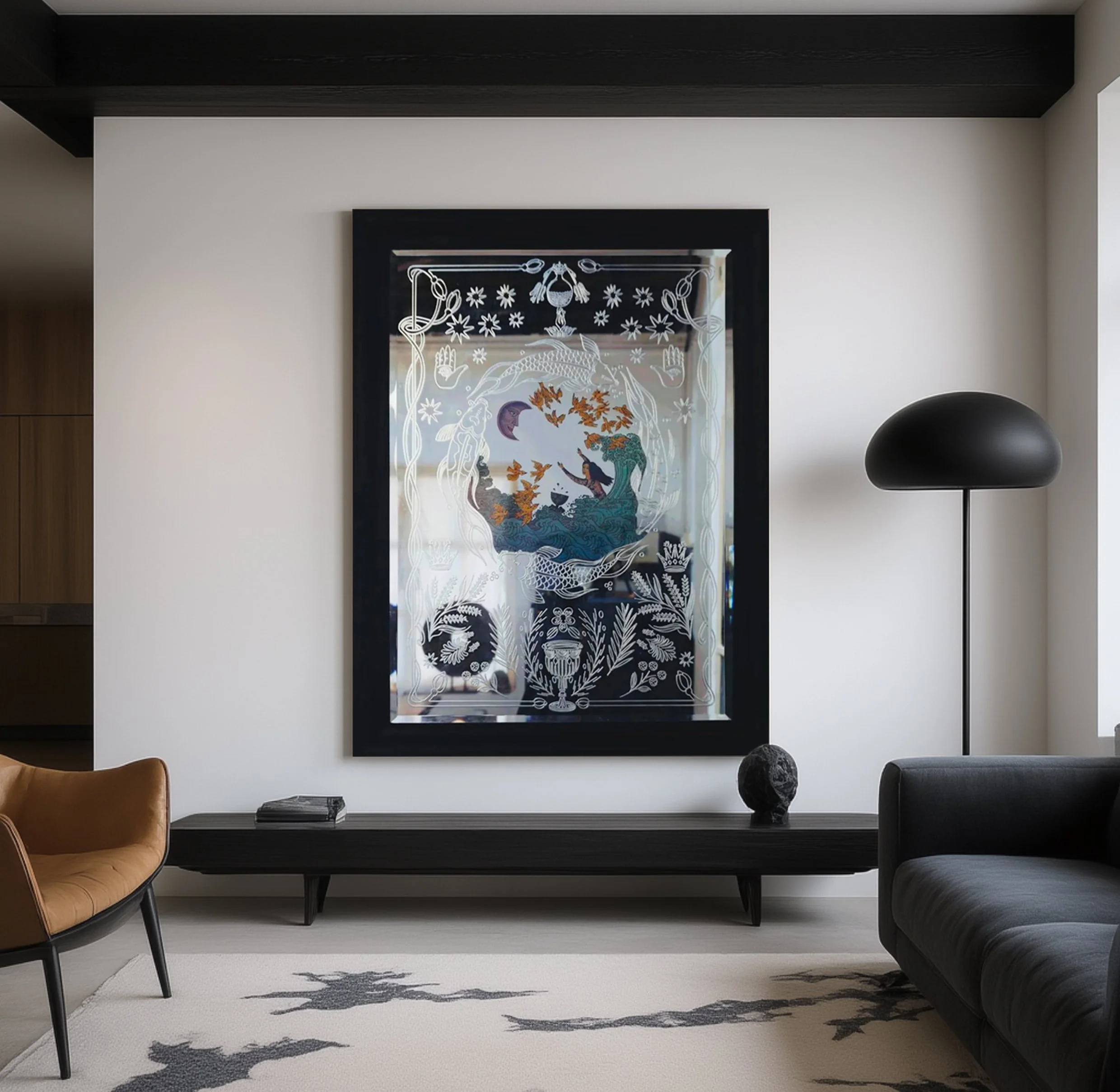
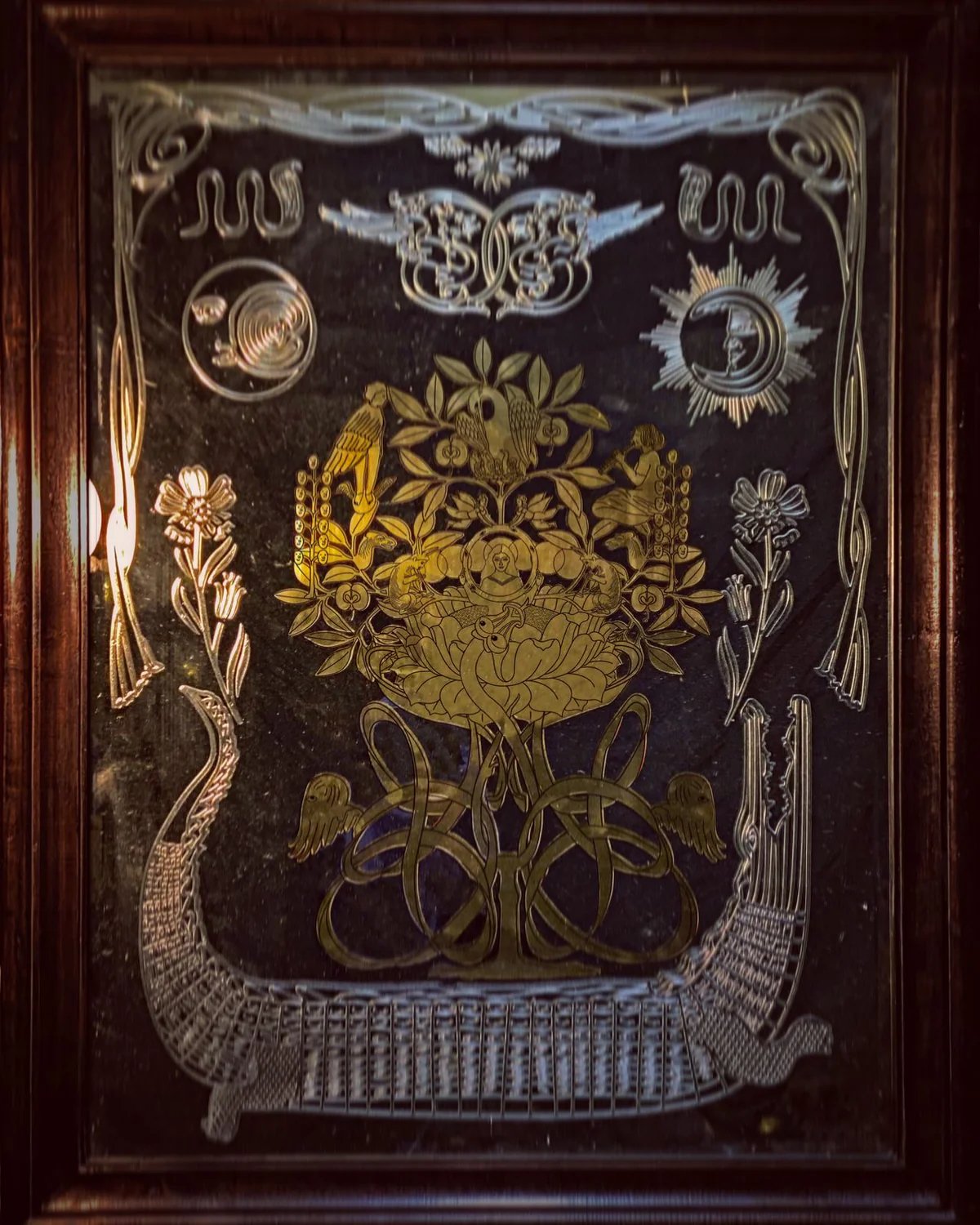
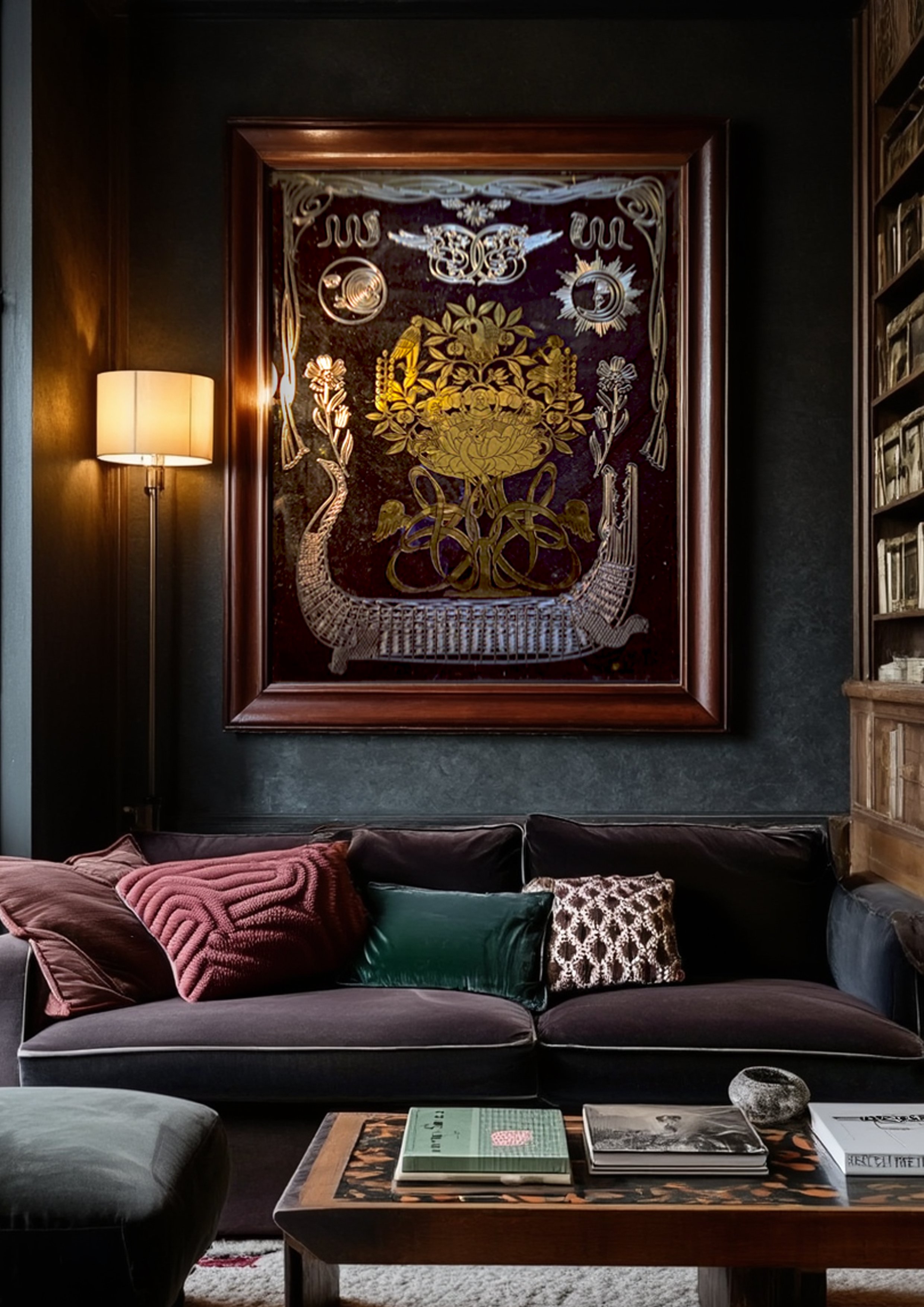
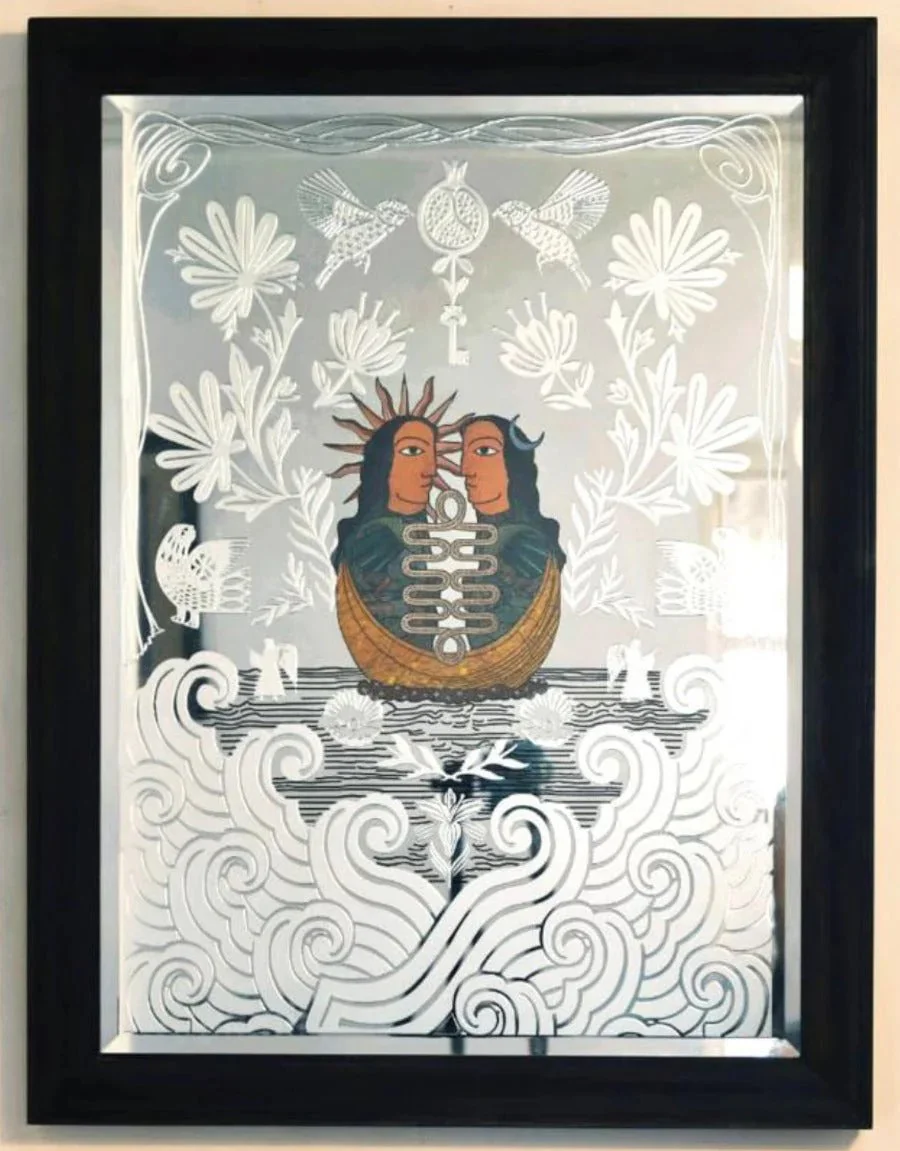
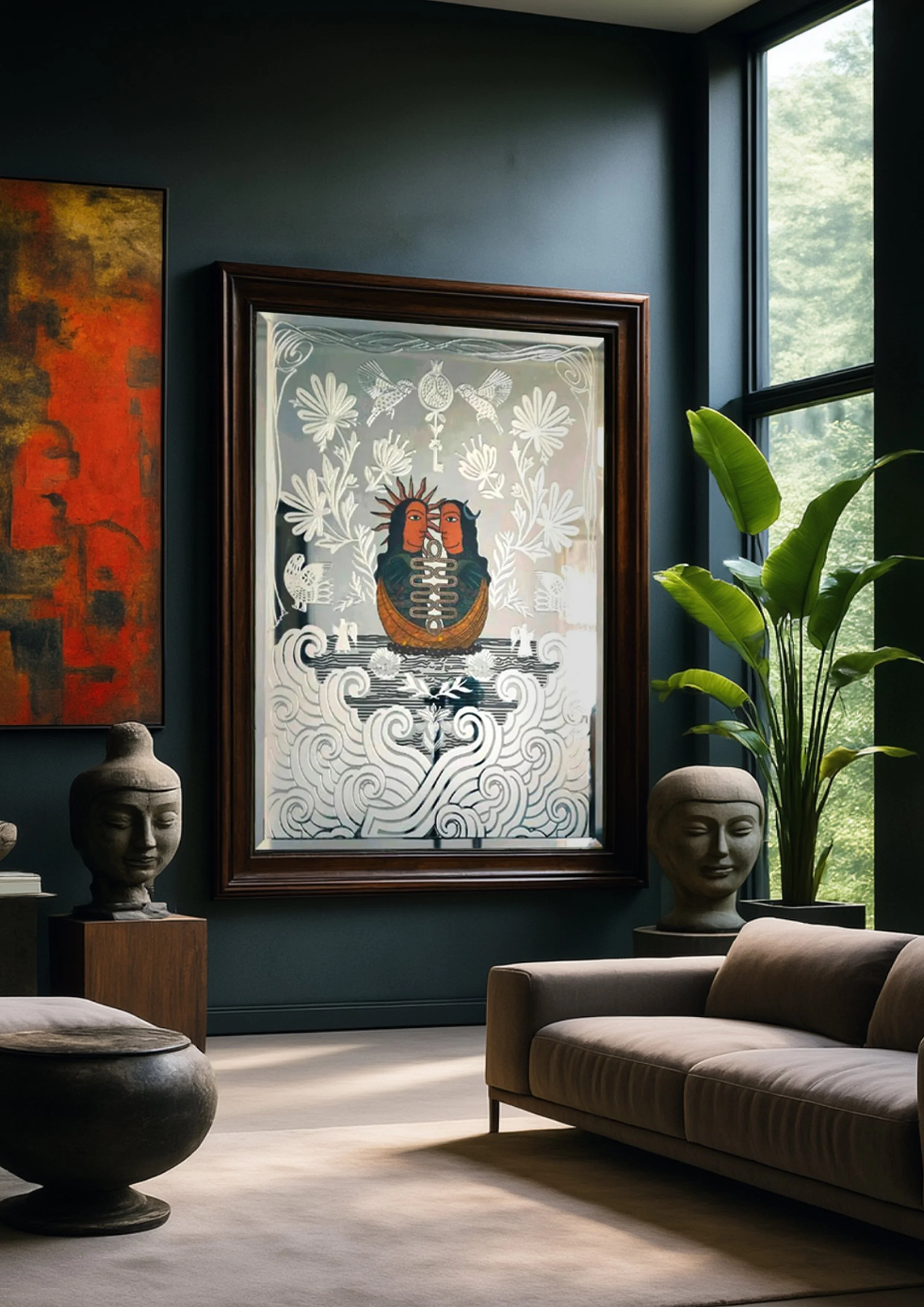
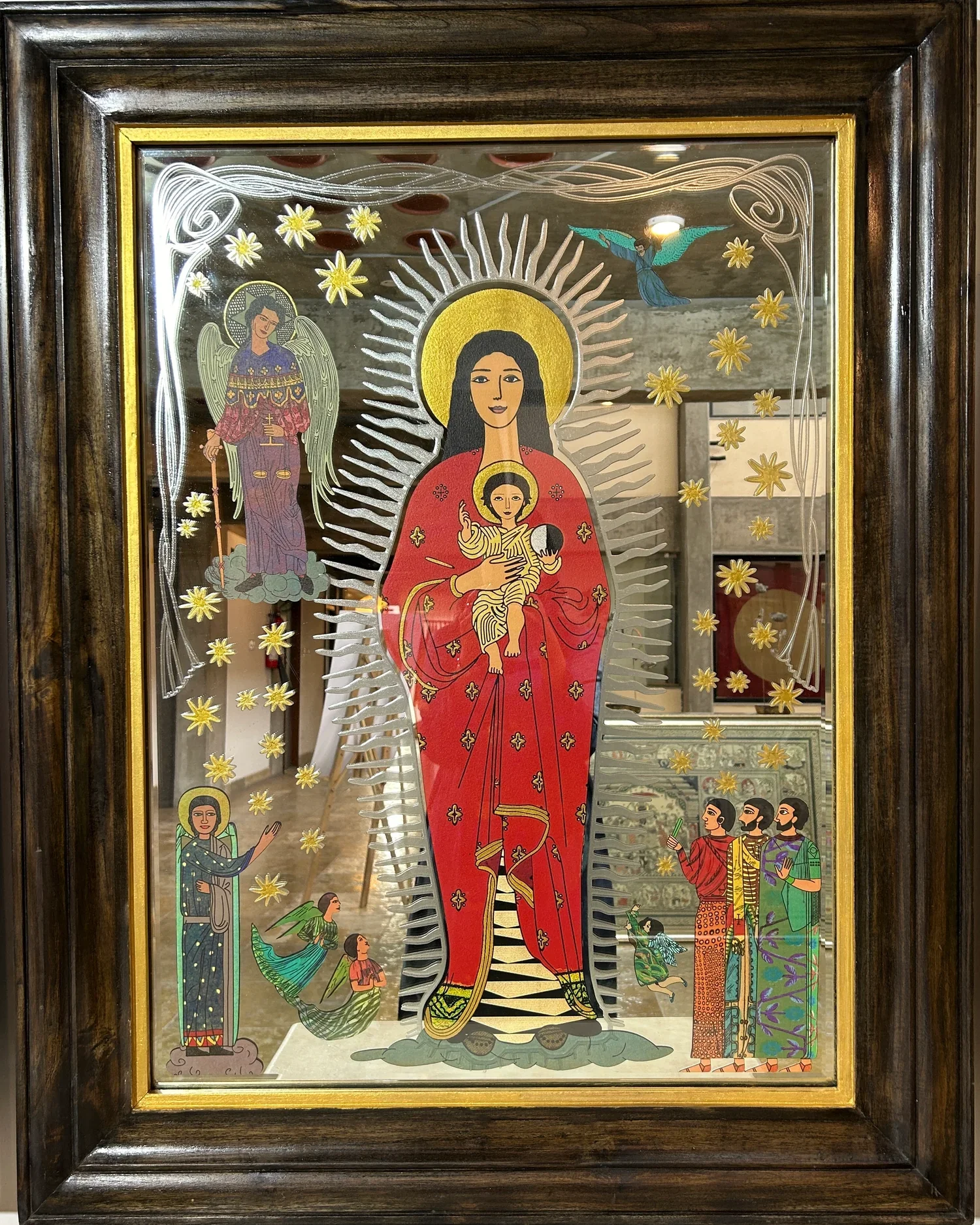
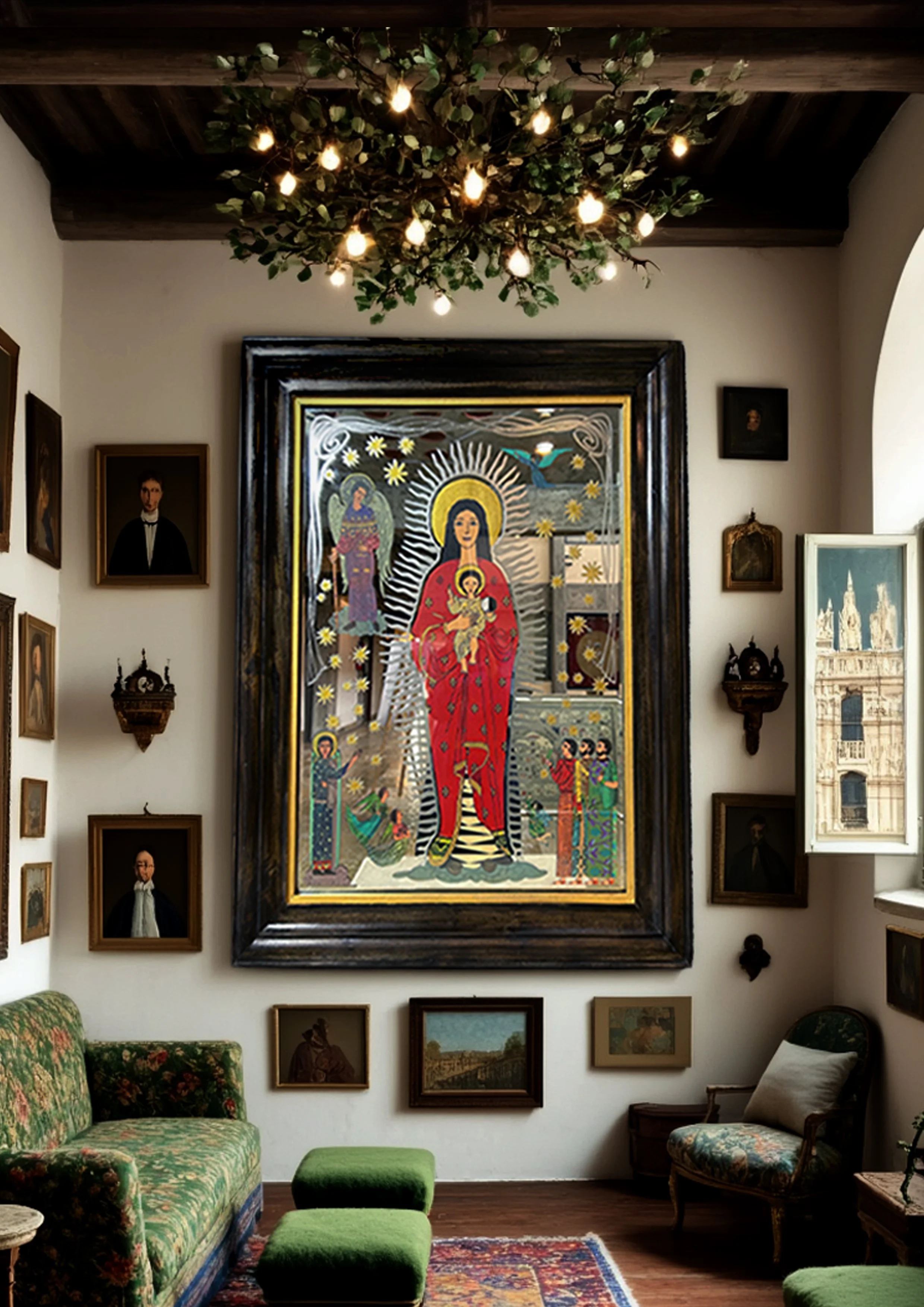
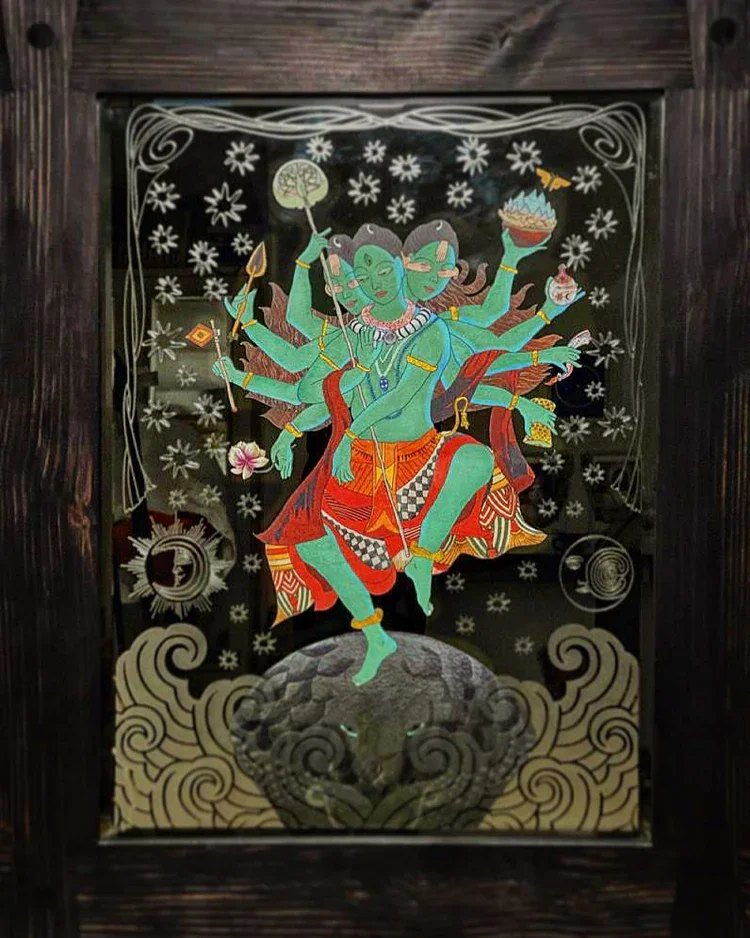
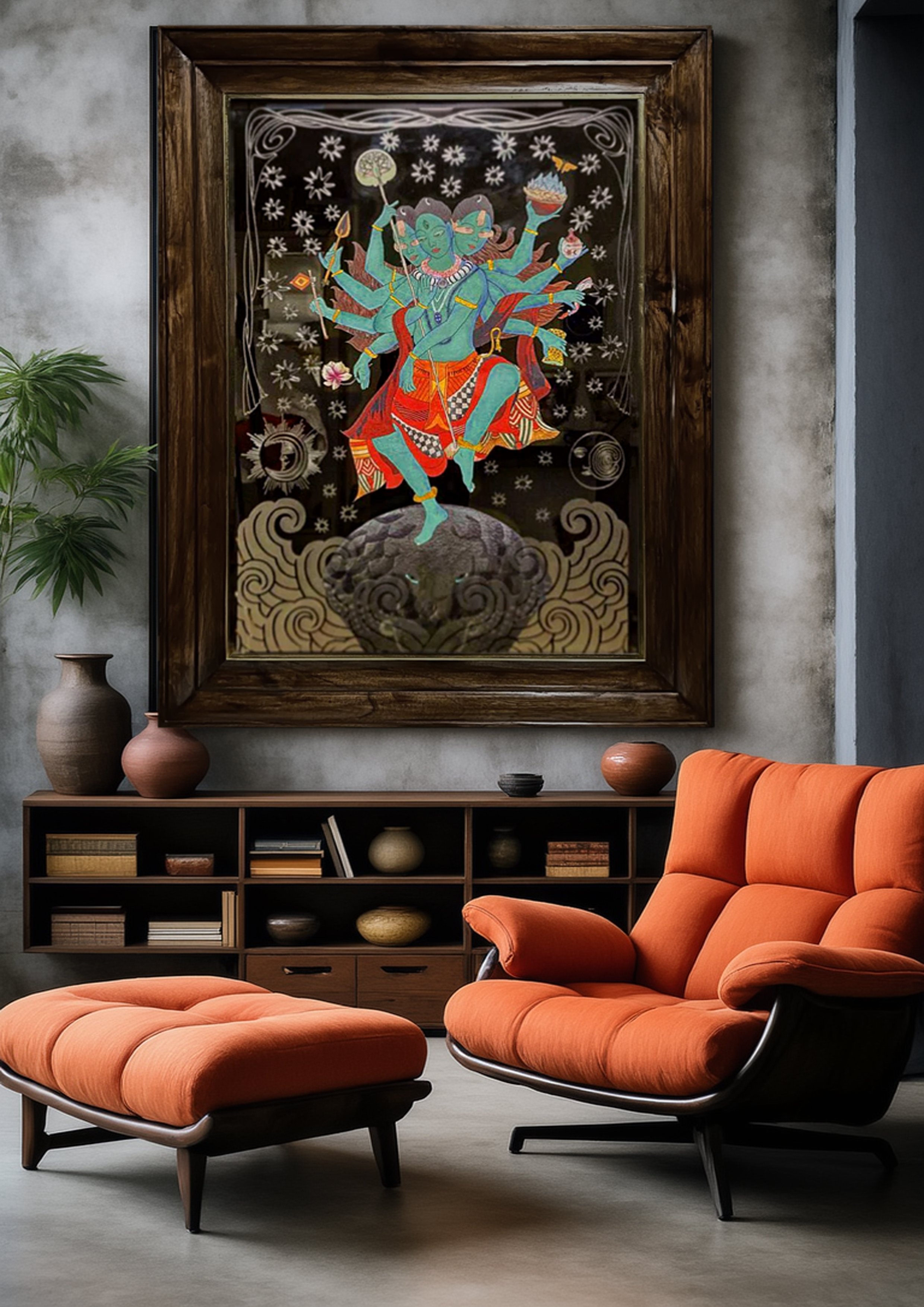
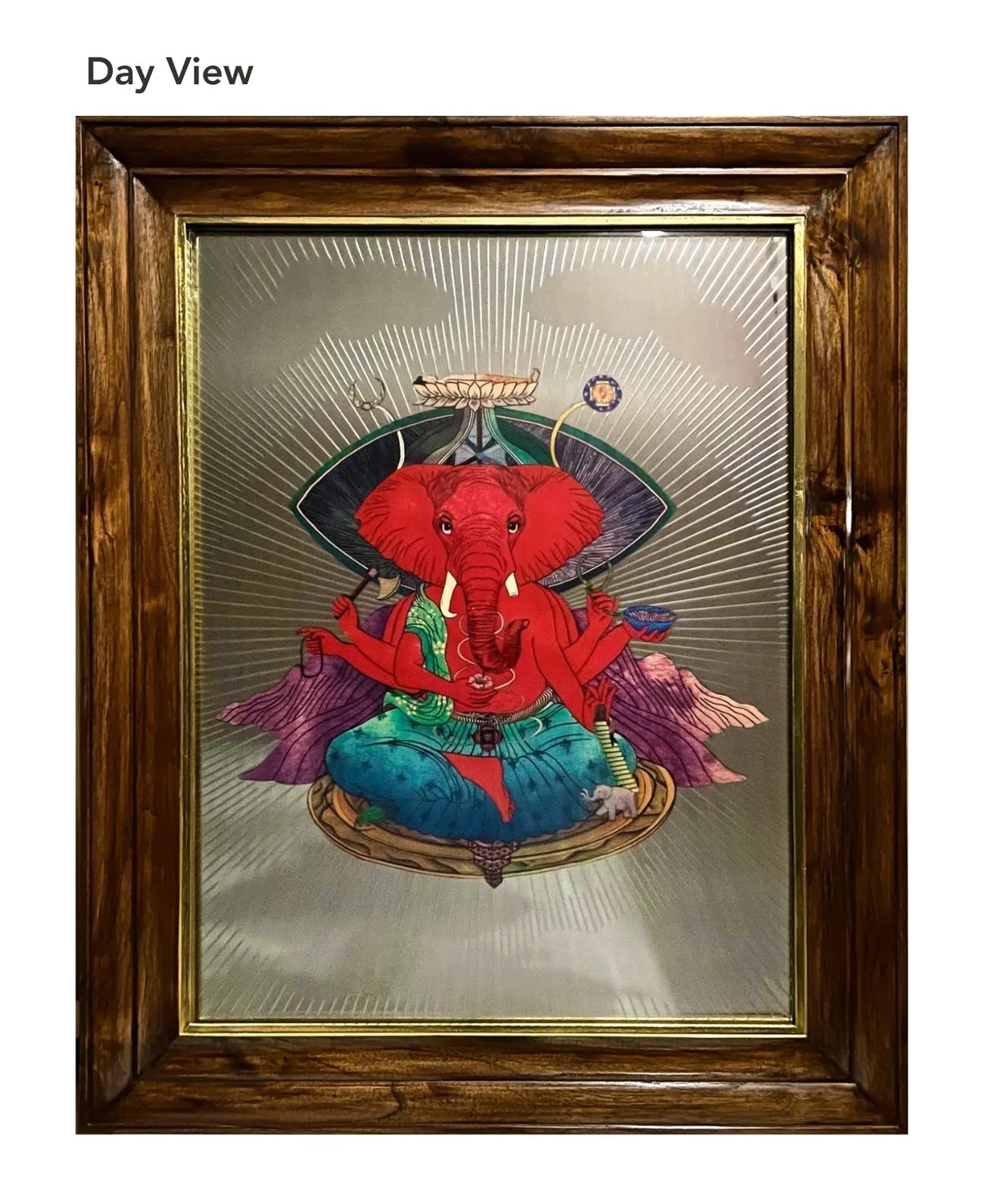
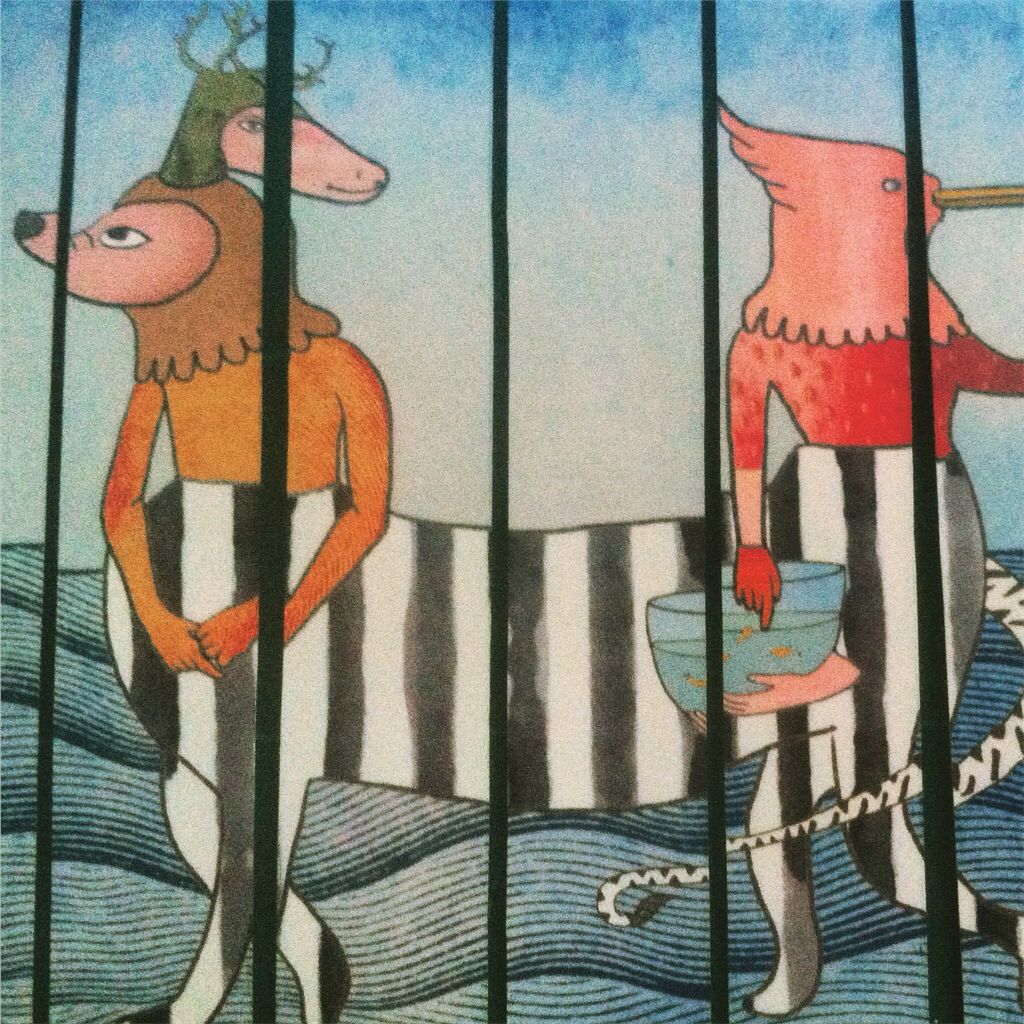
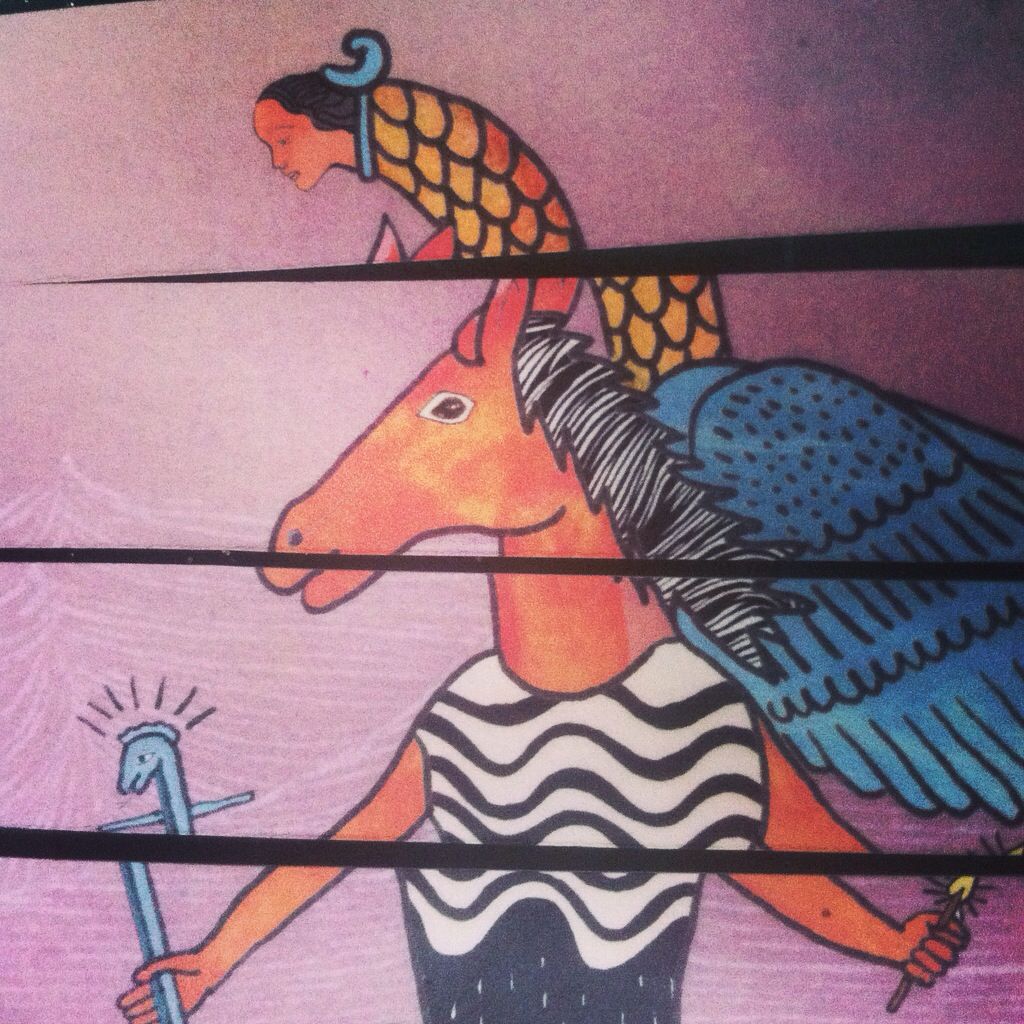
Each piece is a layered surface — drawing, print and engraving worked into silvered glass — where image and reflection share the same plane. A figure rises from a wave to meet a moon with a face. Two beings, sun and moon, ride a single boat across a sea of serpents, a pomegranate holds a key. A tree grows out of a vessel held aloft by a crocodile, watched over by snakes, stars, and small winged things. Around these symbols, the room you are standing in floats faintly through. These mirrors do something to a room that no painting can do. They double the space. They let light travel further than it should, and lets the wall behind you become part of the wall in front of you. They open a window where there was none.
OPTICAL TOYS & PUPPETS
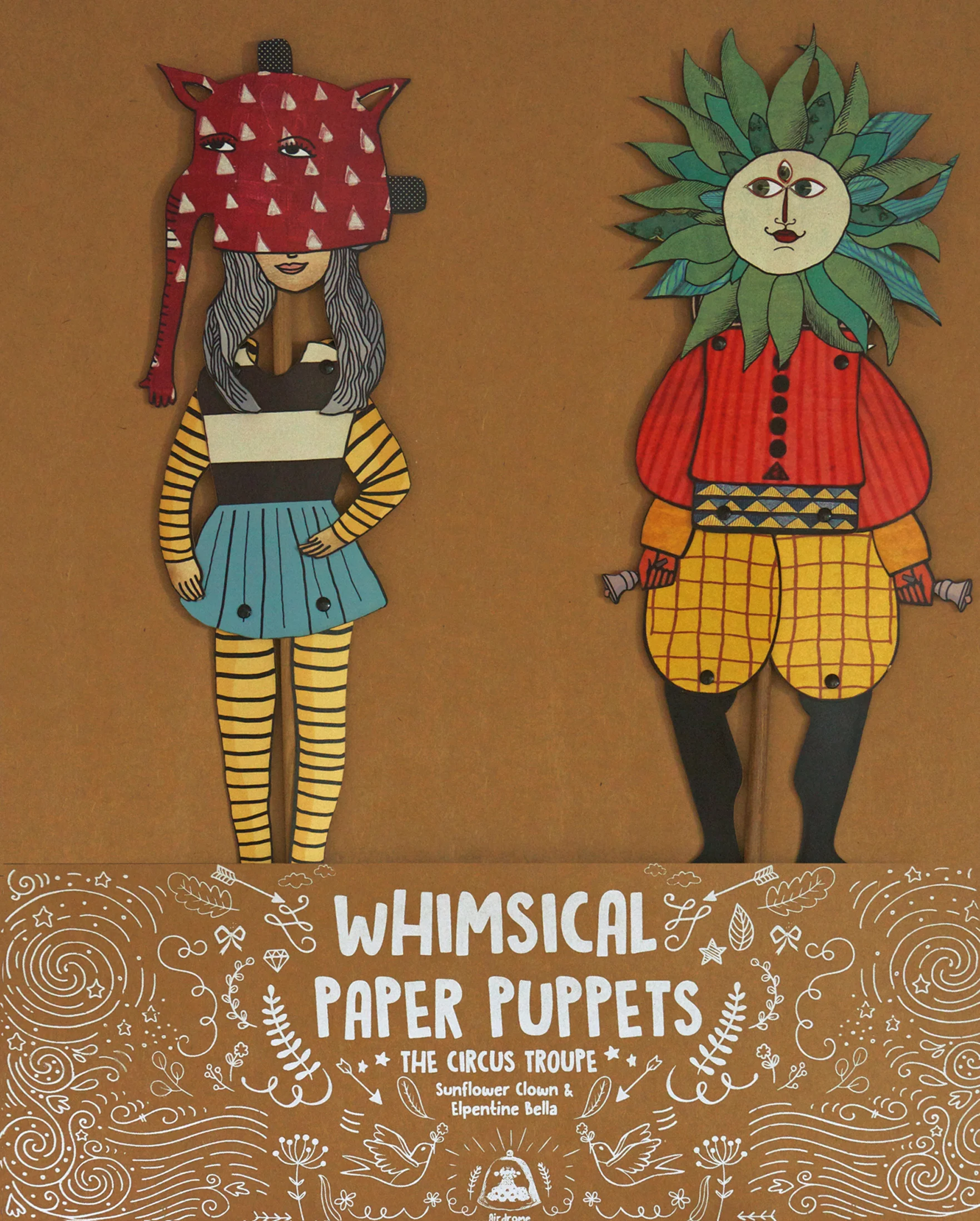
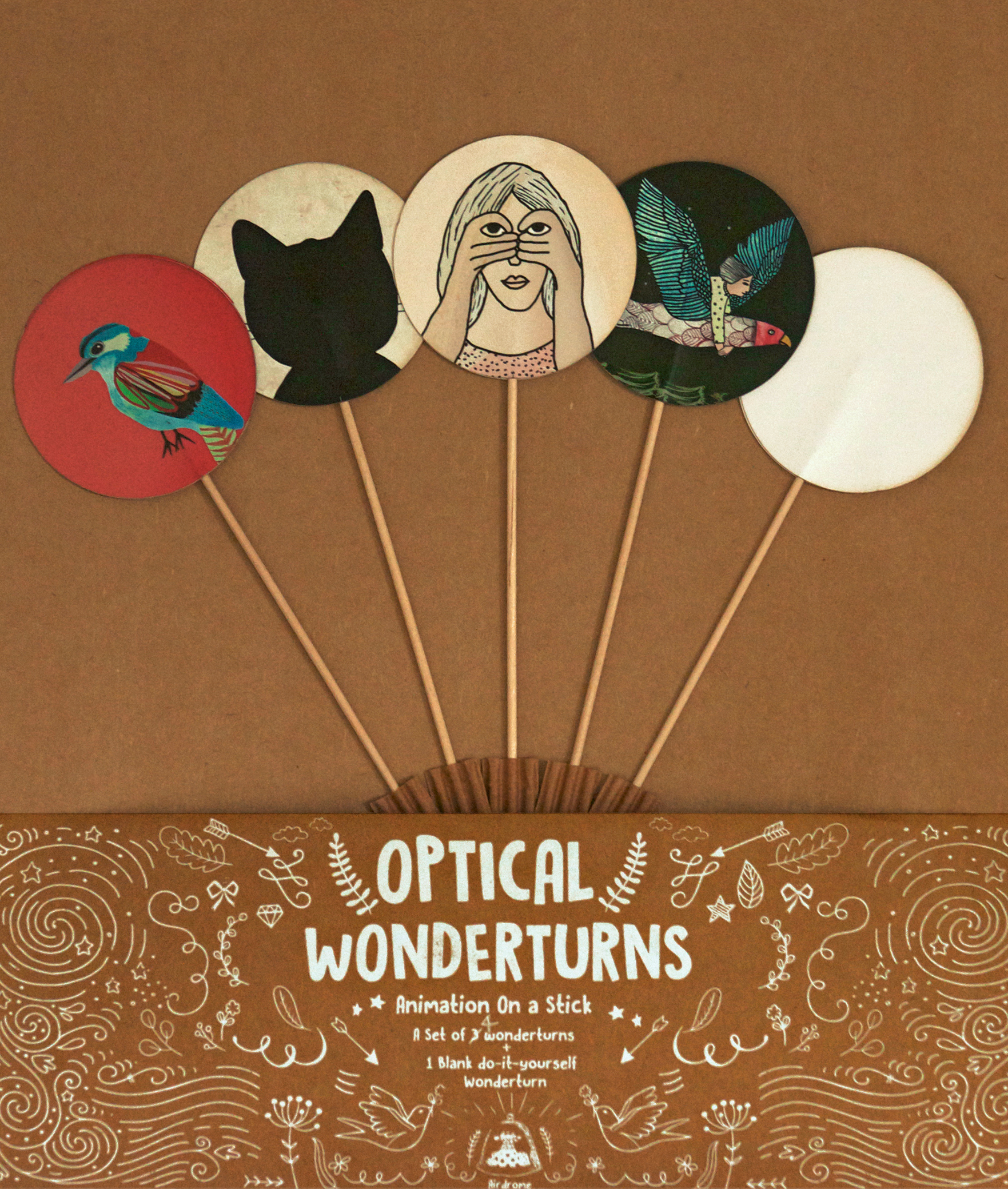
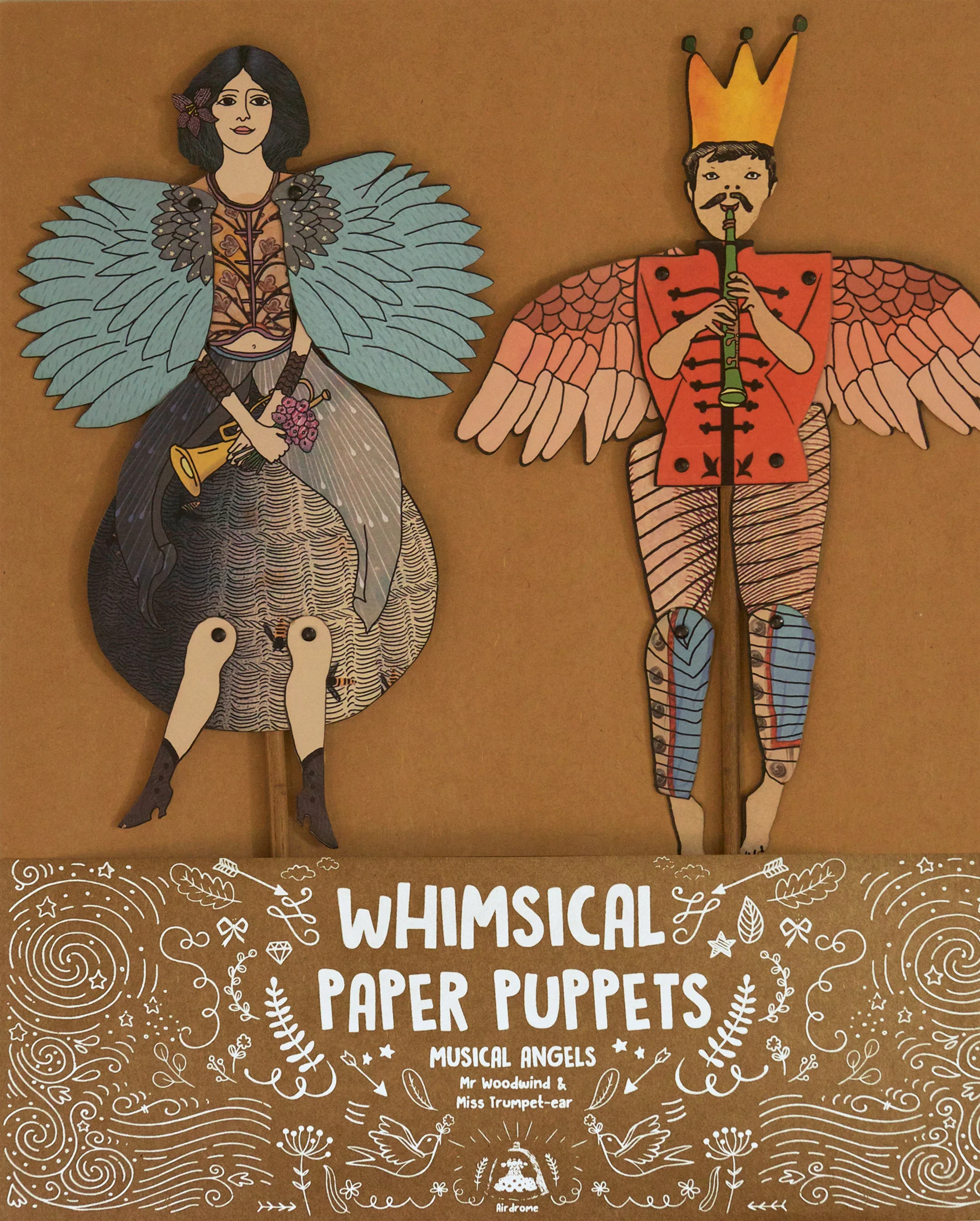
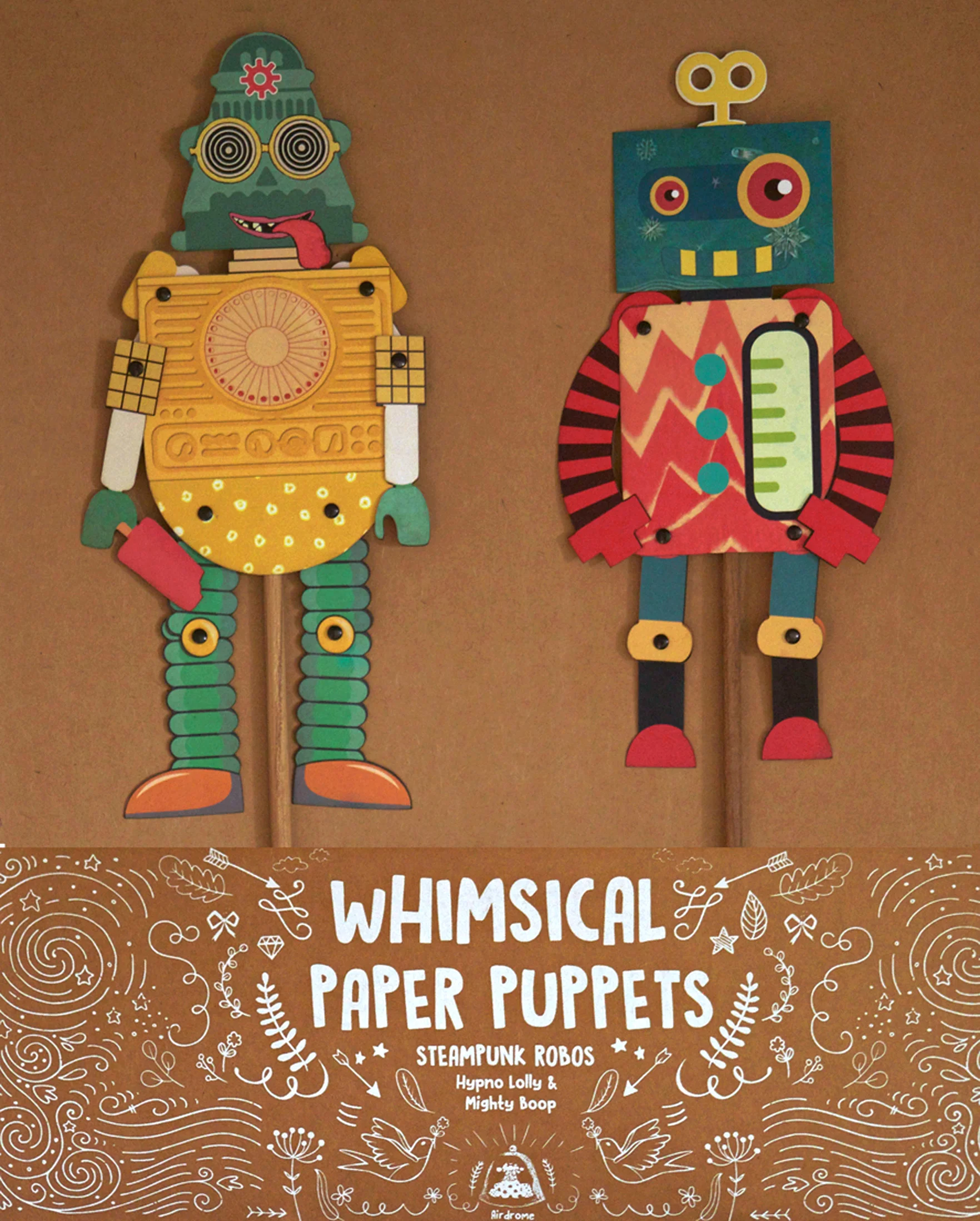
Her optical toys are inspired from the tradition where thaumatropes, phenakistoscopes, zoetropes, praxinoscopes emerged in the nineteenth century from a single obsession: the persistence of vision. The eye, it was discovered, holds an image for a fraction of a second after it disappears. If images are shown in rapid enough succession, the eye stitches them into continuous movement. The Victorian optical toy was the first moving image technology — predating cinema by decades — and it worked entirely by hand: you spun it, you flipped it, you turned it. The body was part of the mechanism. Her jointed puppets are inspired from articulated figures whose movement is produced by the hand that holds them. The Indonesian Wayang, Leather Puppets from southern india, Sicilian marionettes — across cultures the jointed figure has always been the portable theatre, the story that travels. The joints are the grammar of the figure: where it bends determines what it can say.
ART PUZZLES
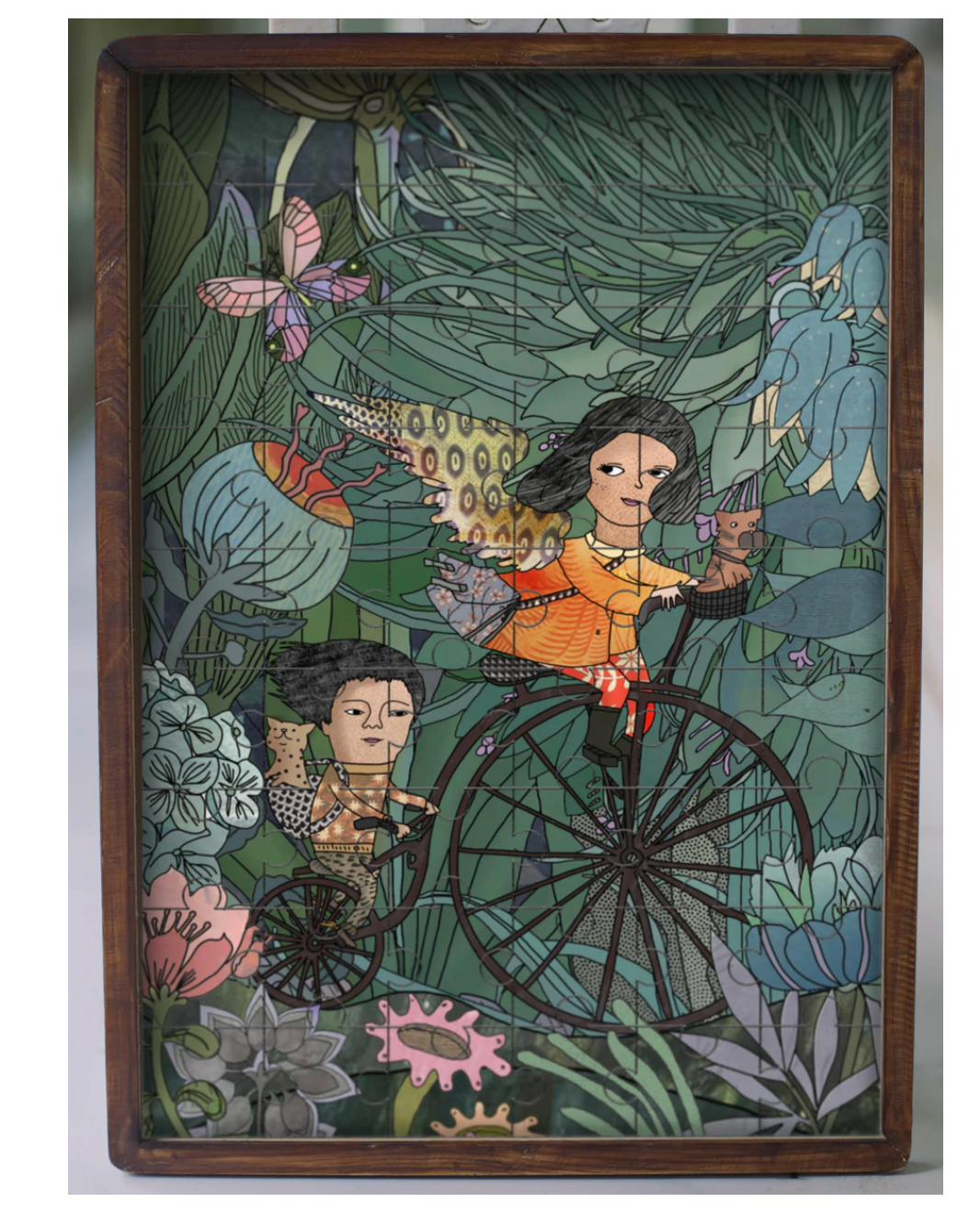
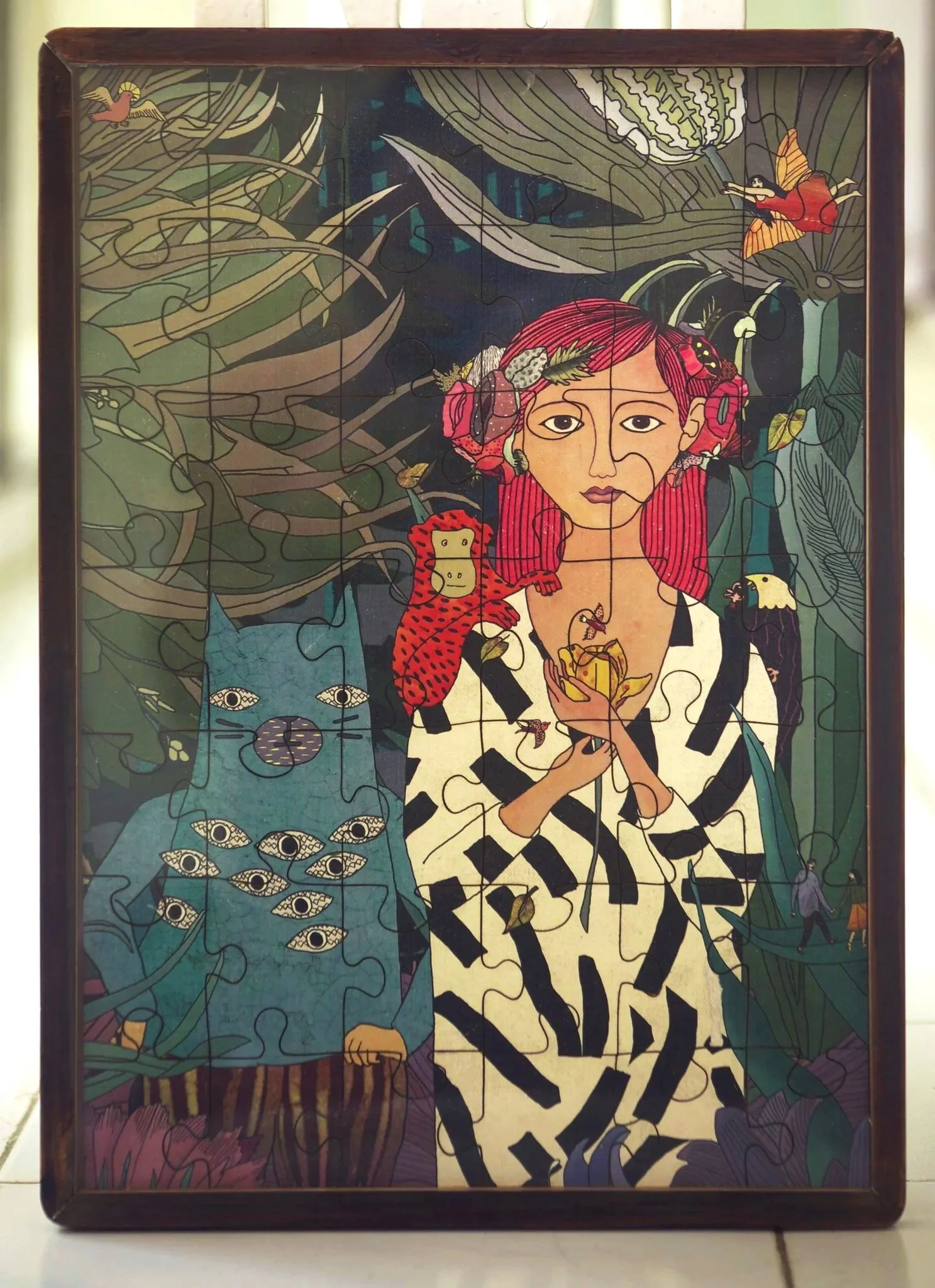
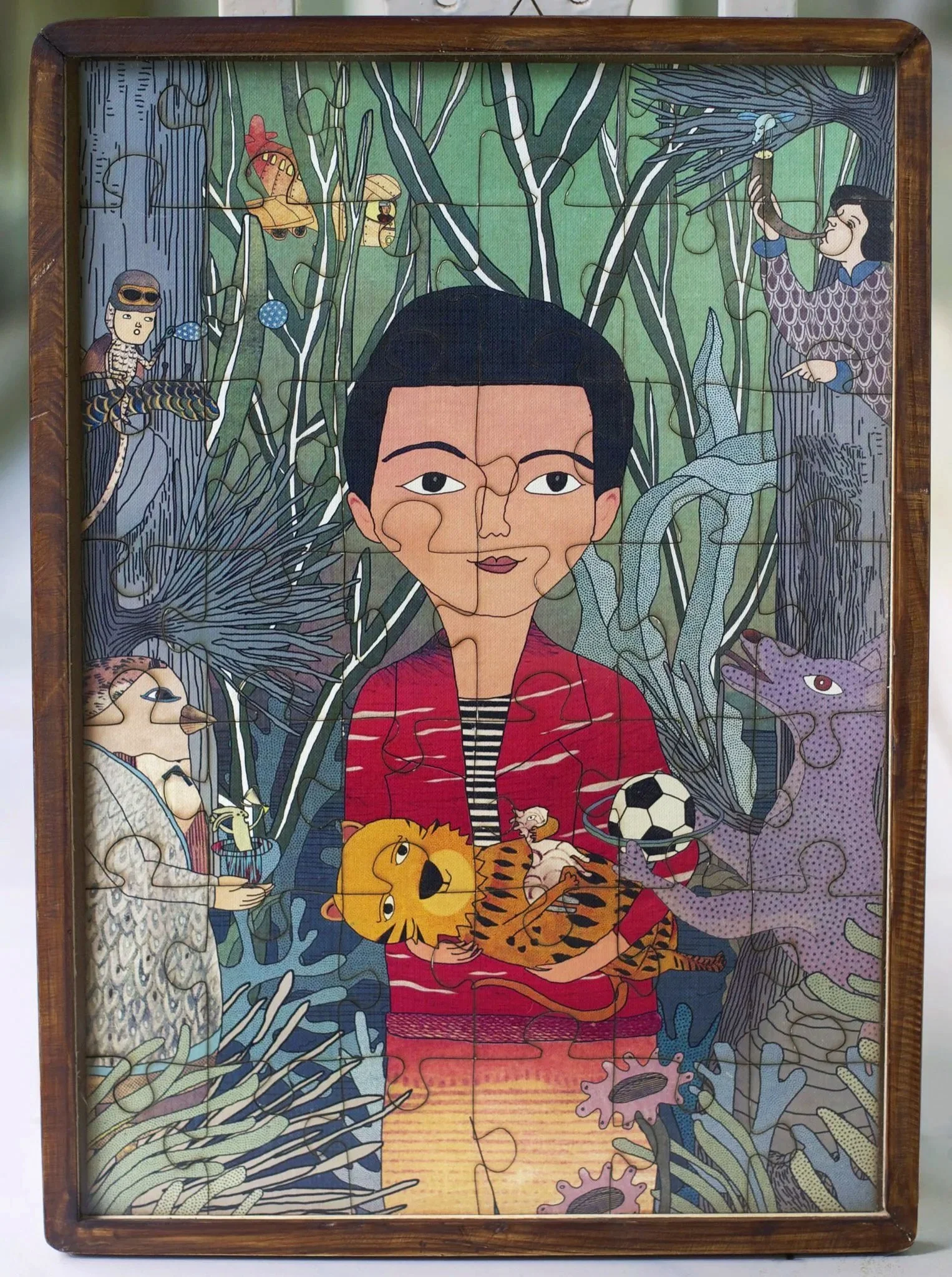
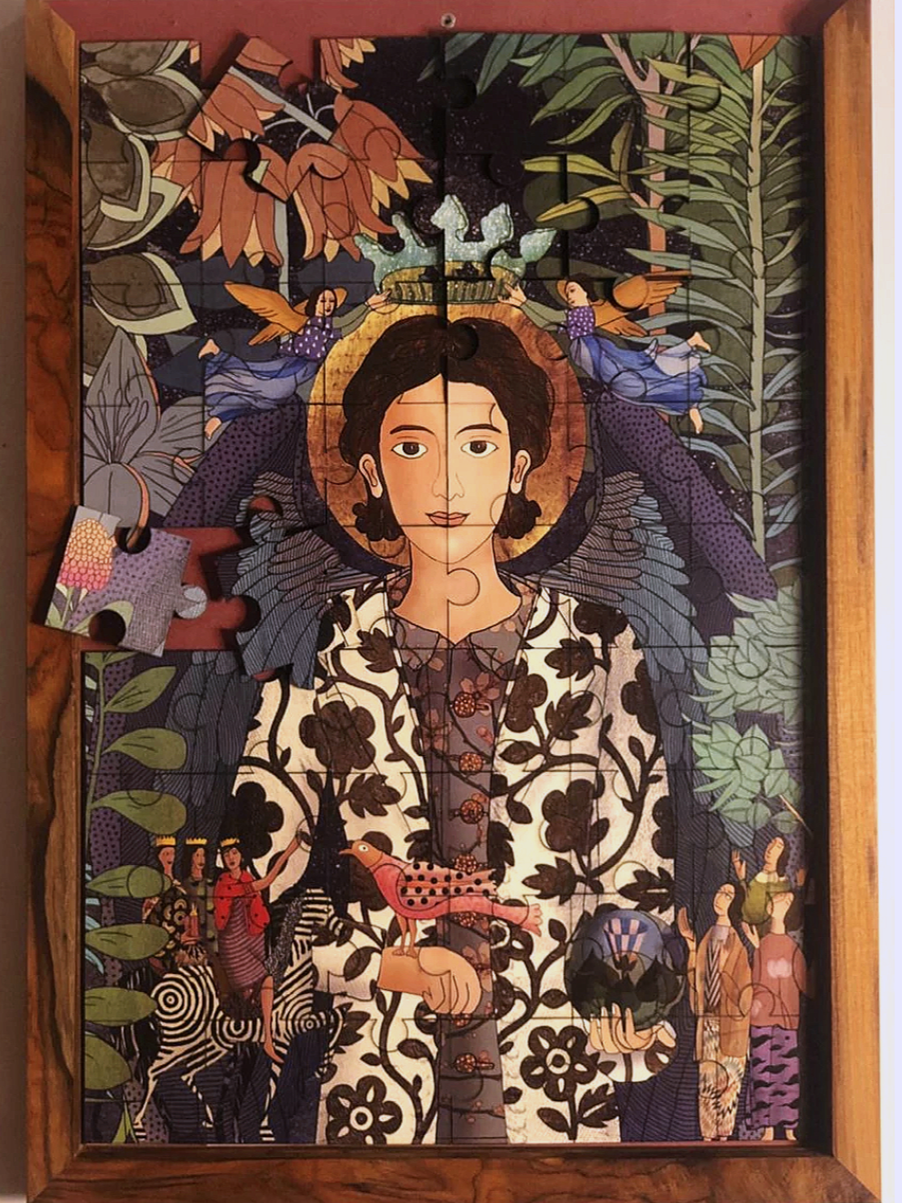
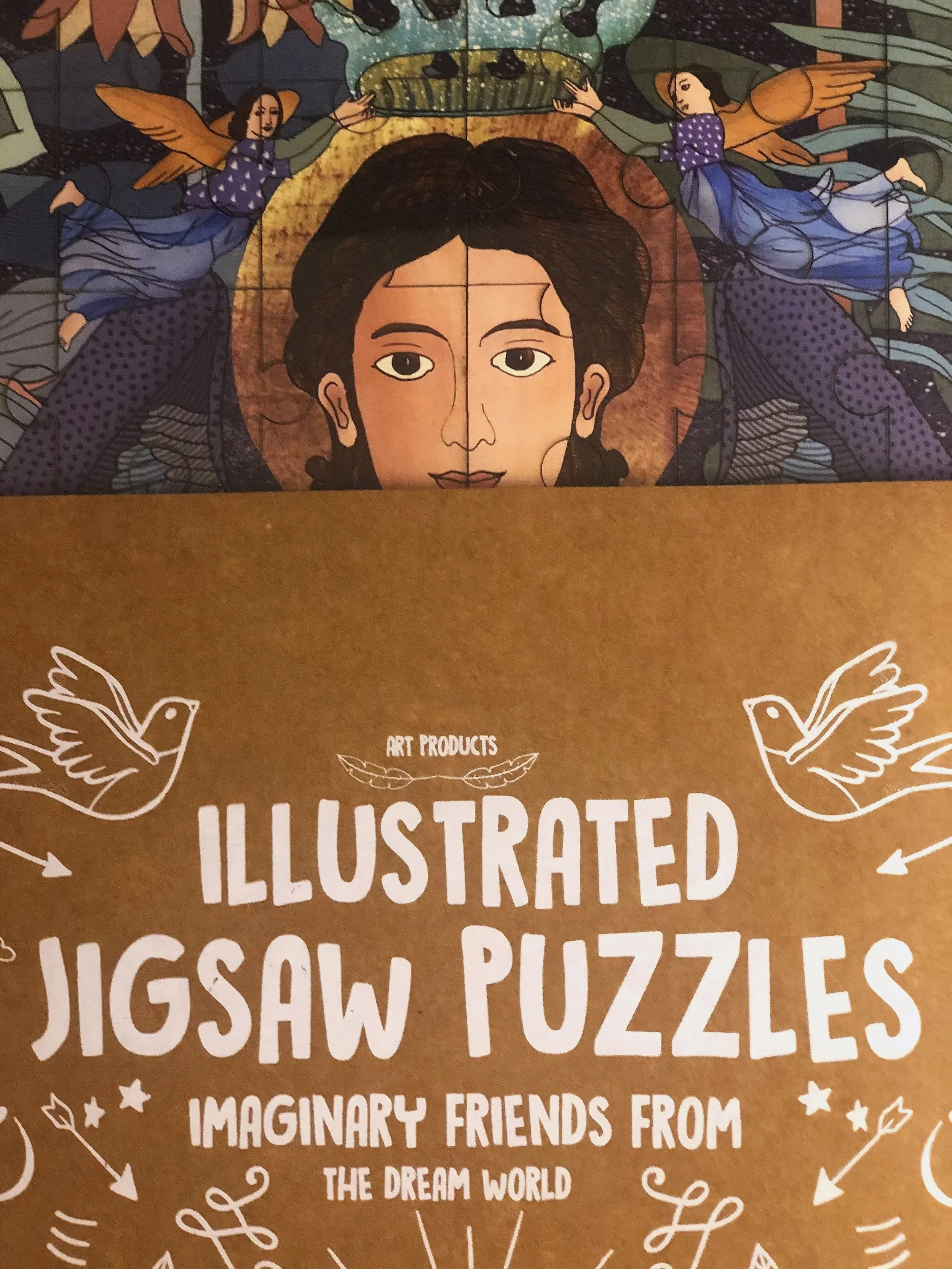
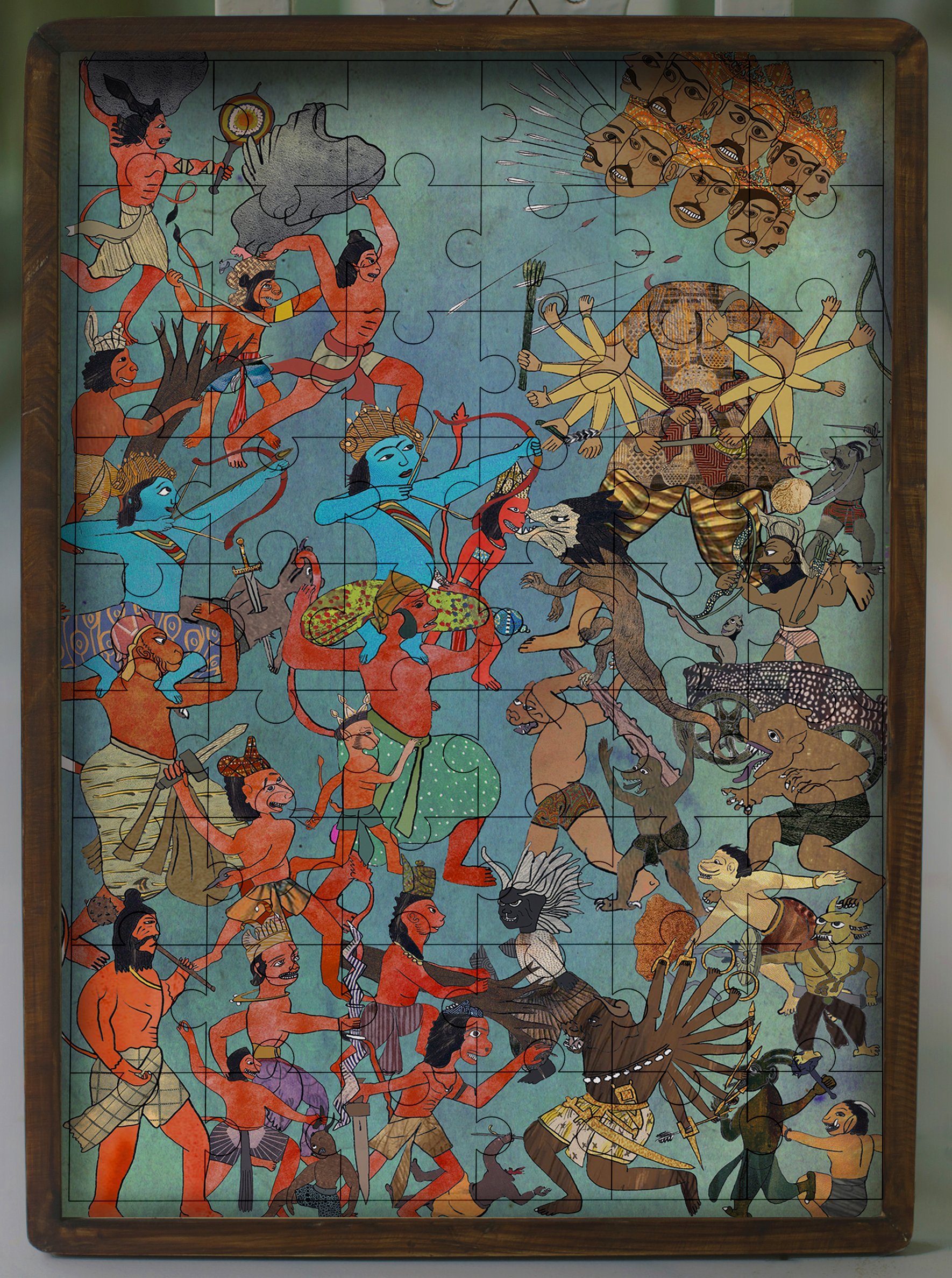
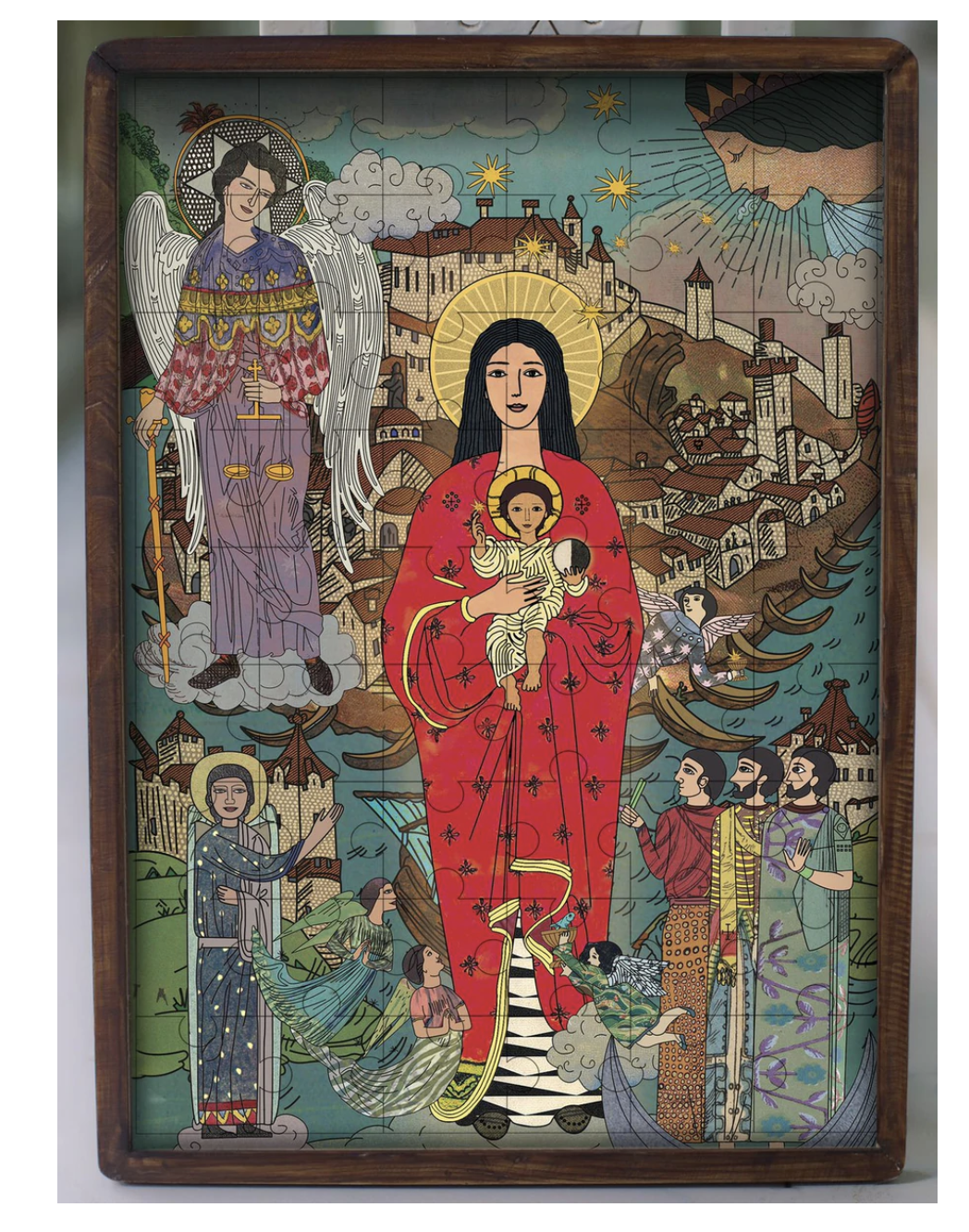
The 48 piece framed art puzzles are portraits of imaginary characters meant to open a door into the world of characters and landscapes that operate by their own logic, where the laws of the waking world do not quite apply. The teakwood frame arrives as a tray — a contained field in which , the image emerges piece by piece. When the last piece is placed, the tray becomes a framed artwork.