THREE TIMES AS DREAM
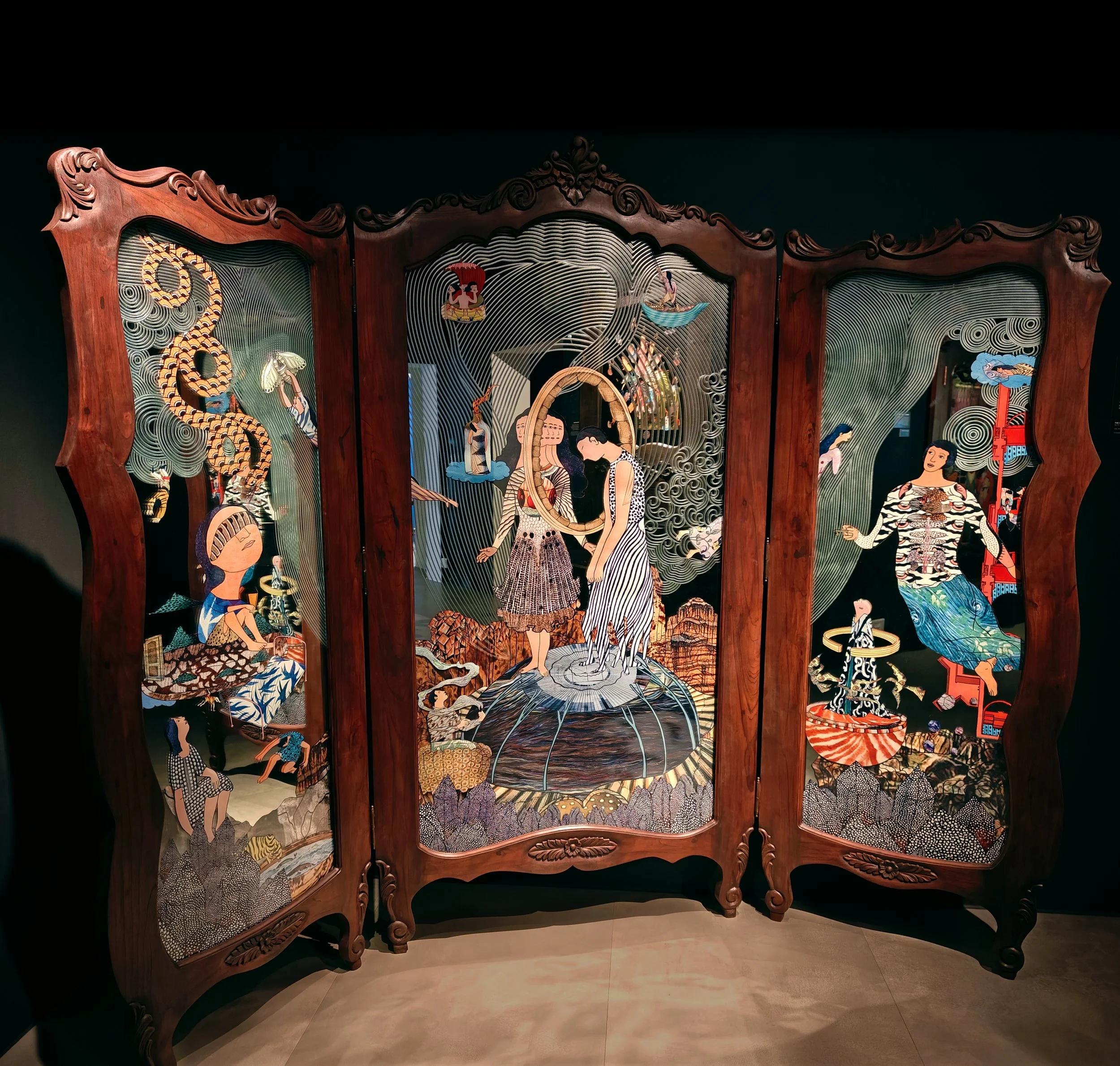
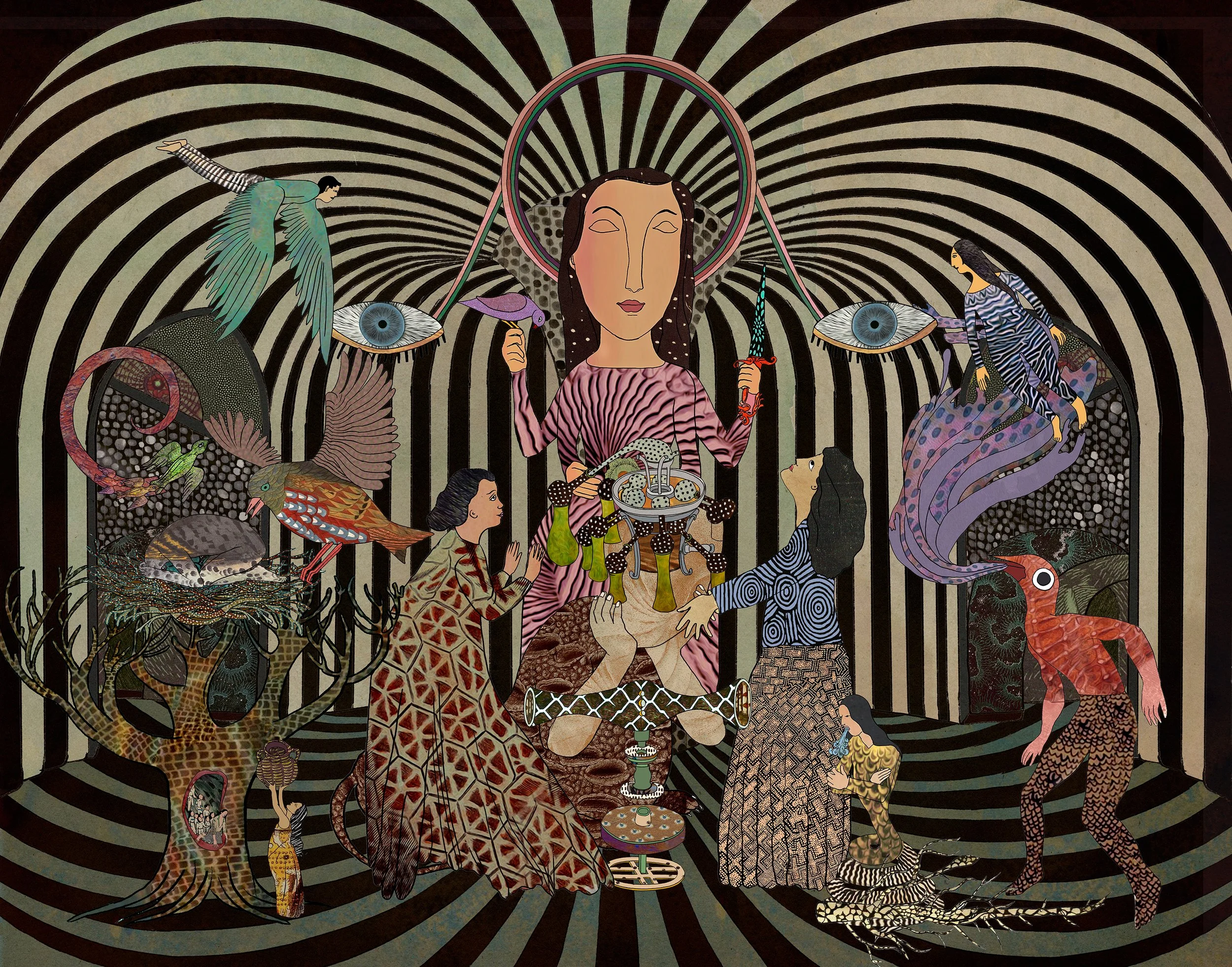
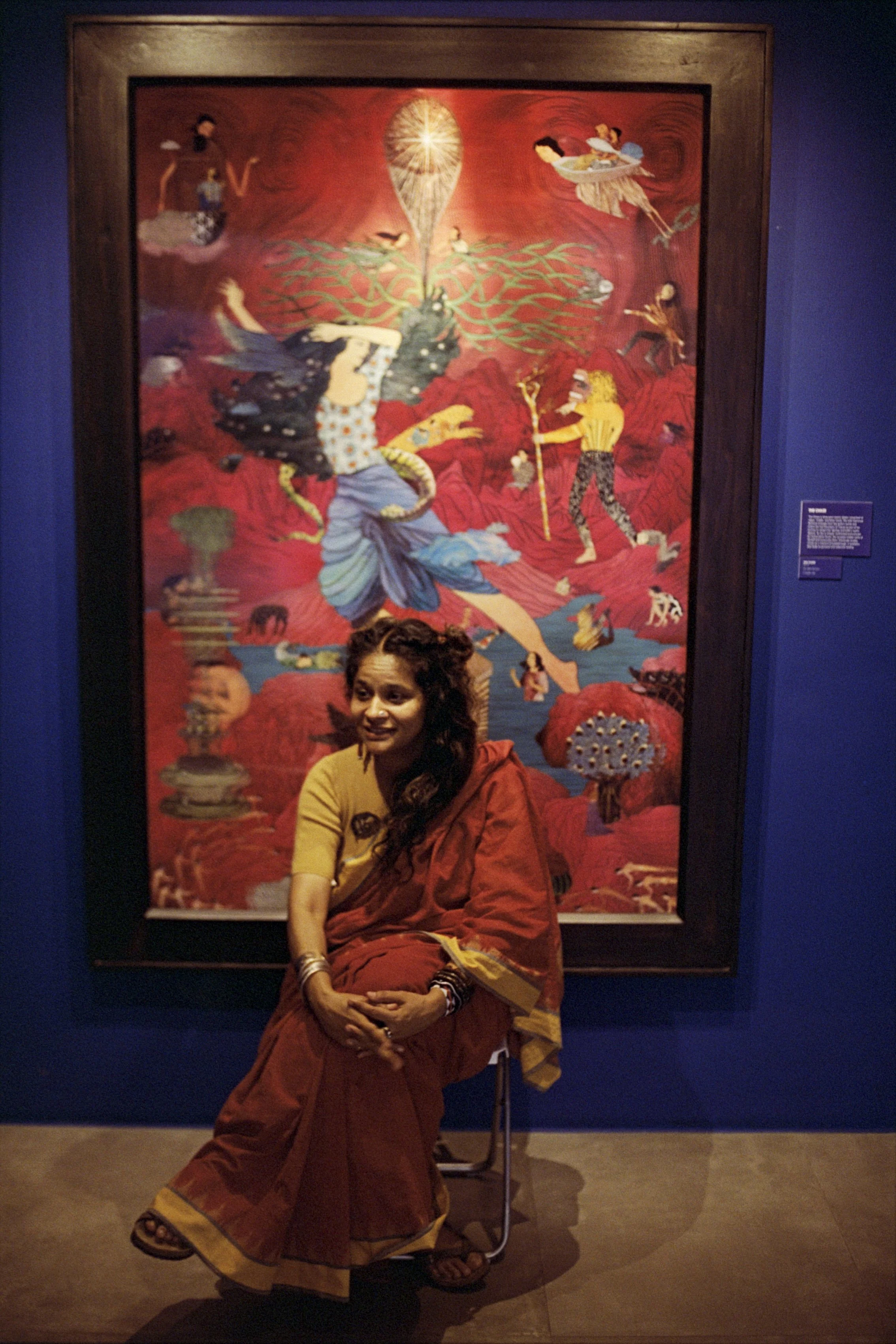
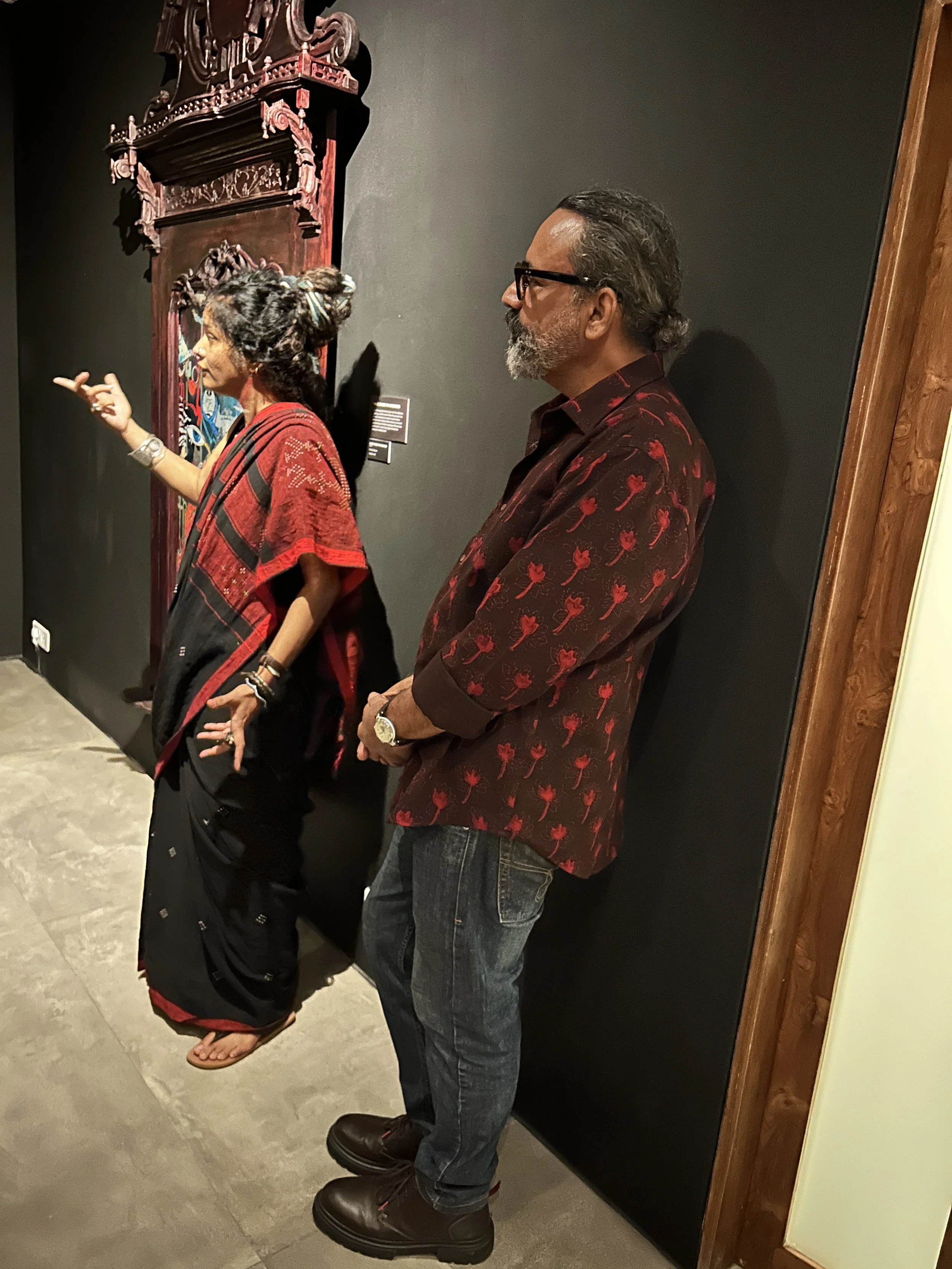
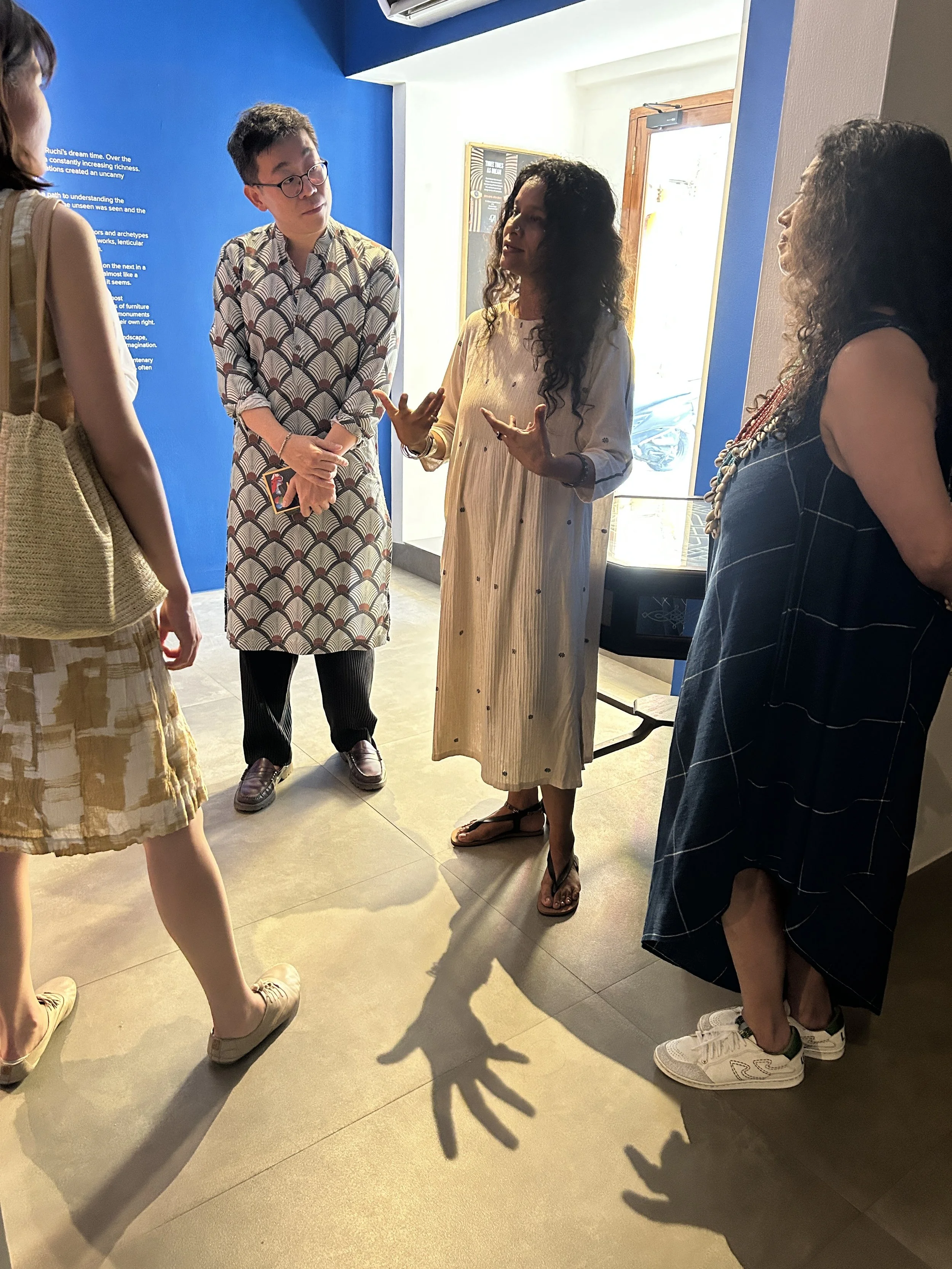
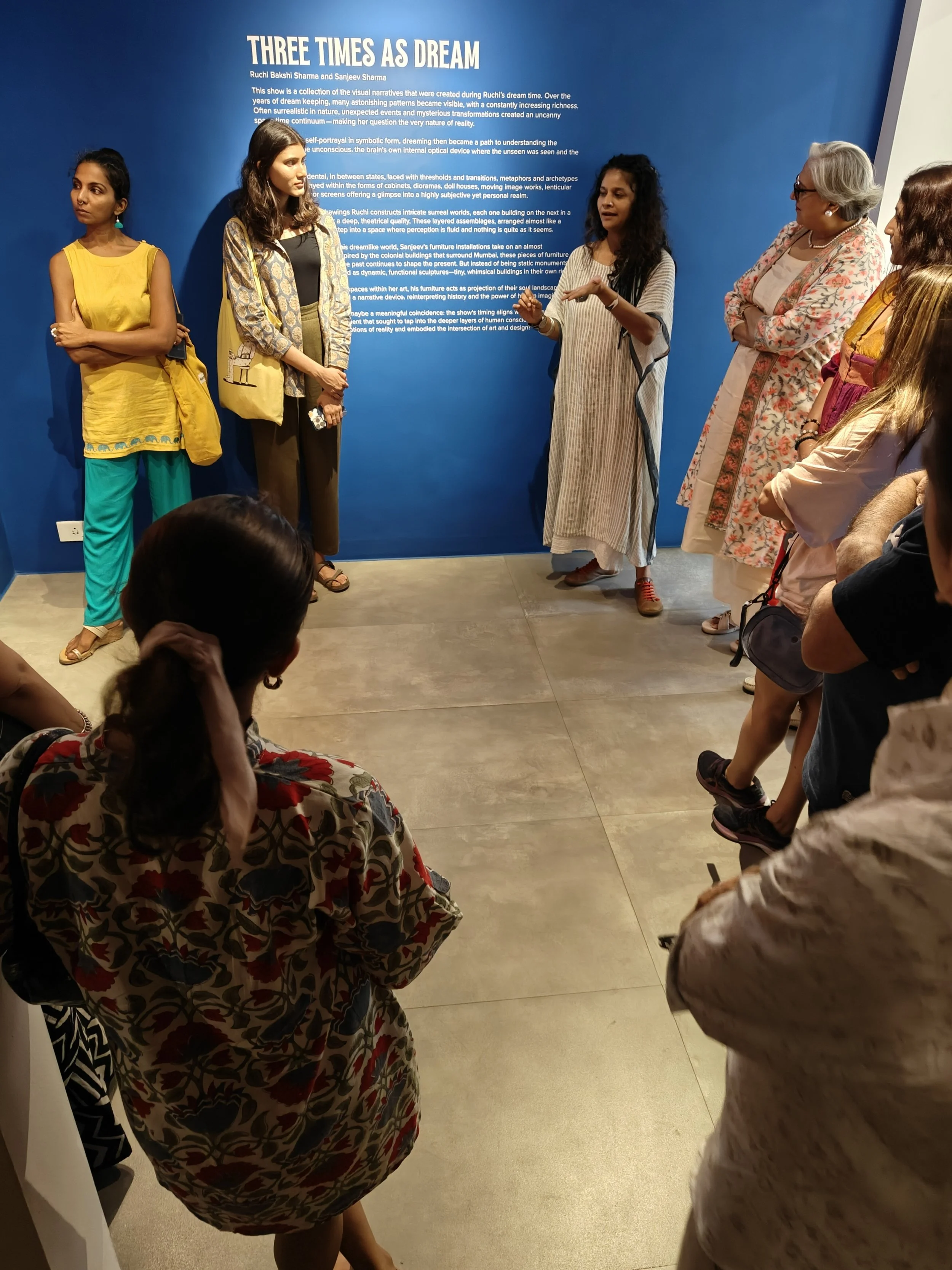
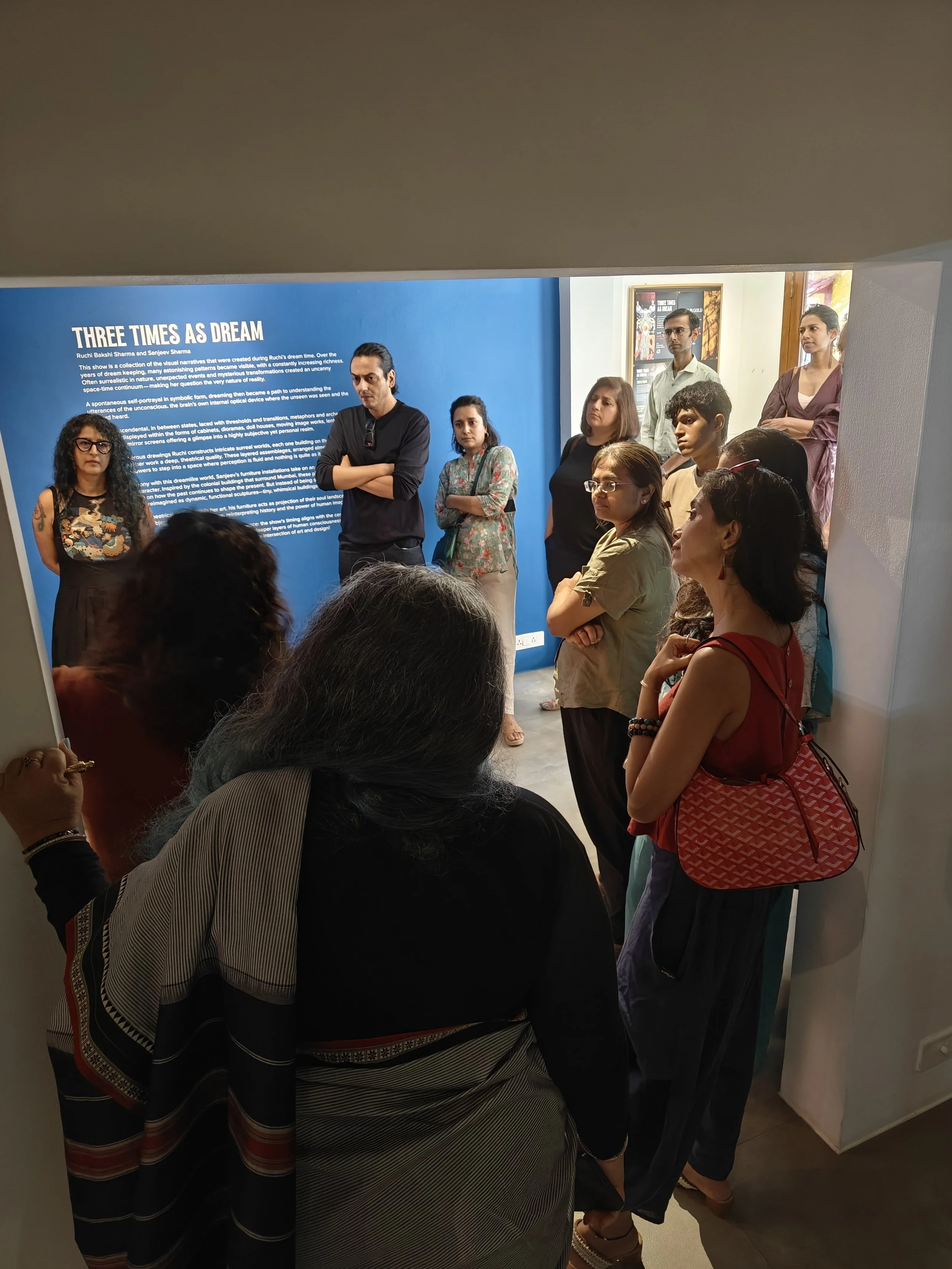
‘Three times as Dream’ is an immersive show that delves into the liminal realms of dreams, blending surreal visual narratives with functional art. Part waking dream, part metaphysical archive—it invites viewers to traverse the porous borders between sleep and consciousness, memory and myth.
Ruchi Bakshi Sharma devotedly chronicles her own nocturnes, transcribes the subconscious through drawings that spiral into labyrinthine worlds—each a palimpsest of archetypes, thresholds, and metamorphic echoes.
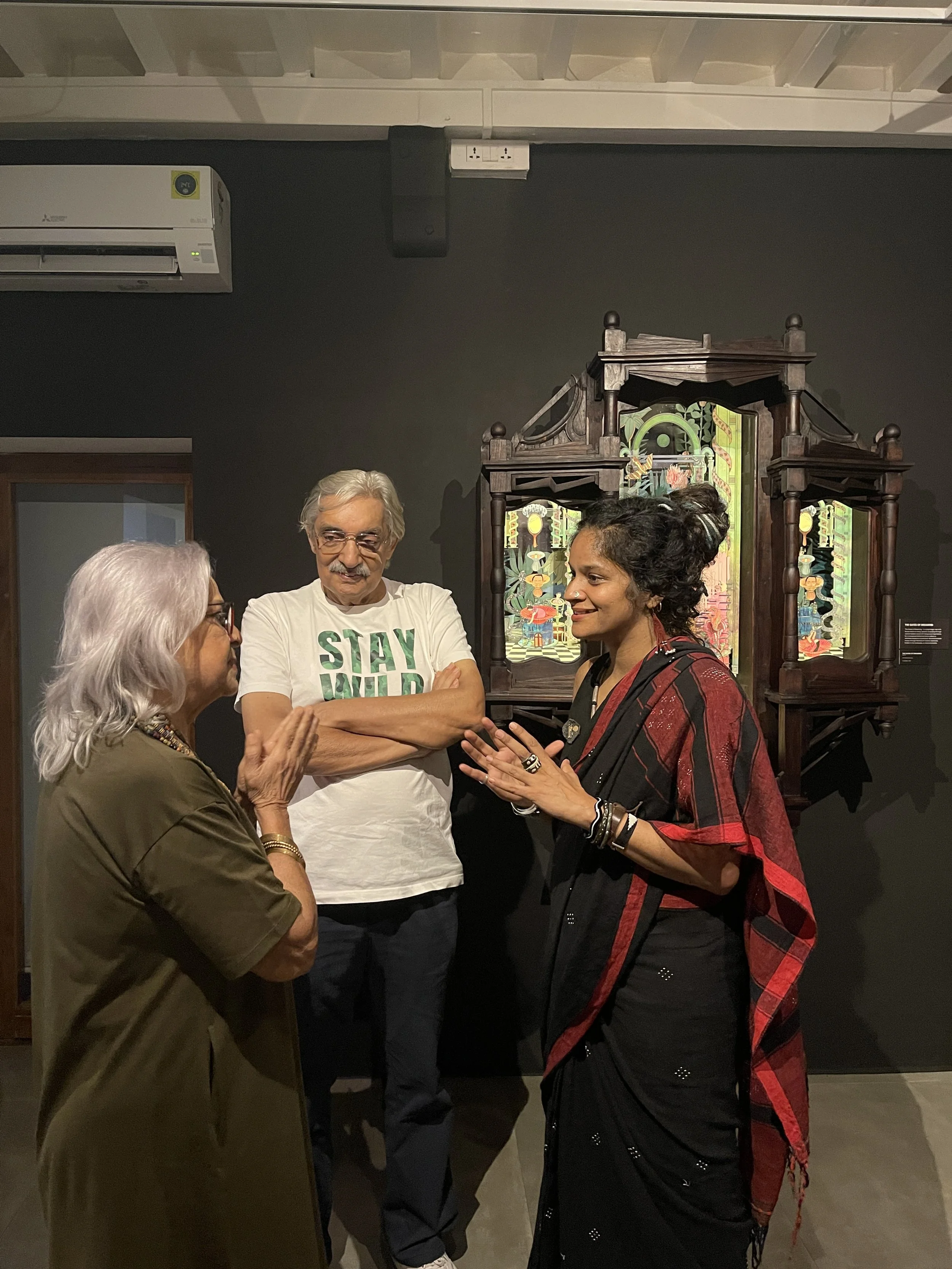
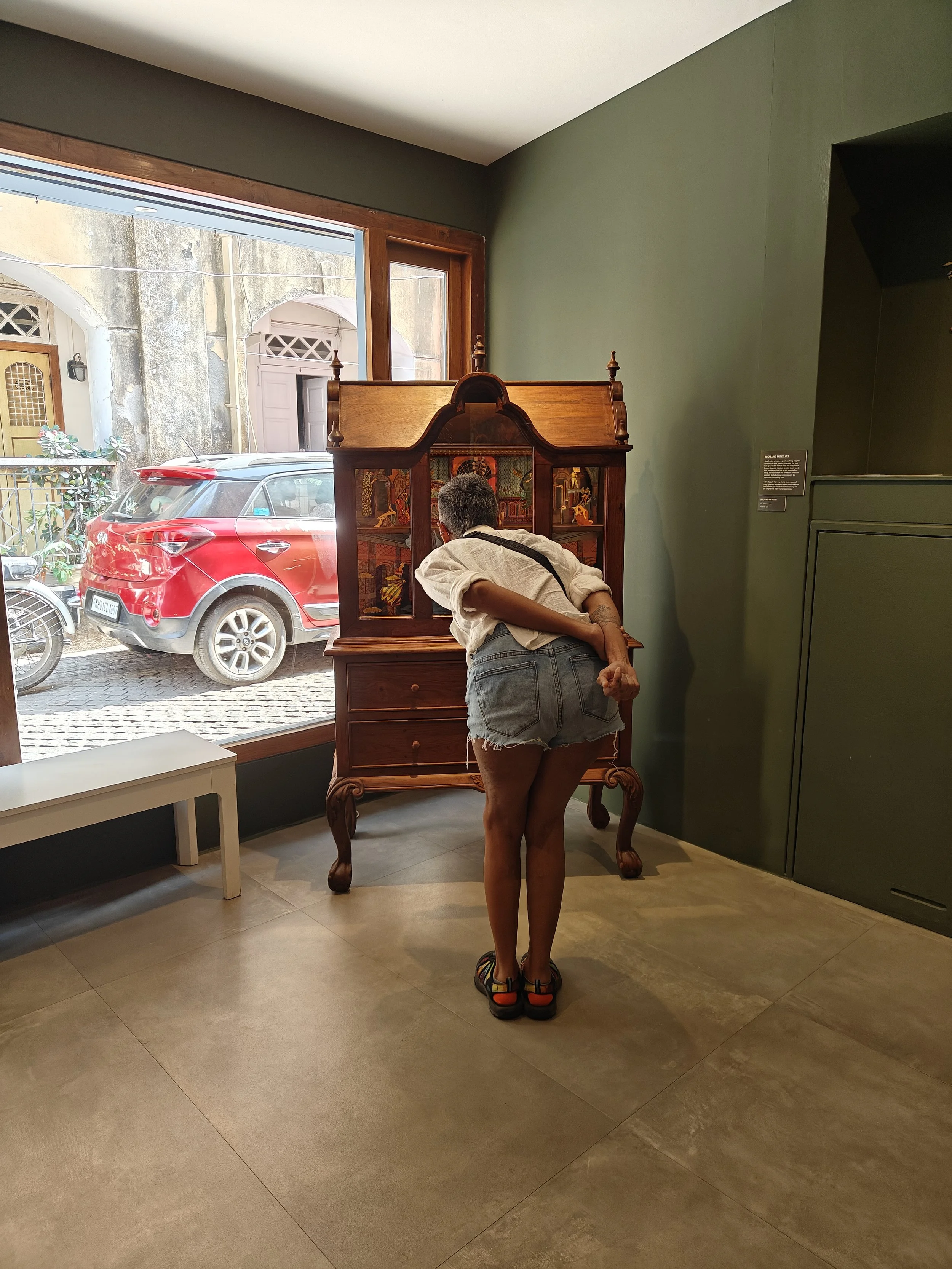
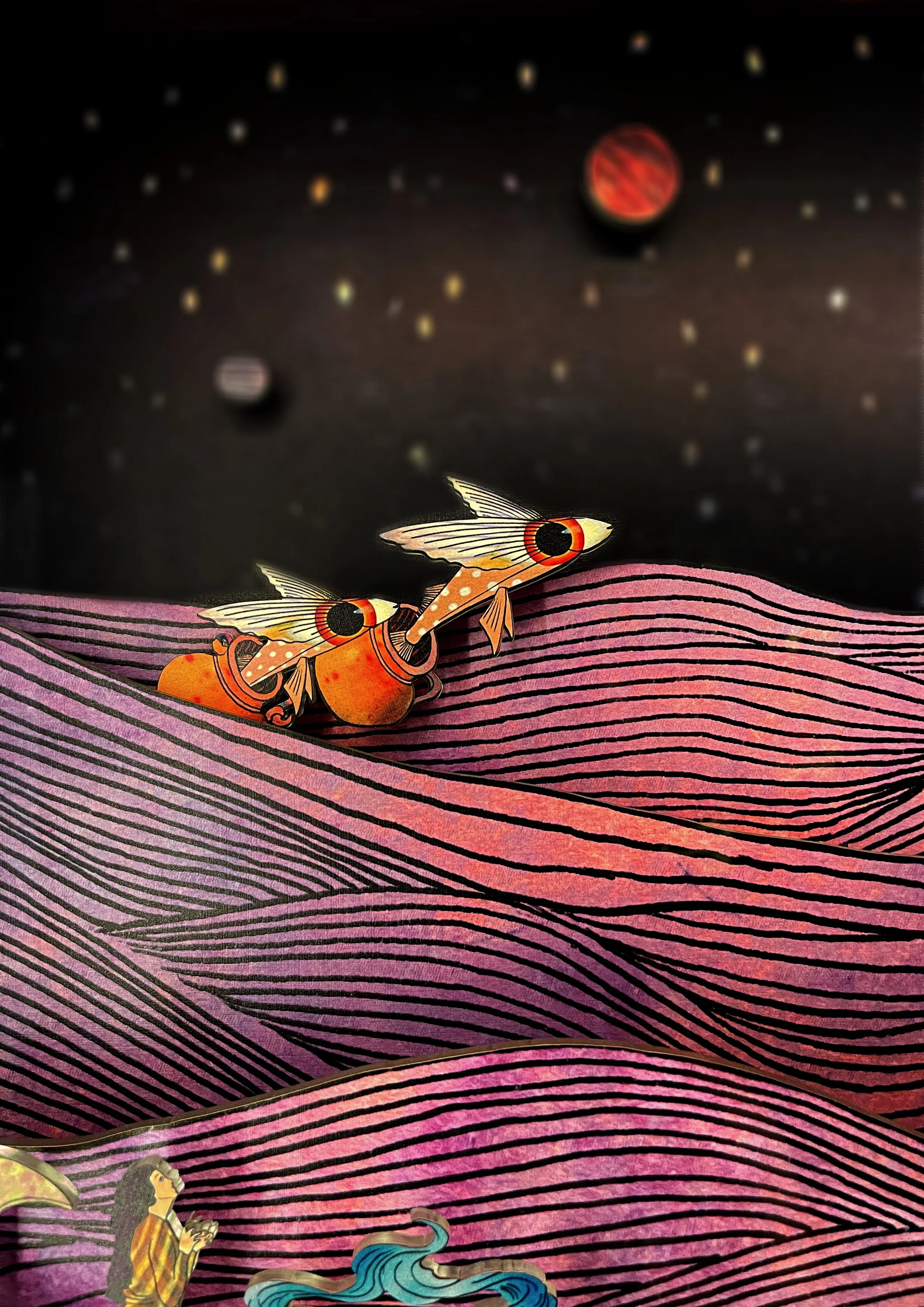
Ruchis work is rooted in years of research into dream psychology and South Asian mythological traditions. She makes lenticular prints: limited edition works using layered lens technology that creates images shifting and revealing depth as you move before them. Every image is hand-drawn individually over many days. The lenticular medium requires digital preparation — the same way a musician uses a recording studio. Shadow boxes: three-dimensional assemblages in reclaimed teakwood frames — each one a container for a recurring archetypal character from the dream journal. Dream furniture: cabinets, dioramas and assemblages designed to hold the interior world of a specific dream. And optical toys: handmade kinetic objects based on Victorian optical principles, sold and used in workshops with children. Her work has been shown at the India Art Fair ( Invited by Sudarshan Shetty - 2018, 2019 ), Serendipity Arts Festival Goa (Invited by Sneha Khanwalkar 2019), Galerie Krinzinger/ Projekte Vienna (2017–18), One World Foundation Sri Lanka (2017), and GALLERYSKE Bangalore (2017). Her experimental films have screened at festivals in Japan, the US, Canada and Bangladesh. She has taught courses at the National Institute of Design Ahmedabad, Parsons ISDI Mumbai; Srishti School of Art Design and Technology, Xavier’s Institute of Communication, and IIT Mumbai.
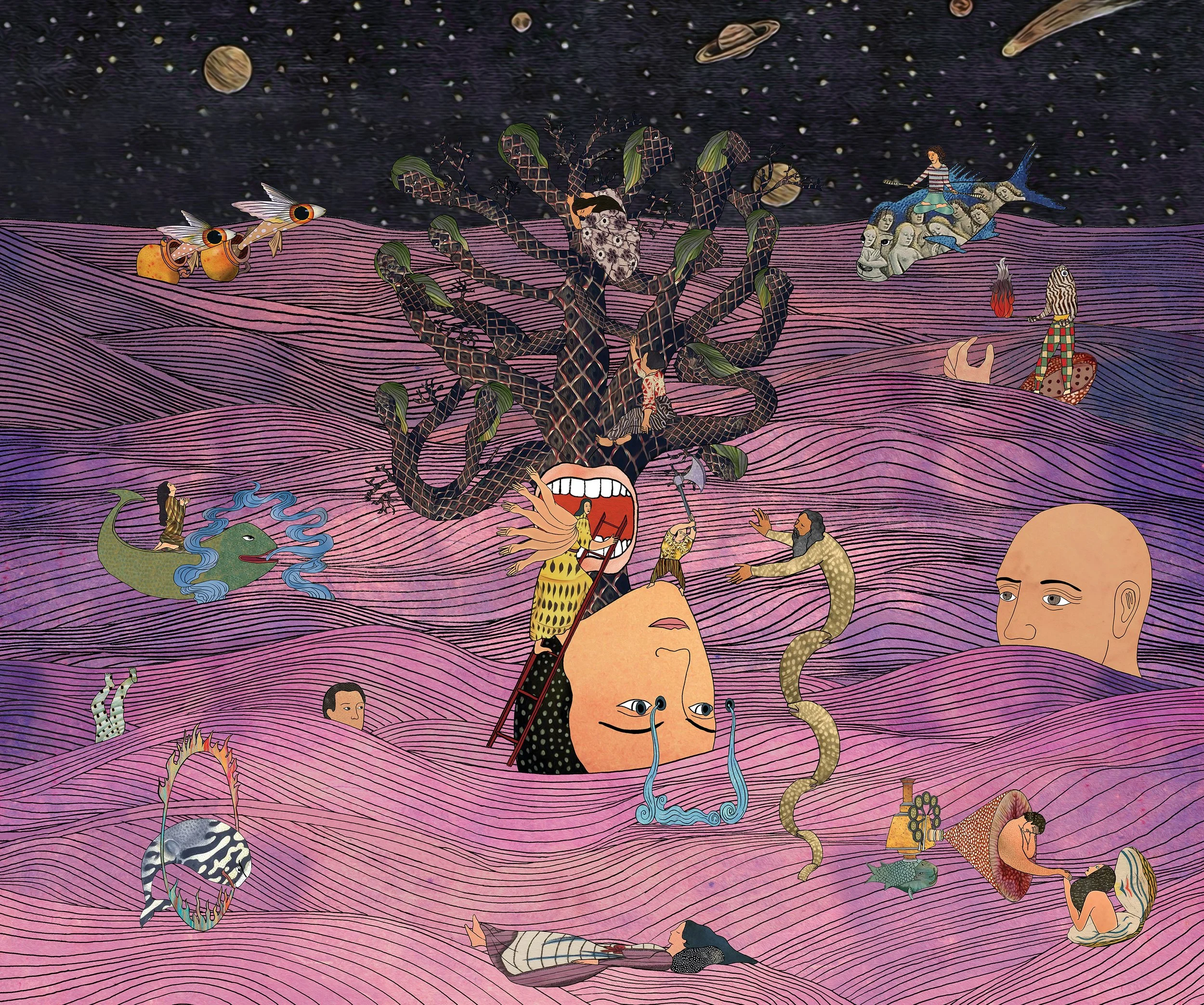
The Wave of Fortune
Just as her drawings dissect the psyche’s buried symbols, his sculptures dissect the ghosts in our city’s walls. Echoing the exhibition’s themes of colonial memory, surreal functionality, and the dialogue between art and design. Sanjeev says, “Furniture is architecture’s intimate ghost because a chair remembers the body it holds and a cabinet guards the secrets it’s imbibed. In this body of work, we’ve unstitched time so the beholder feels like they are stepping into a collective unconscious. We arranged works as thresholds—mirrors facing drawings to create infinite regress, dollhouses lit like reliquaries. Guiding viewers through a labyrinth where every turn blurred the line between their memories and ours, the space itself became a metaphor for the layered and luminous mind.
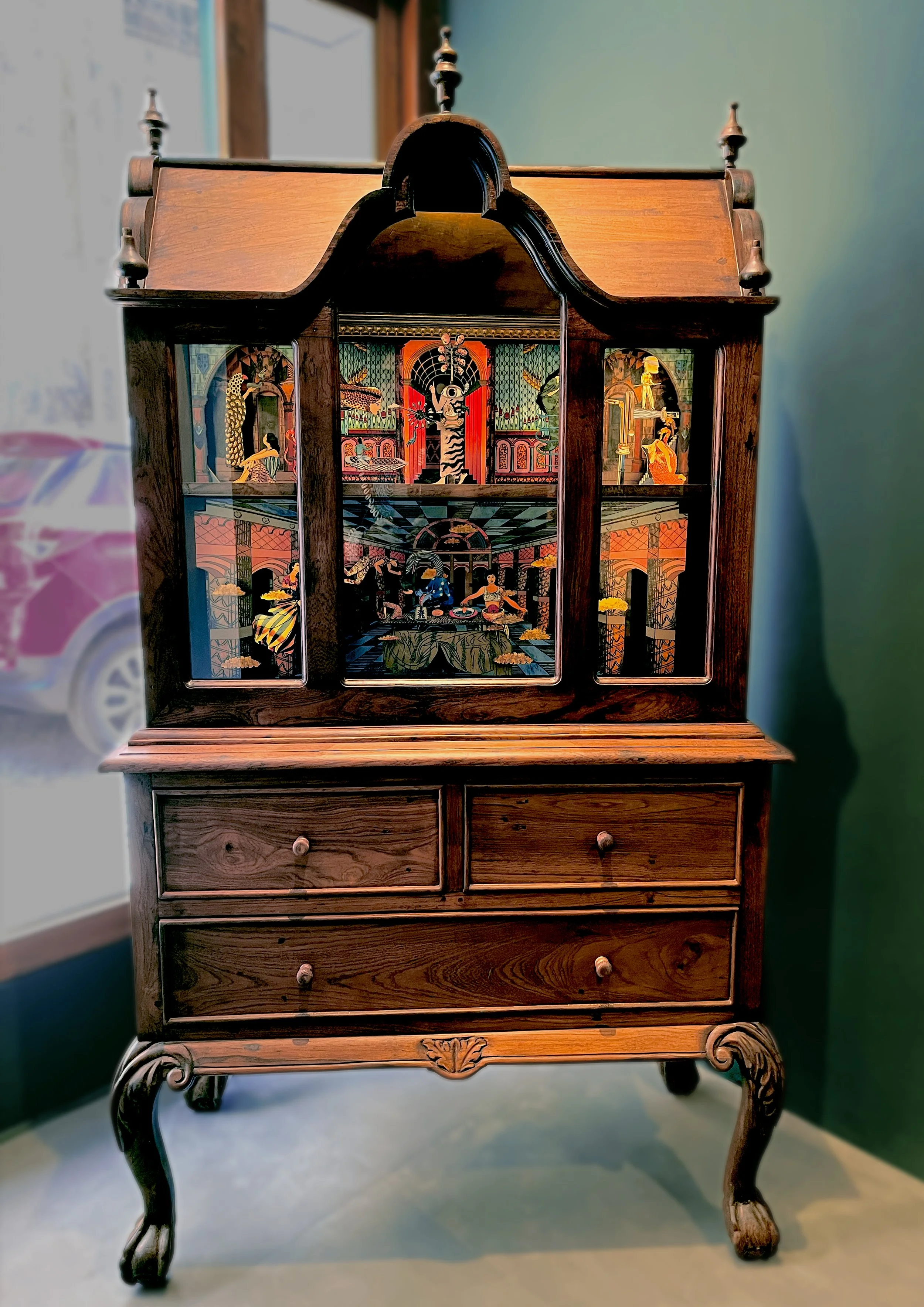
"I make objects for the unconscious. The lenticulars shift as you move past them — the image changes depending on where you stand. The shadow boxes hold recurring characters from my dreams: archetypal figures I've been in conversation with for twenty years. The dream material is housed within sculptural forms that hold the interior world of a dream. These are not decorative objects. They are the kind of things people pass down."
— Ruchi Bakshi Sharma
And I understood that the abundance I had materialised, the game we played, the transparent insect, and the floating diaphanous queen, were all part of this same, endless, benevolent fabrication. The scene shifted, as it does in dreams. the raw material of the self was writing itself in the language of dreams. The world had forgotten how to hold things down. At the appointed midnight the music the contract the debt all of it one thing, one long unbroken sentence spoken by the earth by the trees with ears by the insect with a city in its gut. From its open mouth, a single, shimmering thread extended to my ear. And in response to this sound, the world began to float.
And I understood that the abundance I had materialised, the game we played, the transparent insect, and the floating diaphanous queen, were all part of this same, endless, benevolent fabrication. The scene shifted, as it does in dreams. the raw material of the self was writing itself in the language of dreams. The world had forgotten how to hold things down. At the appointed midnight the music the contract the debt all of it one thing, one long unbroken sentence spoken by the earth by the trees with ears by the insect with a city in its gut. From its open mouth, a single, shimmering thread extended to my ear. And in response to this sound, the world began to float.
〰️
And I understood that the abundance I had materialised, the game we played, the transparent insect, and the floating diaphanous queen, were all part of this same, endless, benevolent fabrication. The scene shifted, as it does in dreams. the raw material of the self was writing itself in the language of dreams. The world had forgotten how to hold things down. At the appointed midnight the music the contract the debt all of it one thing, one long unbroken sentence spoken by the earth by the trees with ears by the insect with a city in its gut. From its open mouth, a single, shimmering thread extended to my ear. And in response to this sound, the world began to float. And I understood that the abundance I had materialised, the game we played, the transparent insect, and the floating diaphanous queen, were all part of this same, endless, benevolent fabrication. The scene shifted, as it does in dreams. the raw material of the self was writing itself in the language of dreams. The world had forgotten how to hold things down. At the appointed midnight the music the contract the debt all of it one thing, one long unbroken sentence spoken by the earth by the trees with ears by the insect with a city in its gut. From its open mouth, a single, shimmering thread extended to my ear. And in response to this sound, the world began to float. 〰️
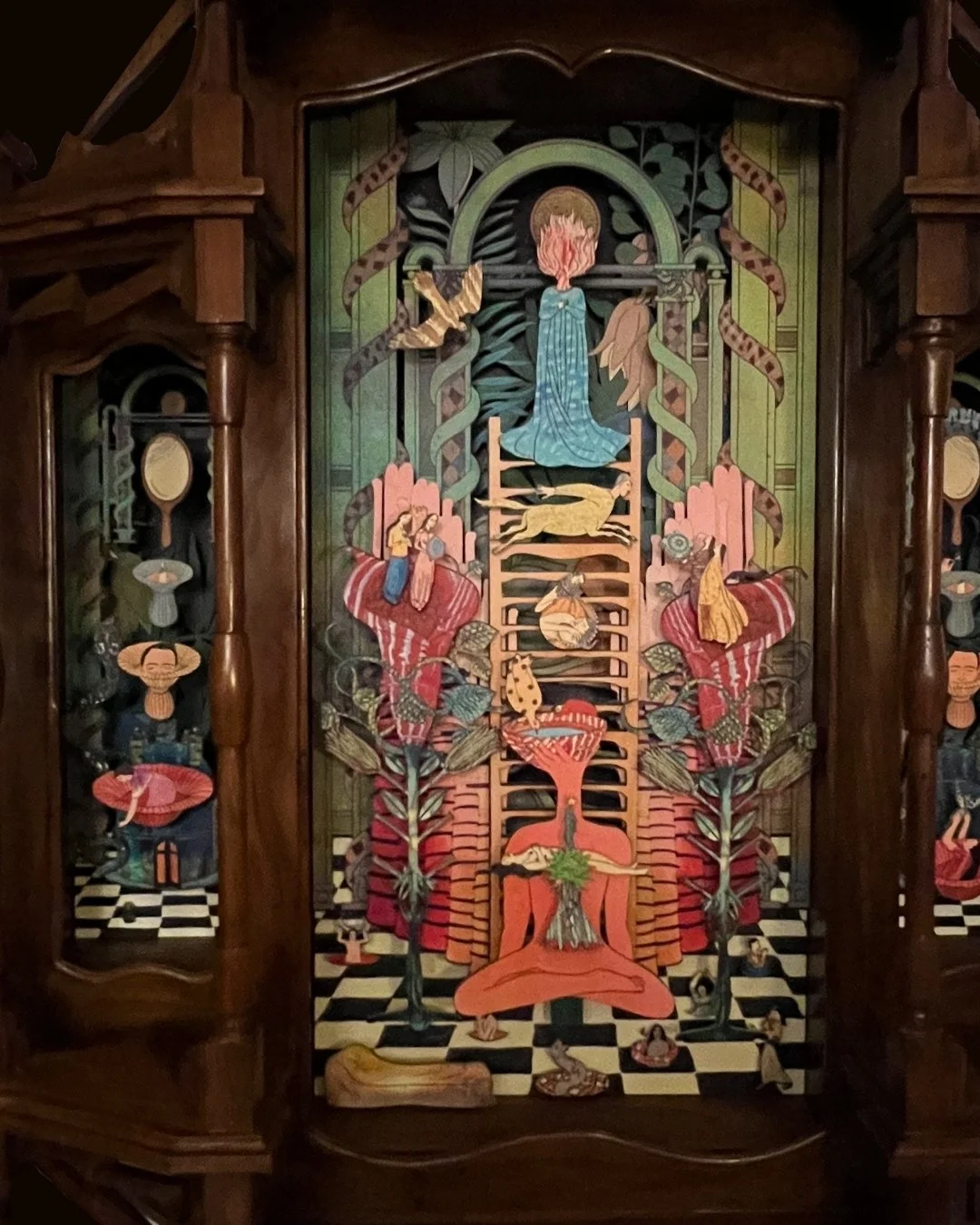
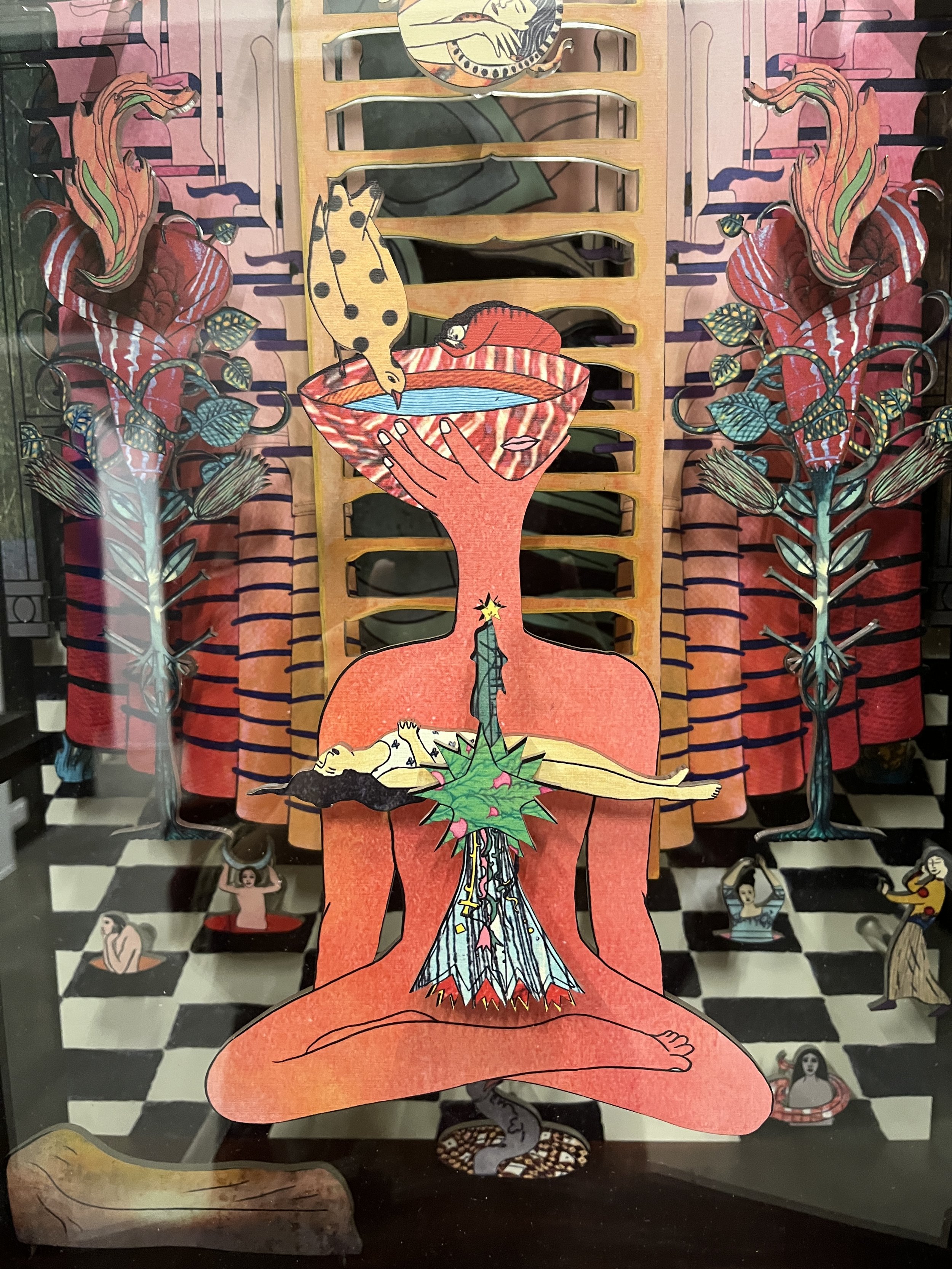
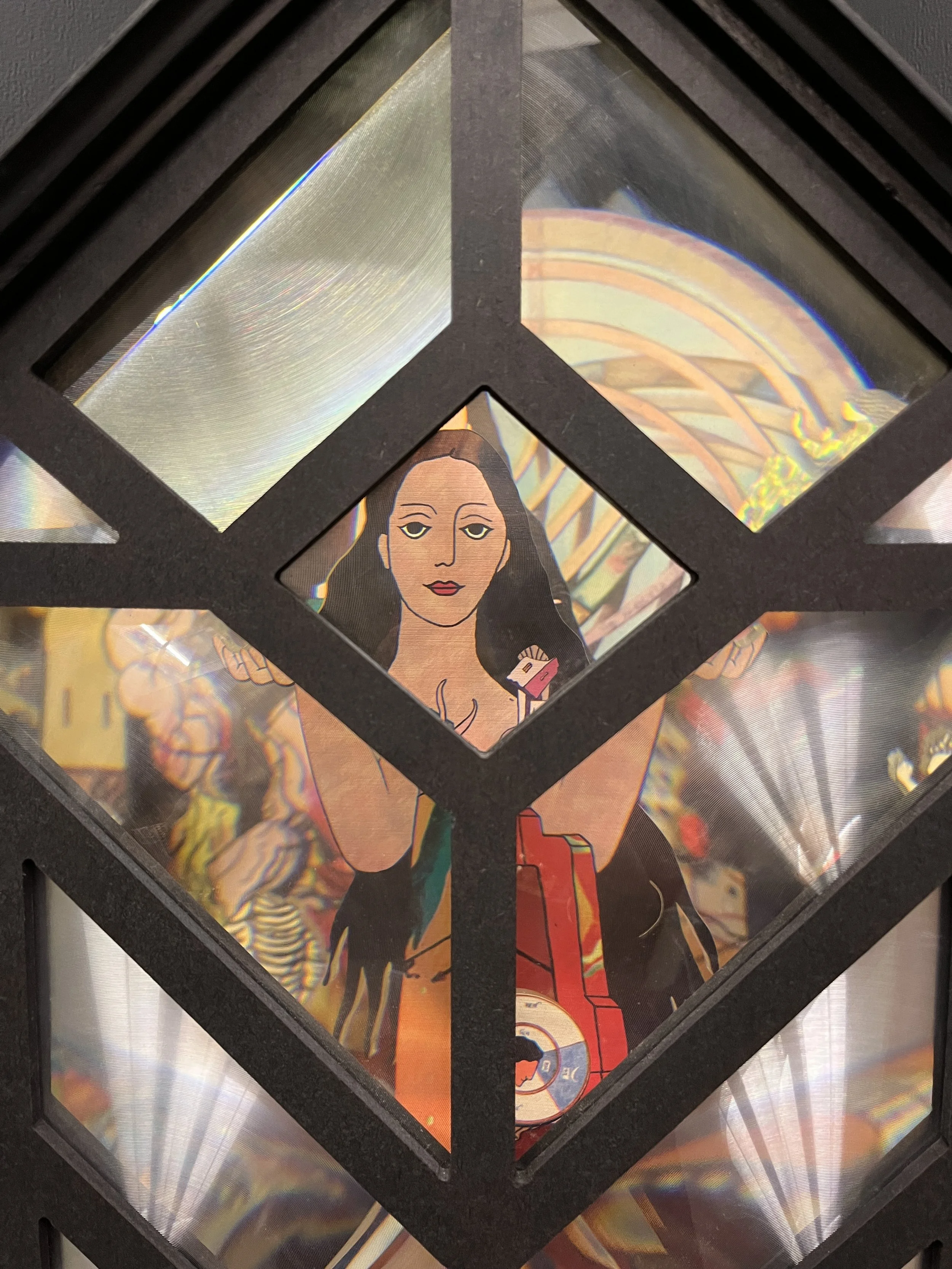
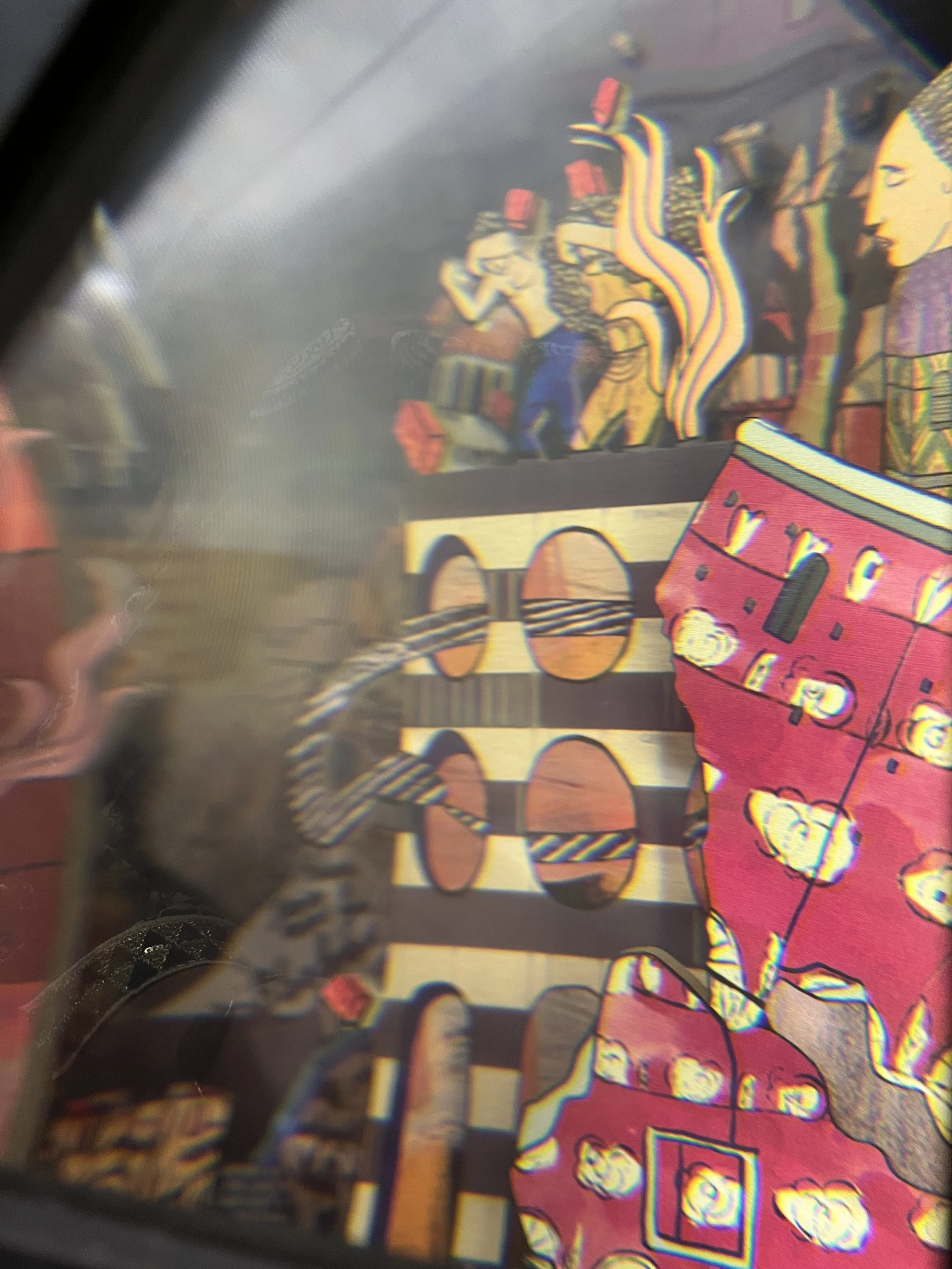
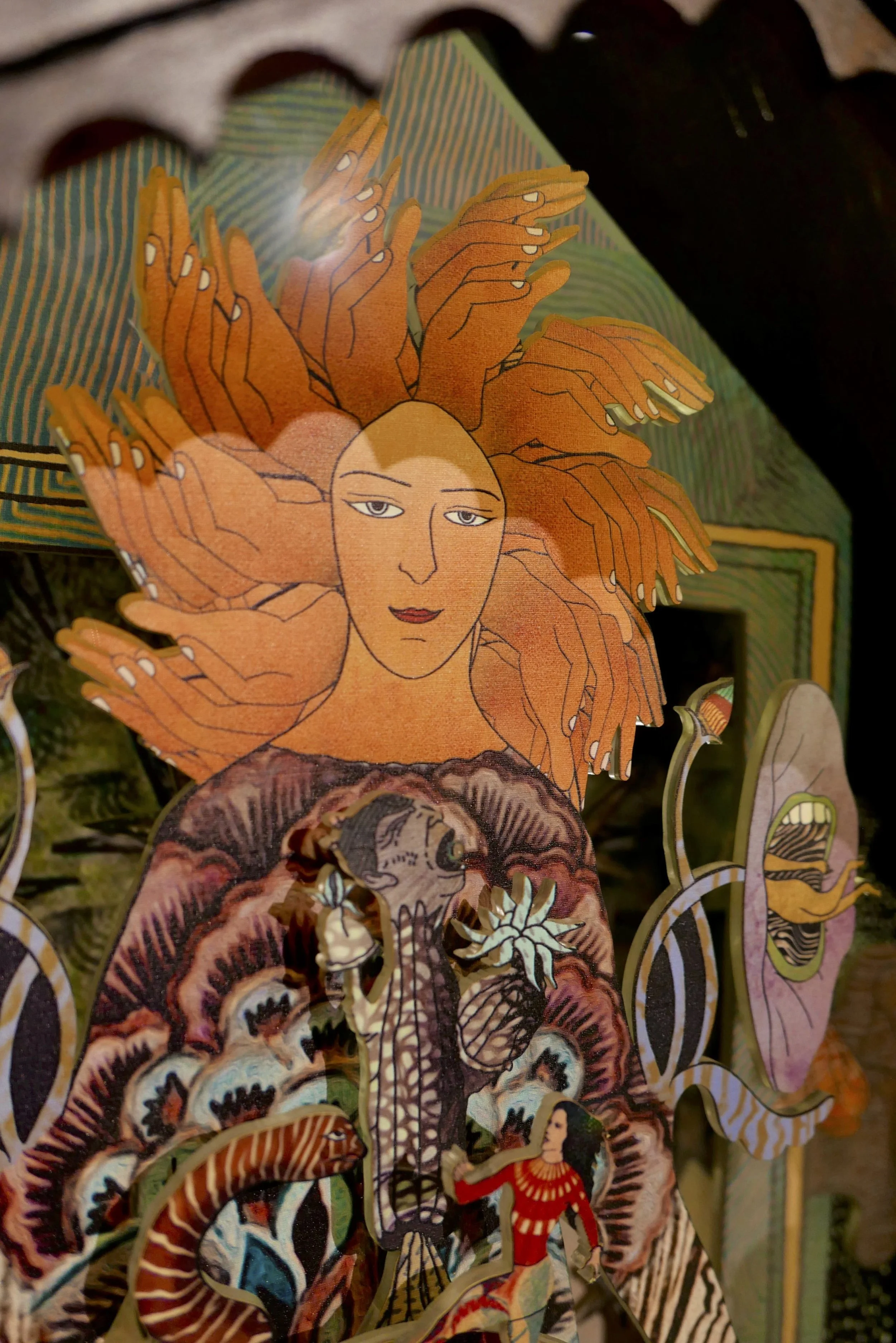
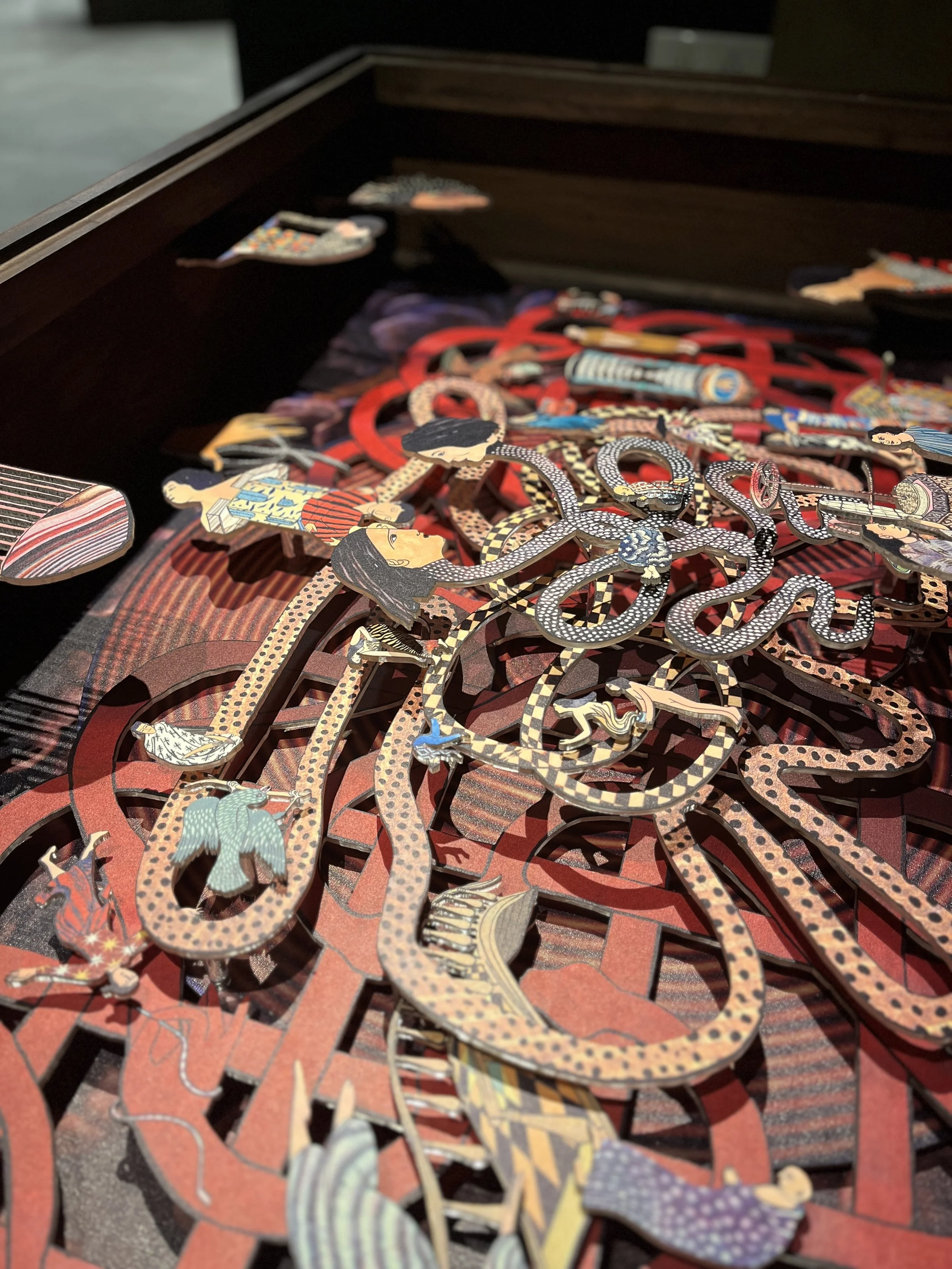
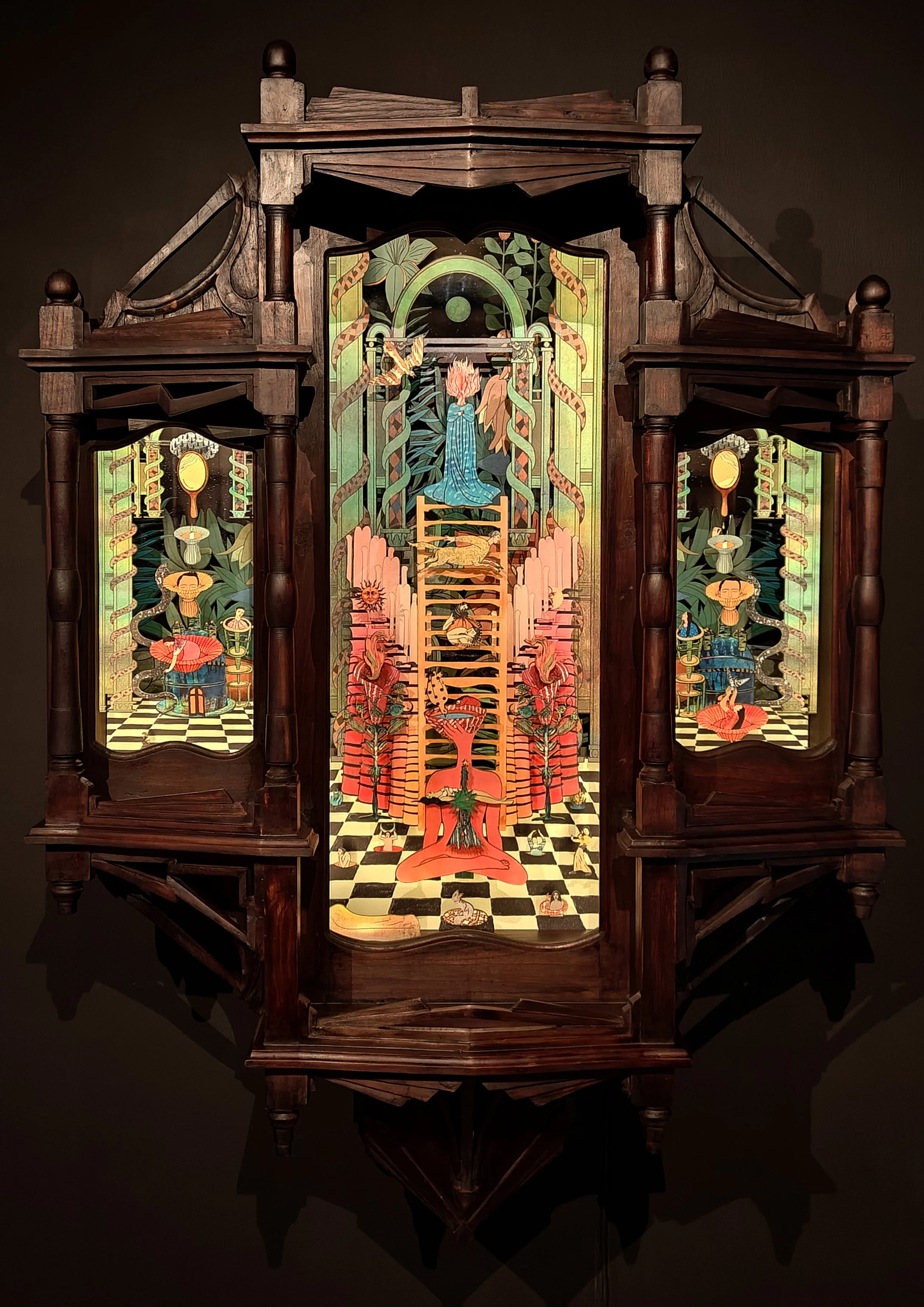
“It began with surrender: keeping a notebook and torch by the bed, scribbling half-coherent visions at 3 AM. Over years, patterns emerged—doorways, eye tree, mouth like portals, endless chases through visceral landscapes, benevolent beings assisting me to fly or seek this hidden knowledge —and I realized these weren’t just my symbols, but shared mythologies. The methodology became ritualistic: transcribe the dream, distill its emotional core, then materialize it through the most uncanny medium. A dream of floating cities became a mobile of cut parchment; a nightmare of silent screams birthed a soundless film loop. The artmaking was a séance, and I was merely the medium.”
- Ruchi
Strikingly, the exhibition’s debut aligns with the 100th anniversary of the Surrealist movement, echoing its legacy of probing the unconscious and redefining reality. The uncanny resonance to the centenary conjures André Breton’s Manifesto anew, asking: What if the brain’s most private theatre staged its visions for all to witness?Both movements share a creed: to plumb the unconscious, to let the irrational sculpt reality. Yet Ruchi pushes further, rendering dreamspace not as abstraction, but as habitat. To step into her world is to wander a mind mid-reverie.
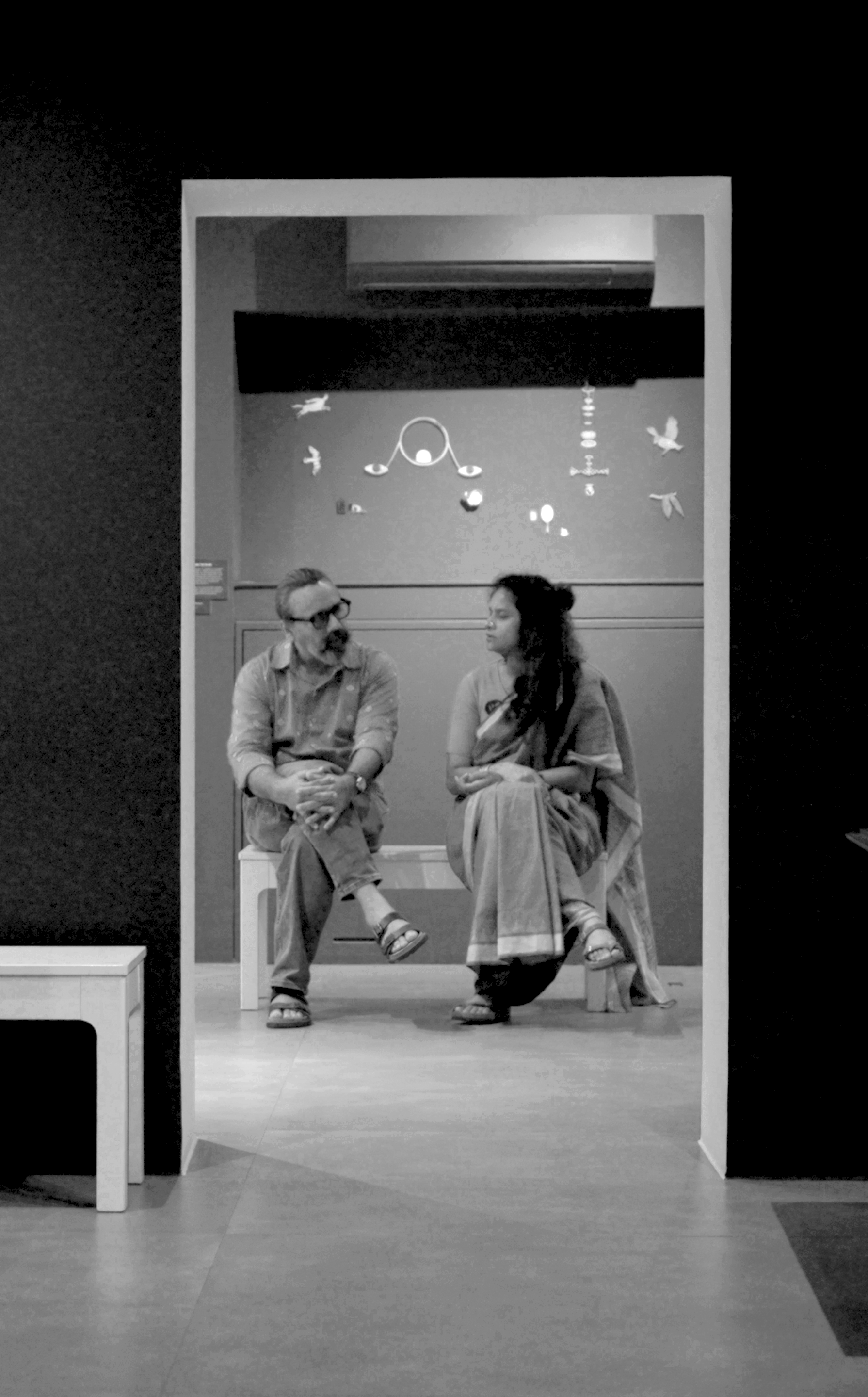
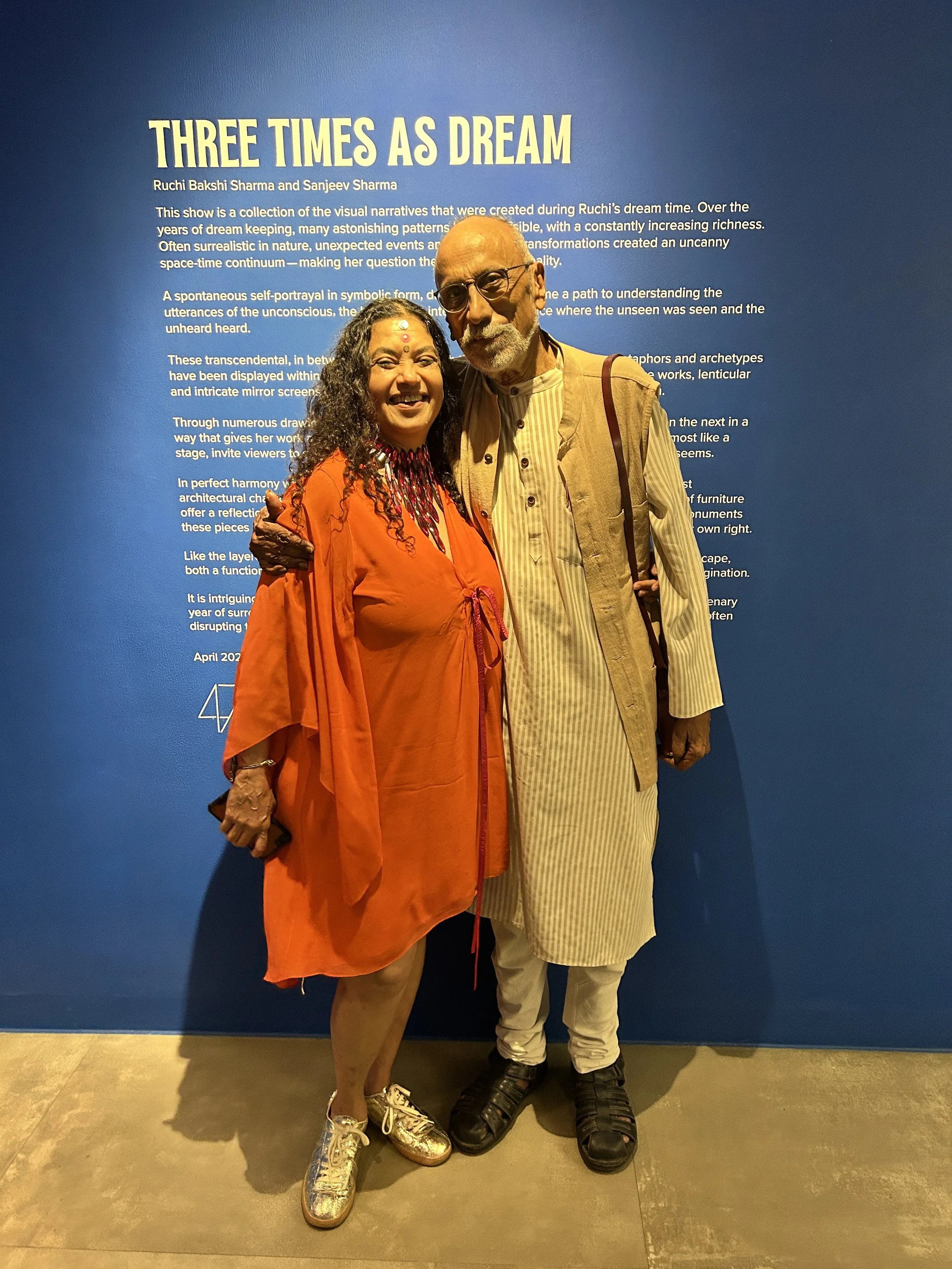
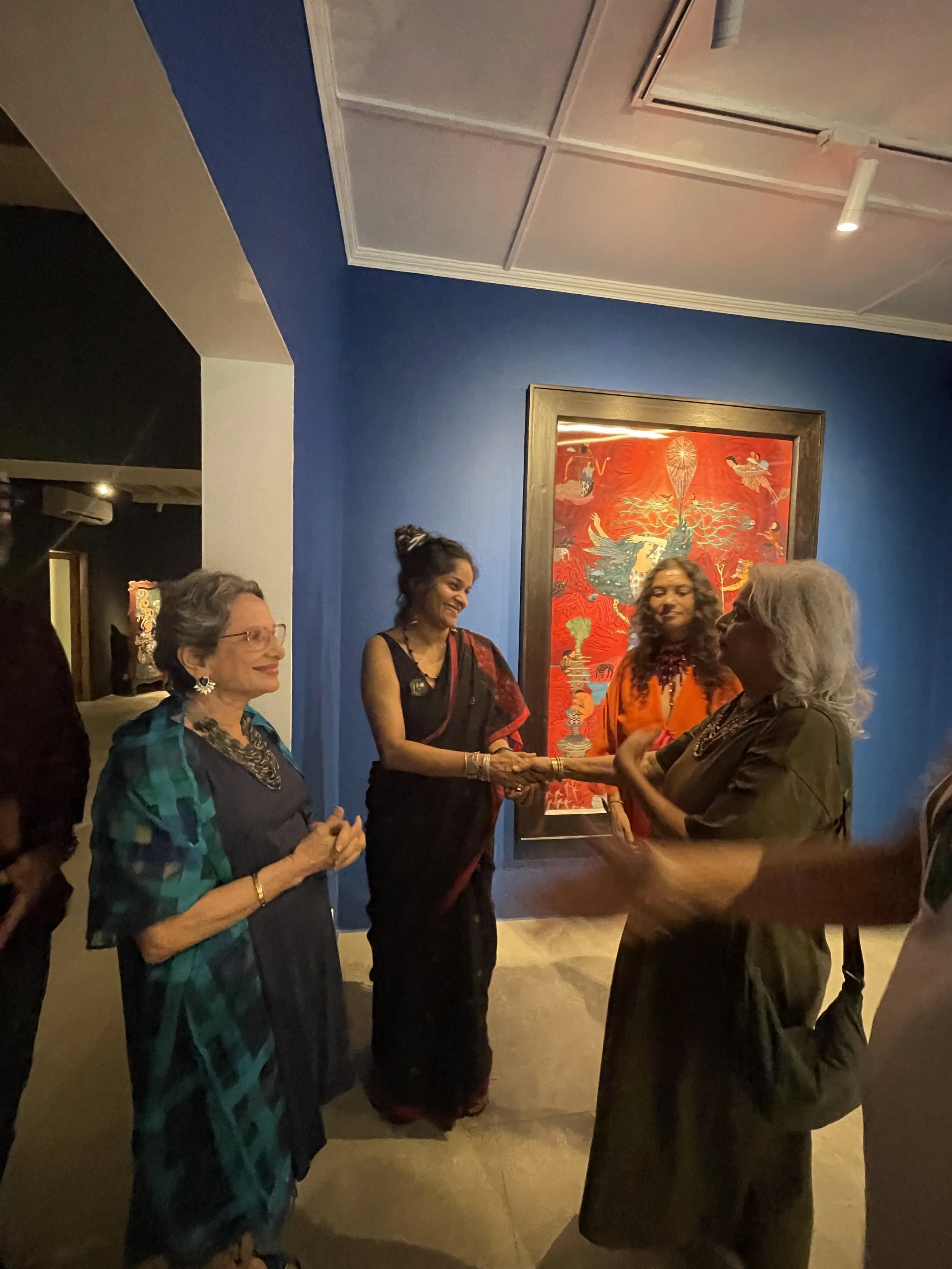
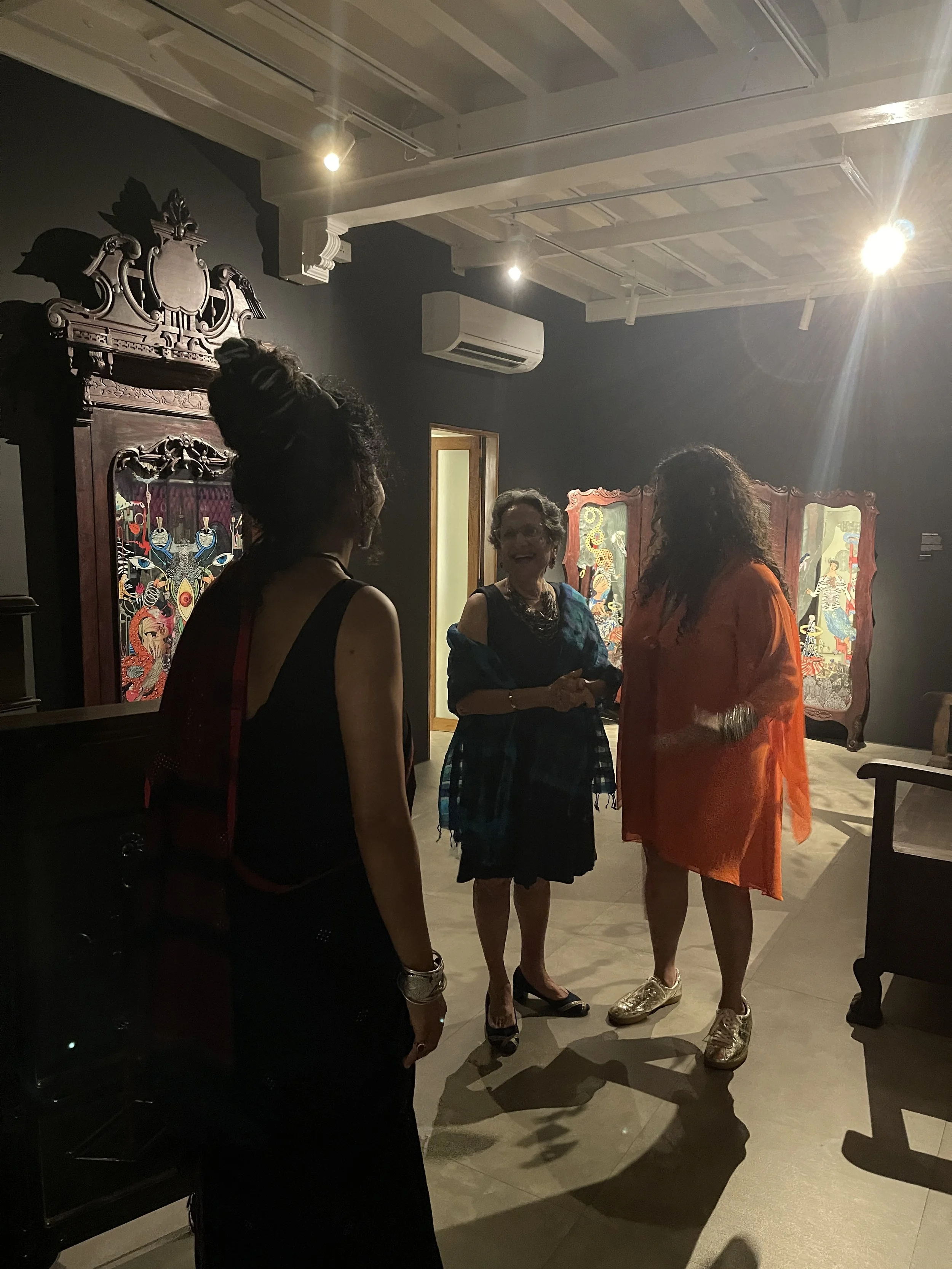
Ruchi and Sanjeev are married and have been working together in the Aksa studio for several years. Their creative partnership is not incidental to the work — it is structural. Ruchi's Three Times as Dream solo show was explicitly presented alongside Sanjeev's furniture installations: her dream cabinets and his architectural furniture occupied the same space as twin explorations of the unconscious and the built world. The show's press noted the way the two practices were 'in perfect harmony' — her layered interior worlds, his objects as narrative devices. AIRDROME is their joint enterprise. The metaphysical thread that runs through Sanjeev's lyrics— runs directly into Ruchi's dreamwork and mythology-based visual practice. They are two facets of the same sustained inquiry: what lies beneath the surface of the visible world, and how do you hold it in a form?
We reject the Tyranny of liner time We unshackle objects from function, form from finality, and perception from chronology. The clock does not govern creation; the calendar does not consecrate meaning. Our materials morph. Our meanings move. We embrace the lenticular, the in-between, the flicker. The object is not static—it is a verb. The shifting images force viewers into active now-ness—what they see depends on their real-time movement, not passive observation. The work is not fixed in time; it is time made visible. We inhabit the eternal present Not as a utopia, but as a practice. A radical now-ness. In this space, memory and possibility collapse into immediacy. In this space, inner freedom expands. This is not escapism—it is return. Retrocausality. Where the future ripples back to affect the present. Reinterpreting structures Furniture is liberated from use. It is reimagined as myth, as metaphor, as companion. The domestic becomes cosmic. The ordinary, sacred. We do not store physical objects in a cabinet, we keep our thoughts and preoccupations in them. We dream awake Our dioramas do not depict dreams—they are dreams: inhabited, layered, recursive. They are containers of paradox, simultaneity, lenses for multiple truths, portals to non-ordinary realities. Art is a portal, not a product We make not to explain, but to open. The work is an invitation to dwell, drift, and dissolve the boundaries between what was, what is, and what could be, a living continuum. Memory is not behind you - its coming from the future you built Memory is a living dynamic, Not a static fixed static personal history prison. We are not moving through time, time is moving through us. The story is not beginning, its a transmission from a version of us that already finished the assignment
We reject the Tyranny of liner time We unshackle objects from function, form from finality, and perception from chronology. The clock does not govern creation; the calendar does not consecrate meaning. Our materials morph. Our meanings move. We embrace the lenticular, the in-between, the flicker. The object is not static—it is a verb. The shifting images force viewers into active now-ness—what they see depends on their real-time movement, not passive observation. The work is not fixed in time; it is time made visible. We inhabit the eternal present Not as a utopia, but as a practice. A radical now-ness. In this space, memory and possibility collapse into immediacy. In this space, inner freedom expands. This is not escapism—it is return. Retrocausality. Where the future ripples back to affect the present. Reinterpreting structures Furniture is liberated from use. It is reimagined as myth, as metaphor, as companion. The domestic becomes cosmic. The ordinary, sacred. We do not store physical objects in a cabinet, we keep our thoughts and preoccupations in them. We dream awake Our dioramas do not depict dreams—they are dreams: inhabited, layered, recursive. They are containers of paradox, simultaneity, lenses for multiple truths, portals to non-ordinary realities. Art is a portal, not a product We make not to explain, but to open. The work is an invitation to dwell, drift, and dissolve the boundaries between what was, what is, and what could be, a living continuum. Memory is not behind you - its coming from the future you built Memory is a living dynamic, Not a static fixed static personal history prison. We are not moving through time, time is moving through us. The story is not beginning, its a transmission from a version of us that already finished the assignment
〰️
We reject the Tyranny of liner time We unshackle objects from function, form from finality, and perception from chronology. The clock does not govern creation; the calendar does not consecrate meaning. Our materials morph. Our meanings move. We embrace the lenticular, the in-between, the flicker. The object is not static—it is a verb. The shifting images force viewers into active now-ness—what they see depends on their real-time movement, not passive observation. The work is not fixed in time; it is time made visible. We inhabit the eternal present Not as a utopia, but as a practice. A radical now-ness. In this space, memory and possibility collapse into immediacy. In this space, inner freedom expands. This is not escapism—it is return. Retrocausality. Where the future ripples back to affect the present. Reinterpreting structures Furniture is liberated from use. It is reimagined as myth, as metaphor, as companion. The domestic becomes cosmic. The ordinary, sacred. We do not store physical objects in a cabinet, we keep our thoughts and preoccupations in them. We dream awake Our dioramas do not depict dreams—they are dreams: inhabited, layered, recursive. They are containers of paradox, simultaneity, lenses for multiple truths, portals to non-ordinary realities. Art is a portal, not a product We make not to explain, but to open. The work is an invitation to dwell, drift, and dissolve the boundaries between what was, what is, and what could be, a living continuum. Memory is not behind you - its coming from the future you built Memory is a living dynamic, Not a static fixed static personal history prison. We are not moving through time, time is moving through us. The story is not beginning, its a transmission from a version of us that already finished the assignment We reject the Tyranny of liner time We unshackle objects from function, form from finality, and perception from chronology. The clock does not govern creation; the calendar does not consecrate meaning. Our materials morph. Our meanings move. We embrace the lenticular, the in-between, the flicker. The object is not static—it is a verb. The shifting images force viewers into active now-ness—what they see depends on their real-time movement, not passive observation. The work is not fixed in time; it is time made visible. We inhabit the eternal present Not as a utopia, but as a practice. A radical now-ness. In this space, memory and possibility collapse into immediacy. In this space, inner freedom expands. This is not escapism—it is return. Retrocausality. Where the future ripples back to affect the present. Reinterpreting structures Furniture is liberated from use. It is reimagined as myth, as metaphor, as companion. The domestic becomes cosmic. The ordinary, sacred. We do not store physical objects in a cabinet, we keep our thoughts and preoccupations in them. We dream awake Our dioramas do not depict dreams—they are dreams: inhabited, layered, recursive. They are containers of paradox, simultaneity, lenses for multiple truths, portals to non-ordinary realities. Art is a portal, not a product We make not to explain, but to open. The work is an invitation to dwell, drift, and dissolve the boundaries between what was, what is, and what could be, a living continuum. Memory is not behind you - its coming from the future you built Memory is a living dynamic, Not a static fixed static personal history prison. We are not moving through time, time is moving through us. The story is not beginning, its a transmission from a version of us that already finished the assignment 〰️
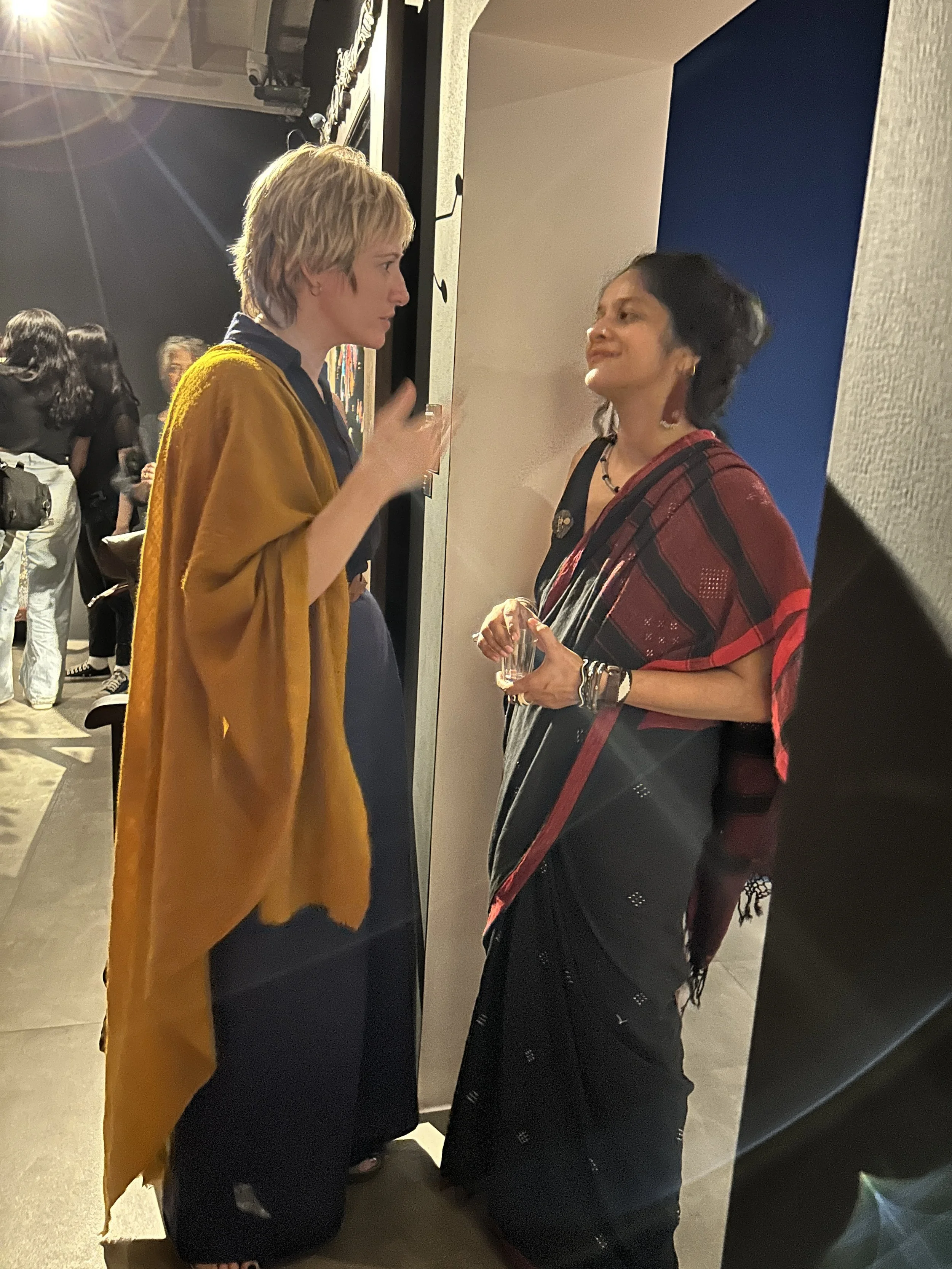
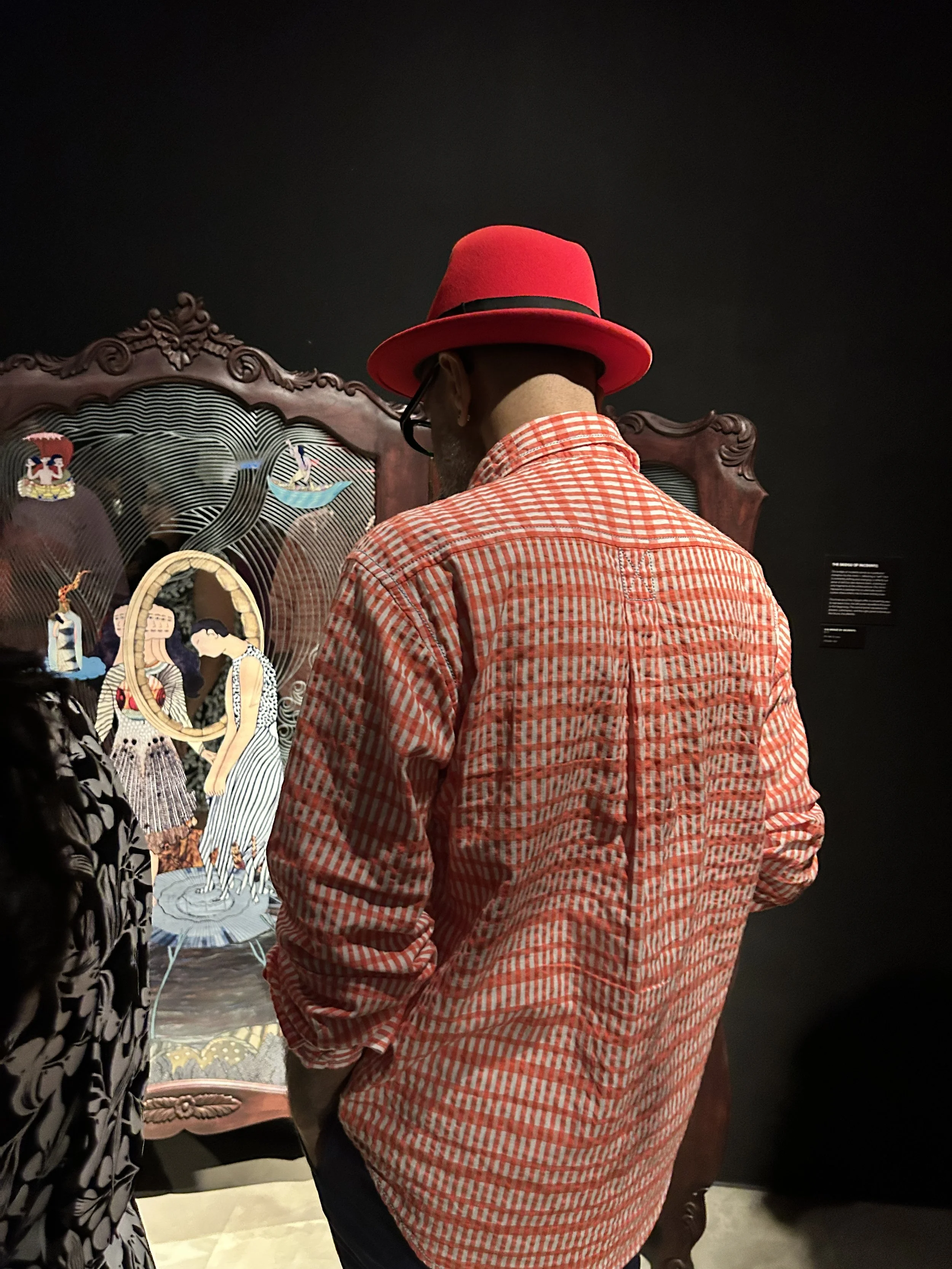
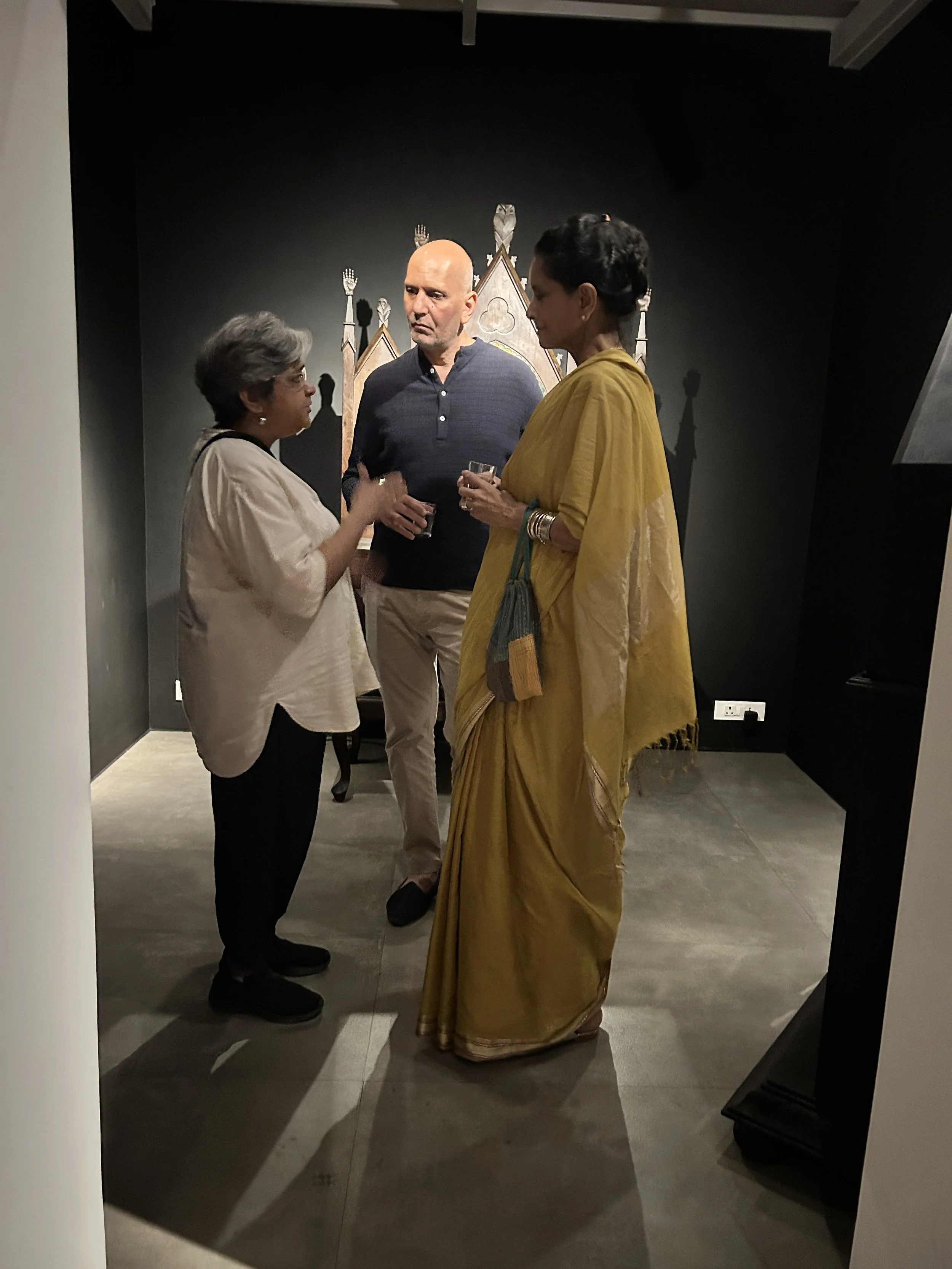
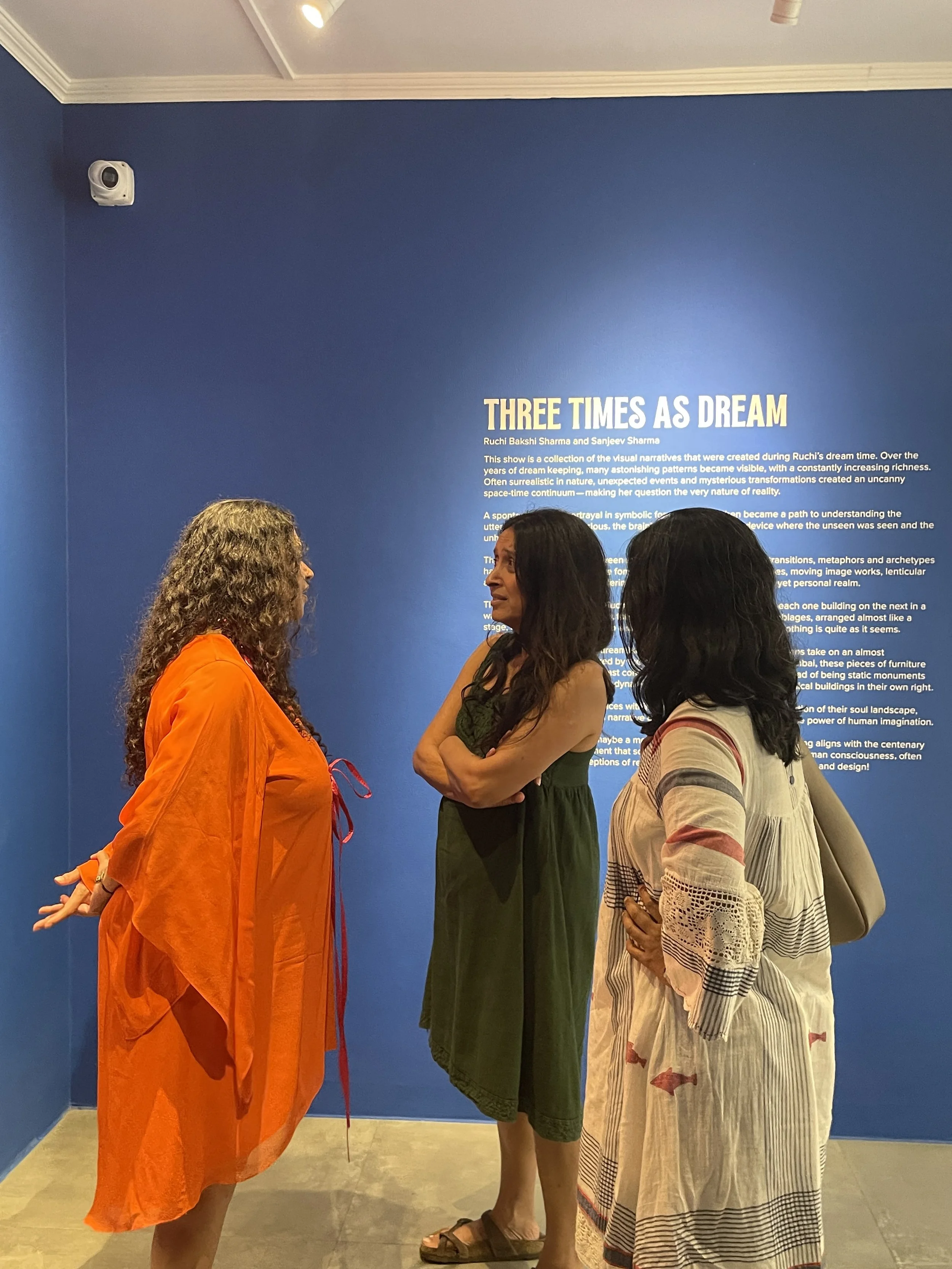
"Dreams are the mind’s most ancient language, yet they speak in riddles we’ve forgotten how to decipher. By externalizing these visions—giving form to the formless—I’m not just sharing a diary, but inviting others to recognize their own subconscious glyphs. The ‘intimate’ becomes universal when we realize how often our dreams borrow the same archetypes, the same sacred geometries. Surrealism taught us that privacy is an illusion; the unconscious is actually a collective territory.”